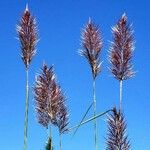
Saccharum giganteum
Sugarcane plume grass · Sugarcane plumegrass · Giant plumegrass
Care Guide
💧 Water
Sugarcane plume grass flourishes in warm climates and shows moderate tolerance to drought. It prefers soil that remains consistently moist, but not waterlogged. For optimal growth, it is recommended to water the grass weekly, particularly during the growing season. This plant is best grown outdoors, where it can benefit from natural rainfall.
☀️ Light Full sun
Sugarcane plume grass is a sun-loving, perennial herbaceous species that originates in open habitats and is commonly found in meadows and grasslands. It prefers full sun but can also tolerate partial sun.
What are the sunlight requirements for Sugarcane plume grass?
Sugarcane plume grass, or Saccharum giganteum, thrives in conditions where it can receive more than 6 hours of sunlight daily, ideally in full sun exposure. It's essential to observe how sunlight shifts throughout your garden to select spots that balance light and shade optimally, ensuring your plants are happy and healthy. Although it prefers full sun, Sugarcane plume grass can also tolerate partial sun conditions, making it a versatile choice for various garden spots.
What are the essentials to know about Sugarcane plume grass?
Sugarcane plume grass is a perennial herbaceous plant that loves the sun. Originating from open habitats like meadows and grasslands, it adapts well to both full and partial sun conditions. For indoor plants that can't get enough natural light, especially during winter or in less sunny spots, artificial lighting becomes crucial. LED lights are favorable for their customizable light wavelengths, which can significantly promote healthier plant growth. The ideal artificial light intensity varies based on the plant's sunlight needs: full sun plants require 30-50W/sq ft, partial sun plants need 20-30W/sq ft, and full shade plants need 10-20W/sq ft of artificial light.
What symptoms indicate Sugarcane plume grass is receiving inadequate light?
When Sugarcane plume grass doesn’t get enough light, several symptoms may appear. These include smaller new leaves, leggy or sparse growth, premature leaf drop, slowed or ceased growth, and lighter-colored or chlorotic leaves. Excessive sunlight exposure can also harm, leading to sunscald, leaf curling, wilting, and leaf scorching. These symptoms show the plant's struggle with inappropriate light levels, either too much or too little, affecting its health and development.
How can I address light-related issues in Sugarcane plume grass?
To optimize Sugarcane plume grass growth regarding light exposure, follow these tips. For indoor plants, gradually increase exposure to sunlight or use artificial light, ensuring at least 6 hours of direct light daily, utilizing a south-facing window or grow lights for ample exposure. Outdoors, adjust plant placement gradually to acclimate to brighter conditions without causing sunburn. To enhance light access, remove obstructions like overhanging branches or relocate the plants to sunnier spots, taking care during their dormant phase for minimal stress. Although parts of the plant affected by light deficiency might not recover, new growth should be healthy with corrected light exposure.
🌡️ Temperature 15–35°C
Sugarcane plume grass can tolerate a wide range of temperatures, but its distribution may still be constrained by different combinations of moisture and heat. It performs best in warm summer conditions with sufficient rainfall or irrigation. Extended periods of cloudy, rainy weather, as well as prolonged high temperatures, can raise the likelihood of the grass dying. In winter, adequate protection from cold can improve the plant’s survival chances.
💨 Humidity
🪴 Soil 6-8
🌱 Fertilizer
Sugarcane plume grass needs extra nutrients to encourage healthy new growth. In spring, spreading compost around the plant's base will effectively supply the nutrition it requires. Fertilization promotes vigorous growth and improves the plant's resistance to diseases and pests.
🪴 Pot & Repot
✂️ Pruning
Sugarcane plume grass is a tall, fast-growing plant. To keep it healthy, prune it in early spring by removing dead material and thinning crowded areas, which improves airflow. Regular pruning not only enhances the plant's vigor and attractiveness but also helps prevent disease and pests. This ensures that sugarcane plume grass thrives throughout the growing season.
🌿 Propagating
🐛 Diseases & pets
☠️ Toxicity
Characteristics
- Plant Type
- Grass
- Life Cycle
- Perennial
- Genus
- Saccharum
- Family
- Poaceae
- Hardiness Zone
- 7-10
- Mature Height
- 0.91 m to 2.44 m
- Mature Spread
- 0.91 m to 1.22 m
- Leaf Color
- Green, Dark Green
- Leaf Type
- Evergreen
- Bloom Time
- Late summer, Early fall, Mid fall
- Planting Time
- Spring, Summer, Autumn
- Harvest Time
- Mid fall, Late fall, Early winter
- Native Area
- Cuba, Jamaica