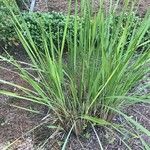
Saccharum ravennae
Plume grass · Ravenna grass · Italian sugarcane · Ranenna Grass · Ekra
Description
Source: leafsnapSaccharum ravennae, commonly known as Ravenna grass or Hardy Pampas grass, is a tall perennial native to the Mediterranean region. As a member of the Poaceae family, this plant can reach heights of up to 10 feet and spread out to 6 feet wide. Its long, narrow leaves are green and can grow up to 2 inches in width. In late summer or early fall, Ravenna grass produces large, feathery plumes of flowers that are creamy white or pinkish in color. These impressive flowers can grow up to 12 inches long, adding an attractive element of texture and movement when planted en masse. This plant thrives in full sun but can also tolerate partial shade. It prefers well-draining soil with moderate moisture levels but is drought-tolerant once established. Ravenna grass is also resistant to salt spray, making it an excellent choice for coastal gardens. Ravenna grass has many uses, including serving as a specimen plant for large landscapes or gardens and as a screening plant for privacy due to its height. It also makes an excellent backdrop for other plants. Florists value its plumes for cut flower arrangements, and landscapers appreciate its low maintenance requirements once established. Overall, Saccharum ravennae is a fantastic addition to any garden. Its attractive foliage and stunning plumes add texture and movement while requiring minimal maintenance, making it an ideal choice for gardeners seeking low-maintenance yet visually appealing plants.
🌳 Consider planting ravennagrass in your garden if you need a privacy screen or a striking focal point. Choose a location with ample space to accommodate its large mature size. This tall, clumping grass is low-maintenance and enhances your landscape with its graceful arching stems and elegant plumes.
Care Guide
💧 Water Every 7 days
Ravennagrass flourishes in warm areas with moderate moisture, and it can withstand short periods of drought. The ideal watering schedule is twice a week, allowing the soil to dry out slightly between waterings. This hardy grass species grows tall and produces feathery plumes, making it perfect for adding vertical accents to landscapes that receive regular rainfall.
☀️ Light Full sun
Ravennagrass prospers in abundant sunlight but can also tolerate lower light levels. It developed in habitats with plentiful sun. Insufficient light may impede its growth, and excessive exposure can be damaging, although it is typically hardy in extreme conditions.
What are the sun requirements for Ravennagrass?
Ravennagrass requires full sun, which means it should receive above 6 hours of sunlight daily, but it can also thrive under partial sun, approximately 3-6 hours of sunlight. It's essential to observe how sunlight moves through your garden to ensure you pick spots that offer the right balance of light and shade, catering to the needs of your plants for optimal growth.
What are the essentials for growing Ravennagrass?
Ravennagrass flourishes in abundant sunlight and is adapted to environments with ample light. However, it can also grow in areas with lesser sunlight. Insufficient light may affect its growth negatively, while excessive exposure can also cause damage, though it's quite resilient in various conditions. In cases where natural light is limited, especially indoors, artificial lighting becomes crucial. LED lights are recommended due to their ability to be customized for specific plant needs. Full sun plants require 30-50W/sq ft of light, partial sun plants need 20-30W/sq ft, and full shade plants need 10-20W/sq ft. The light source should be placed 12-36 inches above the plant, mimicking natural sunlight as closely as possible, and should be on for 8-12 hours per day.
What are symptoms of inadequate lighting in Ravennagrass?
Symptoms of light deficiency in Ravennagrass include smaller new leaves, leggy or sparse growth, faster leaf drop, slower or halted growth, lighter-colored or chlorotic leaves, and in cases of too much sunlight, symptoms like sunscald, leaf curling, wilting, and leaf scorching may occur. These symptoms indicate that the plant is either not receiving enough light or is being exposed to overly intense sunlight, affecting its health and ability to photosynthesize properly.
How can I address lighting issues with my Ravennagrass?
To address lighting issues for indoor Ravennagrass, gradually move the plant to sunnier locations until it receives at least 6 hours of direct sunlight daily. For plants that are large or not easily movable, consider using artificial light for at least 8 hours each day. Outdoors, gradually acclimatize your plants to sunnier spots to prevent sunburn. Note that parts of the plant damaged by insufficient sunlight might not recover, but new growth should be healthy with improved light conditions. Additionally, observe your garden to identify and minimize obstructions like trees and consider transplanting smaller plants to sunnier spots during their dormant periods for better exposure.
🌡️ Temperature 5–35°C
Ravennagrass grows best in temperatures from 41 to 95 ℉ (5 to 35 ℃). It is native to temperate regions but can also tolerate subtropical and tropical climates. In winter, temperatures below 23℉ (-5℃) can harm the plant, so it should be protected or cultivated in a warm location.
What is the ideal temperature range for growing Ravennagrass and its native growth environment?
Ravennagrass, with the botanical name Saccharum ravennae, thrives in temperatures between 41 to 95°F (5 to 35°C). Its natural habitat is in temperate regions, though it can also adapt well to subtropical and tropical climates. It exhibits strong cold resistance, which means it generally does not require special frost protection measures. Nonetheless, it's important to protect the plant or grow it in a warmer location if winter temperatures are expected to drop below 23°F (-5°C). Despite its hardiness, prolonged exposure to temperatures below -25°C can harm the plant, so additional cold protection, such as covering with soil or straw, is advisable.
How should Ravennagrass be cared for during winter?
To ensure Ravennagrass remains healthy throughout the winter, especially if temperatures are predicted to fall below -25°C, it's recommended to cover the plant with protective materials like soil or straw. An important preparatory step before the onset of the first freeze in autumn is to water the plant abundantly, making sure the soil is moist and will freeze in this condition. This strategy helps prevent drought and water scarcity for Ravennagrass during the winter and early spring, aiding in its survival and growth.
What are the symptoms of temperature stress in Ravennagrass and how can they be remedied?
Ravennagrass shows different responses to temperature stresses. For low temperatures above 5°C but under extreme cold below -25°C, the plant remains cold-tolerant but may exhibit reduced sprouting or fail to sprout in spring. If parts of the plant fail to sprout in spring, these should be removed. In high temperatures, specifically above 38°C, Ravennagrass leaves may lighten, curl, become prone to sunburn, or the entire plant might wilt and dry. The remedy involves trimming sunburned or dried parts, relocating the plant or providing shade during peak sun, and watering in the morning and evening to maintain soil moisture.
💨 Humidity
🪴 Soil 6-8
🌱 Fertilizer
Ravennagrass needs extra nutrients to encourage healthy new growth. In spring, spreading compost around the plant’s base can supply the nutrition it requires. Fertilizing supports vigorous growth and helps the plant resist diseases and pests.
🪴 Pot & Repot
✂️ Pruning
To encourage new growth, prune ravennagrass in early spring by trimming old leaves and dead stems down to ground level. This practice helps control the plant's spread, maintains its appearance, and prevents self-seeding. Be sure to use sharp tools to make clean cuts, which will improve the plant's ability to heal and thrive.
🌿 Propagating
🐛 Diseases & pets
☠️ Toxicity
Characteristics
- Plant Type
- Grass
- Life Cycle
- Perennial
- Genus
- Saccharum
- Family
- Poaceae
- Hardiness Zone
- 5-9
- Mature Height
- 1.83 m to 6.1 m
- Mature Spread
- 1.22 m to 1.83 m
- Leaf Color
- Green, Gray
- Leaf Type
- Deciduous
- Flower Color
- Silver
- Flower Size
- 15.24 cm
- Bloom Time
- Late summer, Early fall, Mid fall
- Planting Time
- Spring, Summer
- Harvest Time
- Fall
- Native Area
- Libya, Somalia, Turkey, India, Pakistan, Croatia, Morocco, Yemen, Uzbekistan, Iraq, Jordan, Oman, Romania, France, Saudi Arabia, Tunisia, Bulgaria, Armenia, Greece, Lebanon, China, Afghanistan, Syria, Kyrgyzstan, Kazakhstan, Italy, Spain, Israel, Iran, Albania, Azerbaijan, Algeria, Turkmenistan