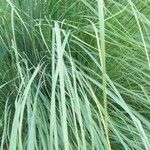
Saccharum spontaneum
Fodder cane · Wild sugarcane · Wild Sugar-Cane · Shatter cane · Sweet cane
Description
Source: leafsnapSaccharum spontaneum, commonly known as wild sugarcane, is a tall perennial grass belonging to the Poaceae family. Native to South and Southeast Asia, it has been introduced and naturalized in many regions around the globe. The plant can reach up to 6 meters in height and features long, narrow leaves that can grow up to 2 meters in length. Wild sugarcane holds significant economic importance due to its high sucrose content, which is extracted from its stems for sugar production. Beyond its use in sugar production, the plant serves various other purposes such as providing forage for livestock, controlling erosion on riverbanks and slopes, and serving as a biofuel crop. Ecologically, Saccharum spontaneum plays a valuable role by offering habitat for various wildlife species, including birds and insects. Its deep root system helps to stabilize riverbanks and prevent soil erosion. Despite being considered an invasive species in some areas because of its rapid spread through rhizomes (underground stems), Saccharum spontaneum remains an important global crop due to its high yield potential compared to other sugarcane varieties. Overall, Saccharum spontaneum is a versatile grass with significant economic value and ecological benefits, including habitat creation and soil stabilization.
Care Guide
💧 Water Every 7 days
Wild sugarcane thrives in tropical climates, where it benefits from regular rainfall and high humidity. For optimal growth, it requires weekly watering, though it also exhibits moderate drought tolerance. Its robust root system allows for efficient water use, making wild sugarcane well-suited to areas with fluctuating water availability.
☀️ Light Full sun
Wild sugarcane is a perennial, herbaceous plant that prefers bright light and comes from open habitats, commonly thriving in meadows and grasslands. It favors full sun but can also tolerate partial sun.
What are the sunlight requirements for Wild sugarcane?
Wild sugarcane is a perennial herbaceous plant that thrives in open habitats like meadows and grasslands, preferring full sun but also capable of growing under partial sun conditions. Full sun implies the plant needs above 6 hours of sunlight, whereas partial sun refers to about 3-6 hours of sunlight. To ensure your plants prosper, observe how sunlight moves through your garden and position them in areas that provide an ideal mix of light and shade.
How can artificial lighting be used for indoor Wild sugarcane plants?
When natural sunlight is insufficient, especially during winter or in less sunny indoor locations, artificial lighting becomes crucial for the healthy growth of Wild sugarcane. LED lights are recommended for their ability to offer specific light wavelengths needed by the plants. For optimal growth under artificial lights, full sun plants require 30-50W/sq ft, partial sun plants need 20-30W/sq ft, and plants adapted to full shade need 10-20W/sq ft. The light source should be placed 12-36 inches above the plant to mimic natural sunlight. Matching the natural daylight duration is essential, with most plants benefiting from 8-12 hours of light per day.
What are the symptoms of inadequate lighting for Wild sugarcane?
Inadequate lighting can lead to several problems for Wild sugarcane, including smaller new leaves, leggy or sparse growth, faster leaf drop, slower or stagnant growth, and leaves developing lighter colors or chlorosis, which shows as a yellowing due to the loss of chlorophyll. Excessive sunlight exposure can also result in sunscald, which damages plant tissues, and symptoms like leaf curling, wilting, and leaf scorching as the plant tries to minimize damage and water loss. These conditions signify that the plant's light requirements are not being met and adjustments need to be made to its environment.
How can I remedy light deficiency issues in Wild sugarcane?
To address light deficiency in Wild sugarcane, you can gradually move the plant to a location where it receives at least 6 hours of direct sunlight daily, utilizing a south-facing window and keeping curtains open during daylight hours. If moving the plant isn't feasible, consider providing additional light using a desk or ceiling lamp for at least 8 hours daily, or invest in grow lights for sufficient lighting. For outdoor plants, move them to sunnier locations gradually to prevent sunburn. Reducing obstructions like pruning branches or relocating the plant to sunnier spots can also enhance light exposure. Keep in mind, while these solutions can prevent further issues, parts of the plant already damaged by insufficient light may not recover, but new growth should be healthy with adequate light exposure.
🌡️ Temperature 20–37.8°C
Wild sugarcane comes from tropical areas where the climate is generally warm and humid. Consequently, it is adapted to high temperatures and moisture. It does not tolerate sudden temperature shifts and prefers a steady temperature environment, so avoiding temperature fluctuations indoors is important. It typically cannot withstand cold and requires relatively high temperatures to grow. If the ambient temperature drops too low, the plant may stop growing or even die.
What is the name of the plant?
The plant is known as Wild sugarcane.
What is the botanical name of Wild sugarcane?
The botanical name of Wild sugarcane is Saccharum spontaneum.
💨 Humidity
🪴 Soil 6-8
🌱 Fertilizer
Use organic fertilizers (e.g., fish emulsion or compost) rather than chemical ones for wild sugarcane. Give young plants higher nitrogen and phosphorus in spring. Mix compost or fertilizer into the soil before or after planting. For mature plants, add a balanced fertilizer in spring or one targeted to a specific deficiency. Nutrient deficiency causes small leaves, shortened branches, yellow or bronze leaves, acidic fruits, premature fruit drop, and splitting.
🪴 Pot & Repot
✂️ Pruning
To encourage the growth of wild sugarcane, it's beneficial to prune early in the spring. This involves removing any dead or damaged stalks, which helps promote new growth and improve airflow. Pruning also prevents overcrowding, controls invasiveness, optimizes sunlight exposure, and enhances flowering. Together, these benefits lead to healthier and more vigorous plants.
🌿 Propagating
🐛 Diseases & pets
☠️ Toxicity
Characteristics
- Plant Type
- Grass
- Life Cycle
- Perennial
- Genus
- Saccharum
- Family
- Poaceae
- Hardiness Zone
- 9-11
- Mature Height
- 3.05 m
- Mature Spread
- 0.91 m to 2.13 m
- Leaf Color
- Green
- Leaf Type
- Evergreen
- Flower Color
- Silver
- Flower Size
- 1.02 cm to 2.03 cm
- Bloom Time
- Mid summer, Late summer, Early fall, Mid fall
- Planting Time
- Spring, Summer, Autumn
- Harvest Time
- Fall
- Native Area
- Sri Lanka, Libya, Somalia, Egypt, India, Eritrea, Pakistan, Thailand, Nigeria, Morocco, Yemen, Kenya, Niger, Uganda, Tanzania, Uzbekistan, Indonesia, Cambodia, Cameroon, Oman, Ghana, Ethiopia, Central African Republic, Nepal, Saudi Arabia, Malawi, Tunisia, Philippines, Sudan, Bangladesh, Laos, Chad, China, Afghanistan, Italy, Kazakhstan, Vietnam, Myanmar, Japan, Israel, Togo, Algeria, Turkmenistan