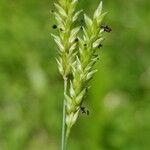
Sacciolepis indica
Chase's Glenwood grass · Indian cupscale grass · Glenwood Grass · India cupscale
Care Guide
💧 Water
Glenwood grass flourishes in high humidity and moist environments, requiring weekly watering to stay healthy. Being an evergreen, it efficiently retains water throughout the year, making it ideal for cultivation both indoors and outdoors.
☀️ Light Full sun
Glenwood grass comes from bright, open habitats and performs best in full sunlight. It can tolerate some partial shade but prefers direct sun for the best growth. This plant, which can be annual or biennial, is noted for its sun-loving character.
What are the sunlight requirements for Glenwood grass?
Glenwood grass requires full sun, meaning it needs above 6 hours of sunlight daily to thrive optimally. It can tolerate partial sun, which is about 3-6 hours of sunlight, but prefers full sun conditions. Ensuring the appropriate balance of light and shade is crucial for the plant's health and happiness.
How does artificial lighting support Glenwood grass growth indoors?
When natural sunlight is insufficient, especially during winter or in less sunny spaces, artificial lighting can be a vital solution for Glenwood grass growth indoors. LED lights, in particular, are beneficial as they can be customized to provide specific wavelengths of light needed by the plant. For full sun plants like Glenwood grass, 30-50W/sq ft of artificial light is recommended, with the light source placed 12-36 inches above the plant for 8-12 hours per day to mimic natural daylight hours.
What are the symptoms of light deficiency in Glenwood grass?
Symptoms of light deficiency in Glenwood grass include new leaves growing smaller than mature ones, leggy or sparse growth, faster leaf drop, slower or halted growth, and leaves that may appear paler or develop chlorosis (yellowing). Other adverse effects of improper light conditions can include sunscald, leaf curling, wilting, and leaf scorching, indicating either insufficient or excessive exposure to sunlight.
What solutions can address Glenwood grass's light deficiency symptoms?
To address light deficiency in Glenwood grass, gradually introduce the plant to more sunlight by moving it to a sunnier location each week until achieving at least 6 hours of direct sunlight daily. For indoor plants, consider using artificial light, such as a desk or ceiling lamp, for at least 8 hours a day, or invest in professional grow lights. For outdoor plants, the gradual relocation to sunny spots is crucial to avoid sunburn. If trees obstruct sunlight, pruning them can help. For smaller plants, transplanting them during their dormant period to a location with ample sunlight and good drainage can be beneficial.
🌡️ Temperature 15–37.8°C
Glenwood grass comes from tropical areas where the climate is generally warm and humid. Therefore it is well suited to high temperatures and humidity. It does not tolerate sudden temperature shifts and prefers a consistent temperature, so avoiding indoor temperature fluctuations is important. It typically cannot withstand cold and needs warmer conditions to grow. If the temperature falls too low, the plant may stop growing or even die.
💨 Humidity
🪴 Soil 6-7
🌱 Fertilizer
🪴 Pot & Repot
✂️ Pruning
Glenwood grass is known for its dense, clump-forming growth and attractive seed heads. To maintain its health and appearance, it is important to prune the grass from early to late spring. This pruning helps remove damaged stems, encourages healthy blooming, and controls its spread. By improving air circulation and light exposure, you also reduce the risk of disease. Always make sure to use clean, sharp tools when cutting.
🌿 Propagating
🐛 Diseases & pets
☠️ Toxicity
Characteristics
- Plant Type
- Grass
- Life Cycle
- Annual, Perennial
- Genus
- Sacciolepis
- Family
- Poaceae
- Hardiness Zone
- 8-11
- Mature Height
- 20 cm to 91 cm
- Mature Spread
- 20 cm to 40 cm
- Leaf Color
- Green
- Leaf Type
- Semi-evergreen
- Flower Color
- Yellow, Green, Brown
- Flower Size
- 0.25 cm to 0.51 cm
- Bloom Time
- Summer, Early fall, Mid fall
- Planting Time
- Spring, Summer
- Harvest Time
- Mid summer, Late summer, Fall
- Native Area
- India, Malaysia, Angola, Nigeria, Kenya, Uganda, Guinea-Bissau, Zimbabwe, Brunei, Mali, Benin, Sierra Leone, Indonesia, Cambodia, Cameroon, Burundi, Mozambique, Koppen, Ghana, Ethiopia, South Korea, Congo, Nepal, Malawi, Central African Republic, Philippines, Zambia, Sudan, Bangladesh, Laos, Guinea, Chad, Vietnam, Myanmar, Japan, Togo, Papua New Guinea, Côte d'Ivoire, Singapore, Thailand