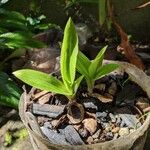
Sacoila lanceolata
Scarlet Beak Lady Orchid · Leafless beaked lady orchid · Leafless Beaked Ladiestresses
Description
Source: leafsnapSacoila lanceolata, commonly known as the lance-leaved sacoila or the sword-leaved sacoila, is an orchid species native to Central and South America. The plant gets its common names from its long, narrow leaves that resemble a sword or lance. It typically thrives in moist, shady environments such as rainforests and cloud forests. The lance-leaved sacoila produces small, fragrant flowers that are greenish-yellow with reddish-brown markings. These flowers grow in clusters on long stems and bloom from late spring to early summer. For centuries, indigenous people have utilized this orchid for its medicinal properties. It contains compounds with anti-inflammatory effects that have been used to treat ailments such as arthritis and fever. Sacoila lanceolata is also popular among orchid enthusiasts due to its distinctive foliage and attractive flowers. It can be grown both indoors and outdoors in warm climates with high humidity levels. Overall, Sacoila lanceolata is a fascinating plant species with both medicinal properties and ornamental value. It plays an important role in its natural ecosystem and is also highly appreciated by humans for its beauty.
Care Guide
💧 Water Every 7 days
The leafless beaked lady orchid thrives in humid conditions and prefers the consistent moisture found in tropical regions. It requires weekly watering but can tolerate moderate drought. As an epiphytic plant, this orchid is often grown indoors. During its active growth cycle, it needs more frequent watering to maintain its health and vigor.
What do I need to do if I give my Leafless beaked lady orchid too much or too little water?
One of the most common ways to kill a Leafless beaked lady orchid is by allowing it to sit in soil that remains too moist for too long. While these plants need regular watering during active growth, they also require a well-draining growing medium. If the plant is overwatered, it will become mushy and develop root rot. In such cases, you should use sterile pruning shears to remove any rotted roots and then repot the orchid in a container with good drainage and fast-draining potting mix. However, excessive repotting can be stressful for this type of orchid, so it's important to water it correctly. If the orchid is underwatered, its leaves will shrivel and feel dry to the touch. In such cases, increase the watering frequency as the soil is drying out faster than expected.
How frequently should I water my Leafless beaked lady orchid?
During the active growth stage in spring and summer, water your Leafless beaked lady orchid once or twice per week, and increase to three times per week or more if it's hot and dry. In winter, water the orchid less frequently, about two to three times per month. If you keep the orchid indoors during winter, the soil may dry out faster, so you may need to increase the frequency of watering. In fall, gradually reduce watering from summer to winter schedule.
What things should I think about when watering my Leafless beaked lady orchid at different times of the year and during its growth phases?
When planning the watering schedule for your Leafless beaked lady orchid, there are two important growth phases to consider. The first phase is the active growth period, which occurs in spring and summer. During this time, you should water the plant multiple times per week. The second phase is the rest period, which lasts for about two to three months in winter. During this period, the plant requires far less water and fertilization than usual. You should water it only once or twice per month. In the fall, gradually reduce the watering frequency from multiple times per week to once or twice per month, as appropriate for the winter.
If I grow my Leafless beaked lady orchid indoors, how should I change the way I water it?
The Leafless beaked lady orchid needs a relatively humid growing environment. Indoor locations don't usually have enough moisture, causing the plant and soil to dry out faster compared to outdoor growth. To address this, consider using a humidifier in the room where you grow the orchid and increase watering frequency. However, it's important to balance humidity with proper air circulation to avoid excessive moisture and potential diseases. Including a fan in the room is recommended to ensure proper air flow.
How should I water my Leafless beaked lady orchid?
The way you water the Leafless beaked lady orchid depends on whether it is in an active growth phase or not. During active growth, you should water the soil and occasionally water overhead if the weather is warm. In winter or when the weather is cool/wet, stick to watering the soil directly. Signs that your orchid needs more water are thin/dry roots and leaves or discoloration. If the plant is receiving too much water, it will appear mushy and limp. Grow your orchid in a well-draining potting mix with good drainage. In the growing season, water multiple times per week, ensuring that each watering drains quickly to avoid standing water. The size of the pot will determine the frequency of watering, with larger pots needing less frequent watering. Use rainwater or distilled water that matches the air temperature as closely as possible.
☀️ Light Full sun
Leafless beaked lady orchid does best when given a substantial amount of light throughout the day, though it can tolerate lower light. Coming from habitats with strong daily light exposure, it can develop health problems if light is insufficient. At the same time, too much light can also cause the plant to become stressed.
What are the sunlight requirements for the Leafless beaked lady orchid?
The Leafless beaked lady orchid, also known by its botanical name Sacoila lanceolata, thrives in environments with substantial sunlight throughout the day, mirroring its natural habitat's conditions. It requires full sun, defined as above 6 hours of sunlight daily, but can also grow under partial sun, which is about 3-6 hours of sunlight. It's important to observe how sunlight moves through your garden to find spots that offer the right balance of light and shade, ensuring the plant's well-being and preventing health issues related to insufficient or excessive light.
How can artificial lighting benefit indoor plants, especially in less sunny spaces or during winter?
Indoor plants, including the Leafless beaked lady orchid, can significantly benefit from artificial lighting, especially when natural sunlight is insufficient, like in winter or less sunny spaces. Artificial lights, particularly LEDs, can be crucial for promoting faster and healthier growth. They can be customized to provide specific wavelengths needed by your plants. For optimal growth, full sun plants require 30-50W/sq ft, partial sun plants need 20-30W/sq ft, and full shade plants should get 10-20W/sq ft of artificial light. The artificial light source should be 12-36 inches above the plant, mimicking natural sunlight as closely as possible and ensuring your plant receives 8-12 hours of light per day.
What are common symptoms of inadequate light in Leafless beaked lady orchids?
Leafless beaked lady orchids may exhibit several symptoms when exposed to inadequate light, affecting their growth and overall health. Common signs include small, immature leaves, leggy or sparse growth, indicating a stretched-out appearance due to increased spacing between leaves or stems. Another symptom could be faster leaf drop as the plant tries to conserve resources. Slower or halted new growth, lighter-colored new leaves, chlorosis, and issues like sunscald or leaf curling from excessive sunlight exposure can also occur. Additionally, symptoms like wilting and leaf scorching may appear due to overexposure to sunlight, indicating the plant is struggling with maintaining hydration or suffering reduced photosynthesis capacity.
What are effective solutions to address light deficiency in Leafless beaked lady orchids?
To address light deficiency in Leafless beaked lady orchids, consider gradually exposing them to more sunlight, aiming for at least 6 hours of direct sunlight daily. For indoor plants, using south-facing windows and keeping curtains open during daylight or employing artificial lighting like desk lamps or plant grow lights for 8 hours daily can prove beneficial. Outdoor plants should be moved to sunnier spots gradually to avoid sunburn. If sunlight is blocked by obstructions like trees, pruning to allow more light or transplanting smaller plants during their dormant period to a location with better sunlight and drainage can help. While some parts of the plant might not recover from previous light deficiency, new growth should be healthy with improved light conditions.
🌡️ Temperature 15–37.8°C
Leafless beaked lady orchid does well in warm conditions. It prefers moderately high temperatures but not excessive heat and humidity. Sunlight helps warm the plant and encourages flowering. However, extended exposure to direct sun in summer can cause sunburn, so the amount of light it gets should be regulated during that season. The plant typically does not tolerate cold well, so it needs adequate protection and warmer conditions in winter to prevent freezing.
What is the Leafless Beaked Lady Orchid?
The Leafless Beaked Lady Orchid, known botanically as Sacoila lanceolata, is a distinct species of orchid. This particular orchid is noted for its unique characteristics and naming but specific details about its essentials, such as care, habitat, and growth conditions, or symptoms of distress, were not provided in the information available.
💨 Humidity
🪴 Soil 5-7
🌱 Fertilizer
Appropriate fertilization is essential for the health and appearance of the Leafless beaked lady orchid. Fertilize the Leafless beaked lady orchid during summer, repeating the application monthly throughout the season. Nutrients support growth and help maintain the plant’s structures. Feeding the plant improves the Leafless beaked lady orchid’s floral display, ensuring the best blooms.
🪴 Pot & Repot
✂️ Pruning
The leafless beaked lady orchid is known for its distinctive structure, having no leaves and showcasing intricate flowers. To maintain its health and appearance, prune it from late winter to early spring by removing any dead stalks. This careful pruning encourages healthier blooms and helps shape the plant. Avoid damaging the delicate tubers during the process to promote vigorous flowering and enhance the plant's overall vitality and aesthetic appeal.
🌿 Propagating
🐛 Diseases & pets
☠️ Toxicity
Characteristics
- Plant Type
- Herb
- Life Cycle
- Perennial
- Genus
- Sacoila
- Family
- Orchidaceae
- Hardiness Zone
- 8-11
- Mature Height
- 30 cm to 61 cm
- Mature Spread
- 30 cm
- Leaf Color
- Green
- Leaf Type
- Evergreen
- Flower Color
- Pink
- Flower Size
- 2.03 cm to 3.05 cm
- Bloom Time
- Late spring, Early summer, Mid summer
- Planting Time
- Spring, Summer, Autumn
- Harvest Time
- Late summer, Early fall, Mid fall
- Native Area
- Belize, Honduras, Mexico, Guatemala, Peru, Panama, Jamaica, Colombia, Bahamas, Cuba, Bolivia, Venezuela, Guyana, El Salvador, Nicaragua, Brazil, Ecuador, Costa Rica