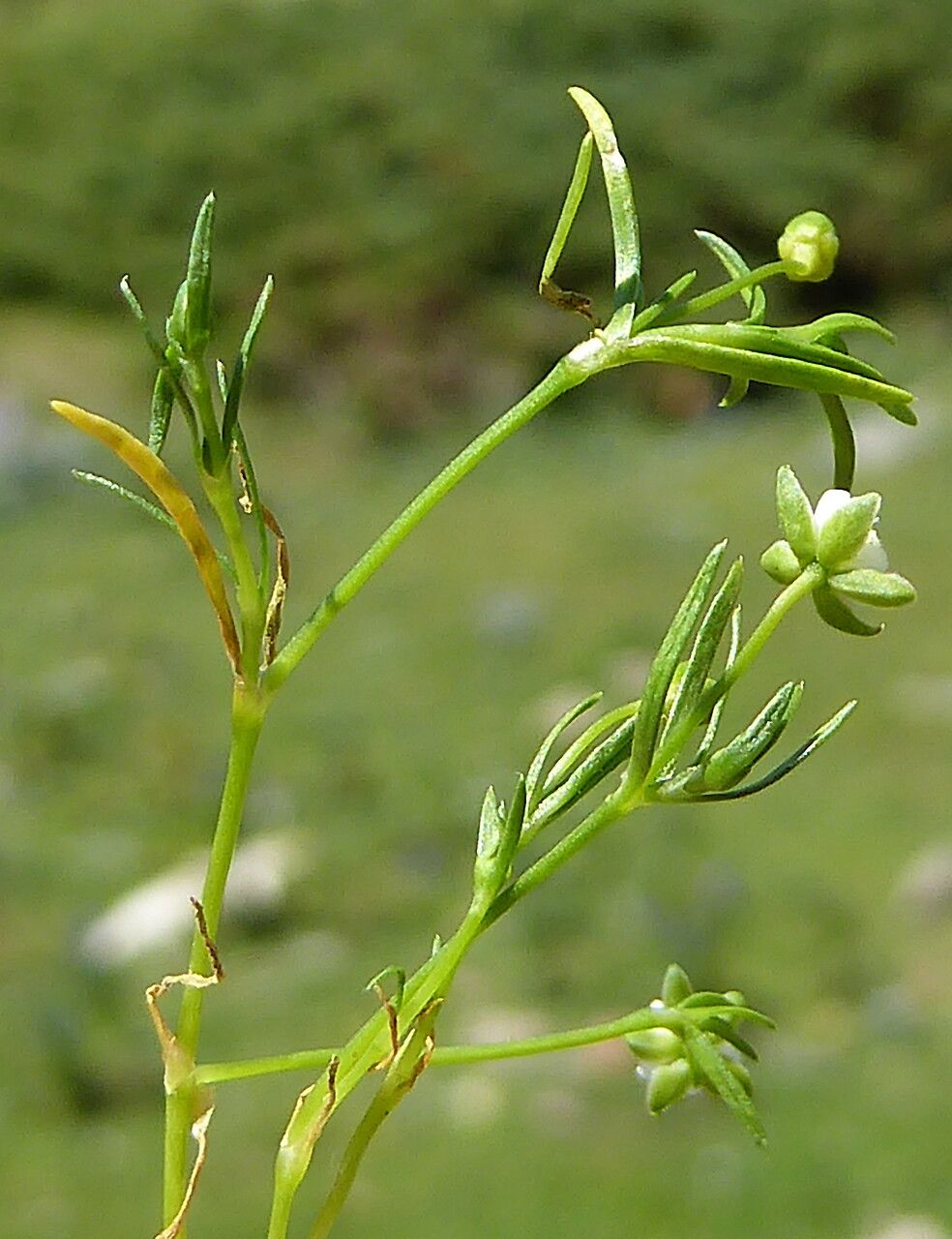
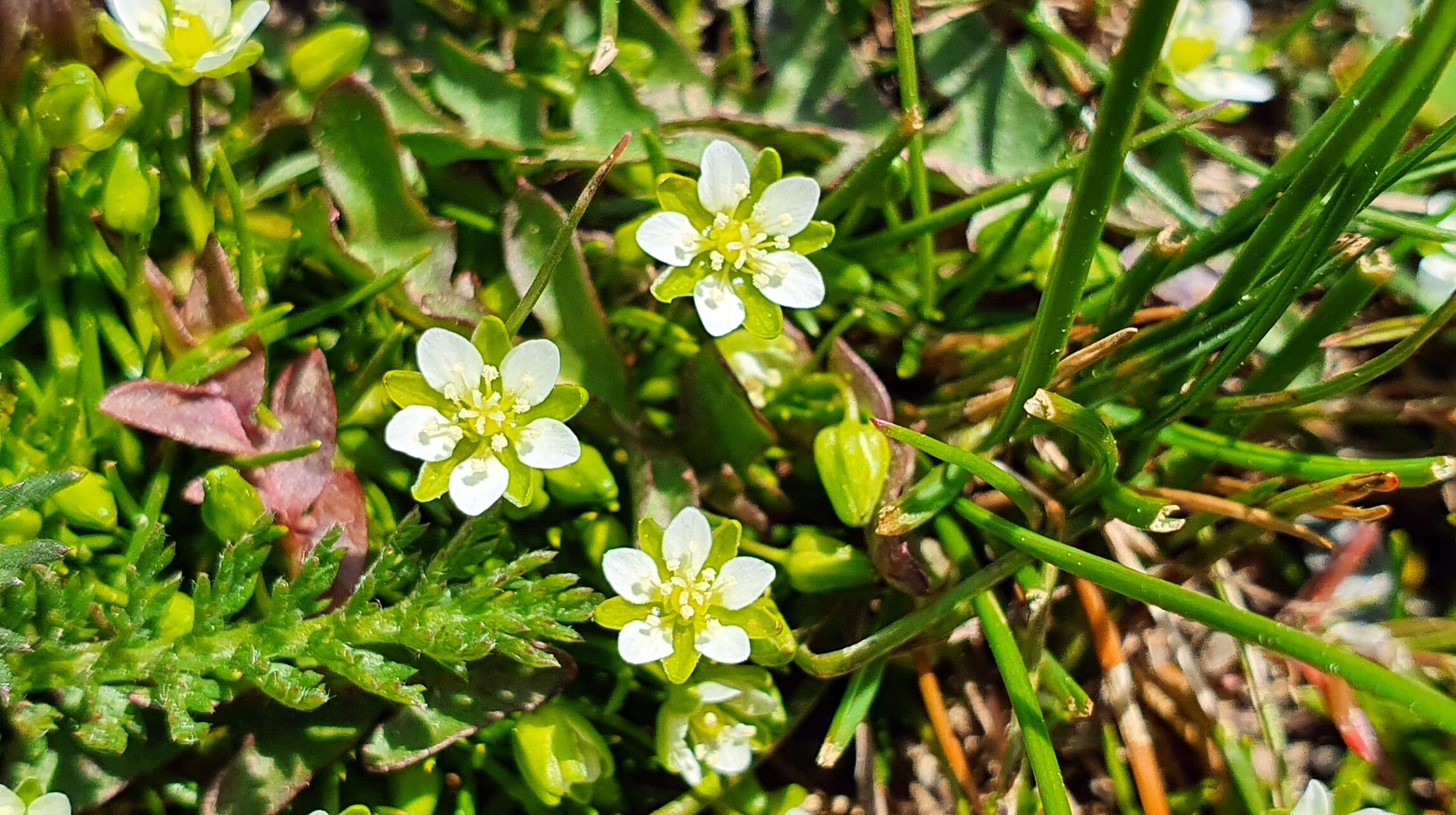
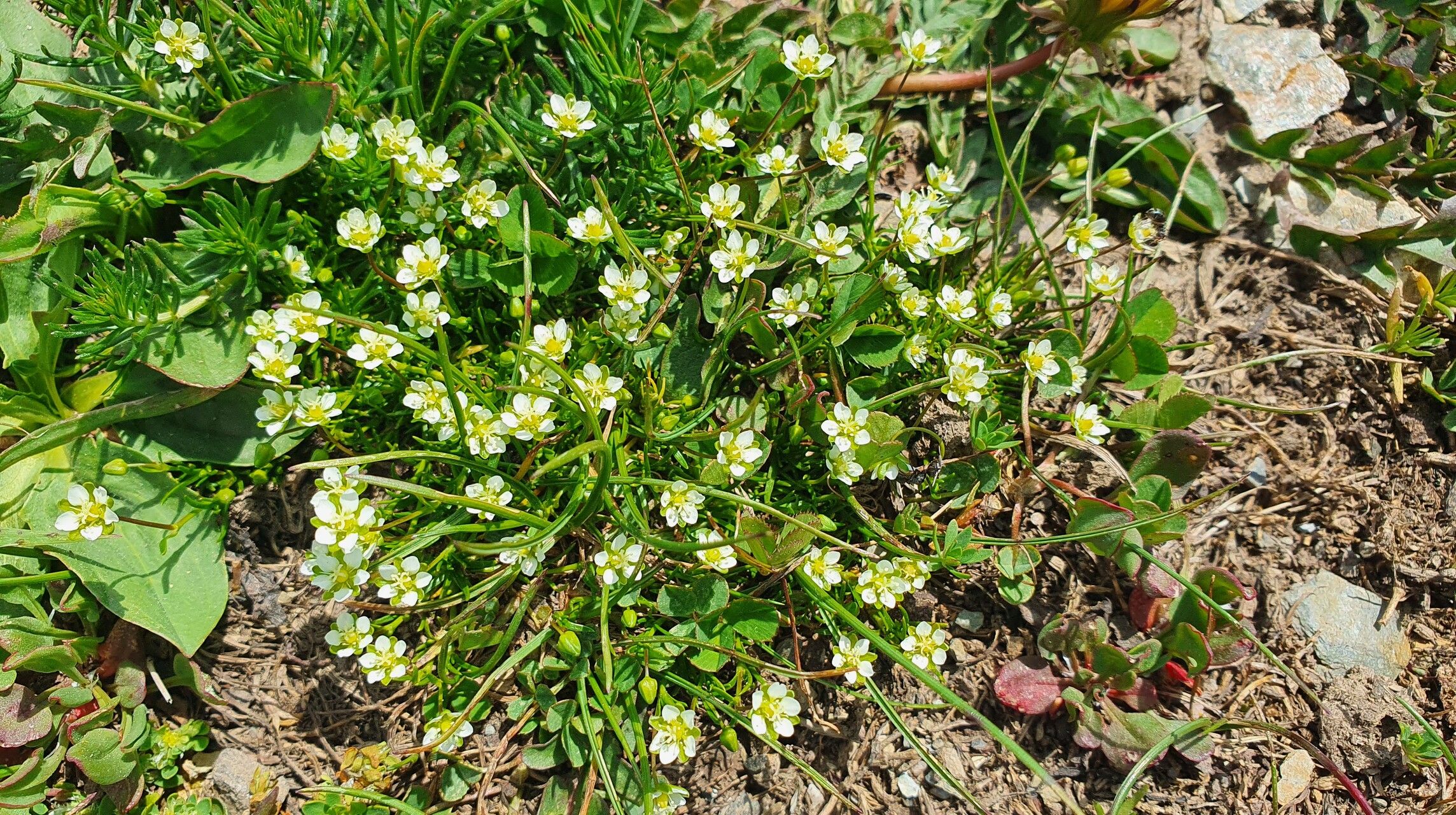
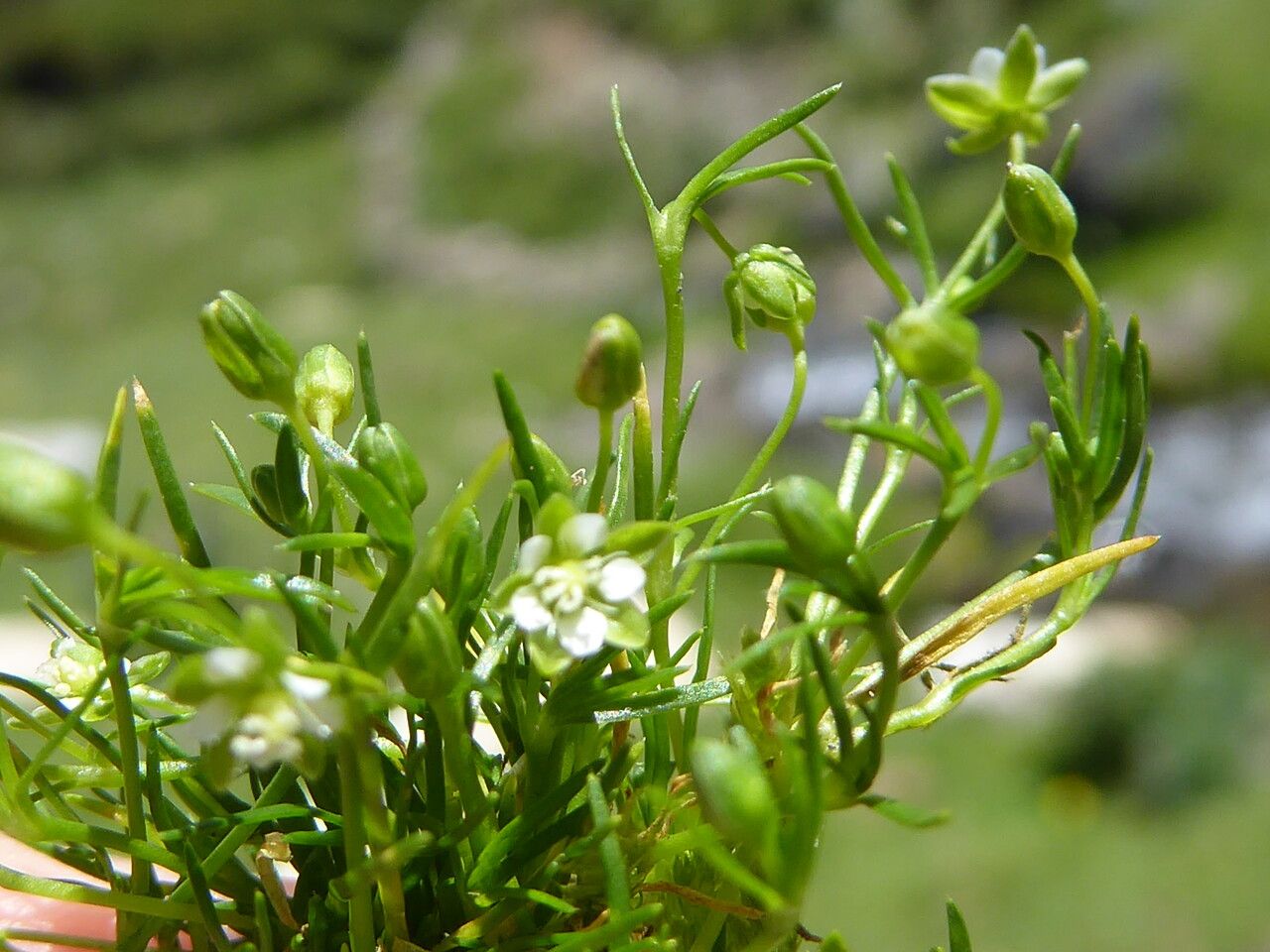
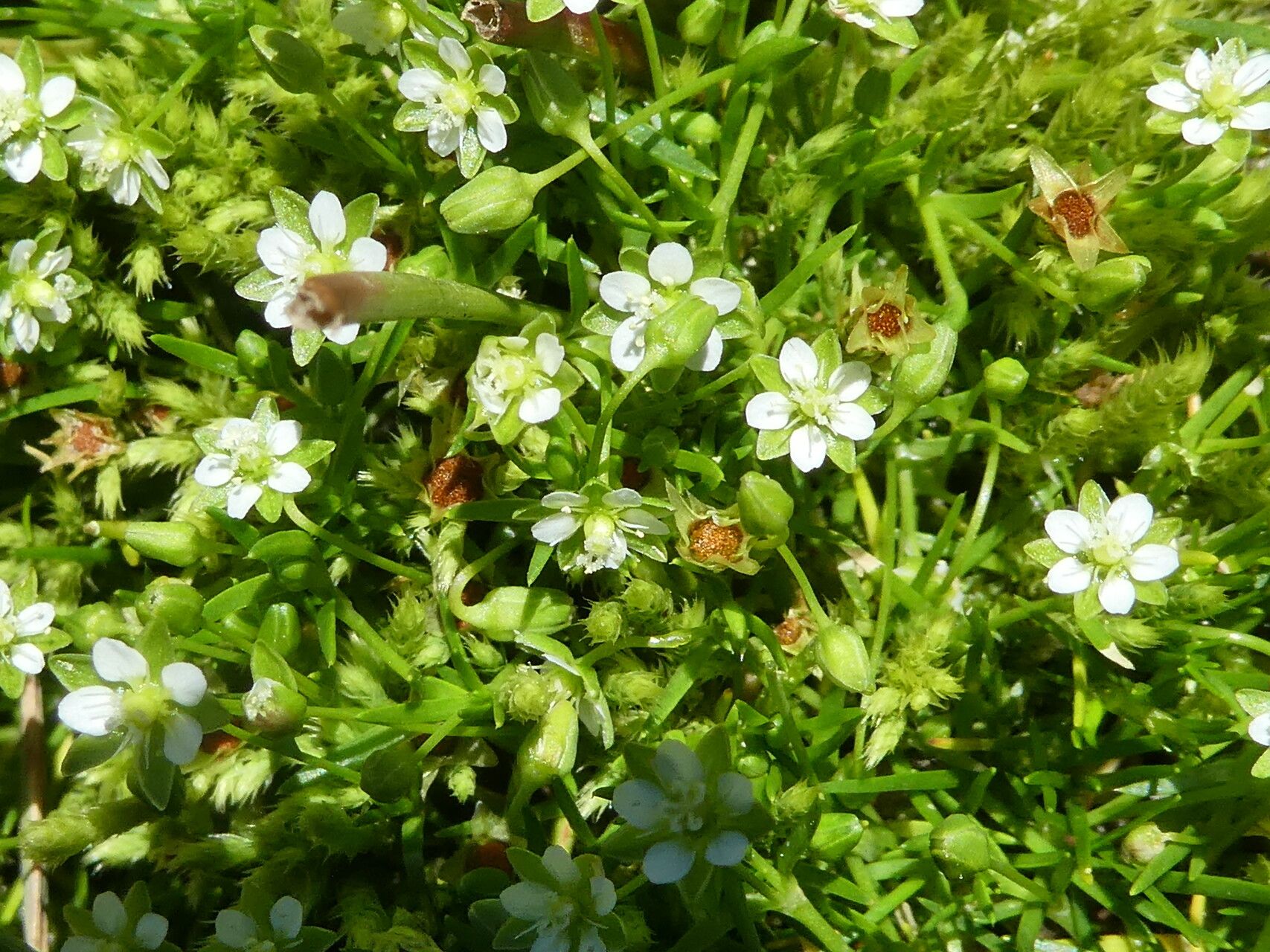
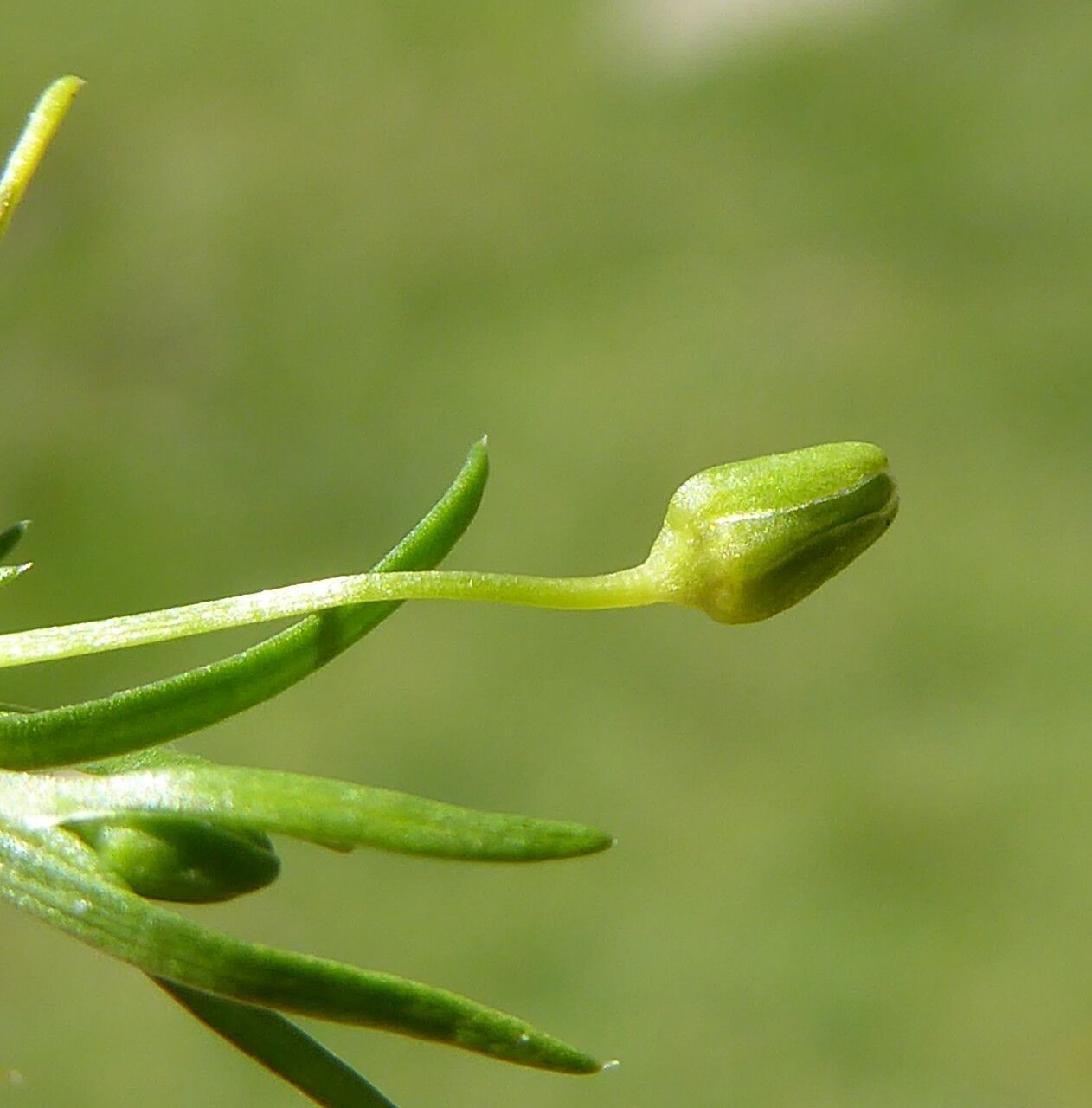
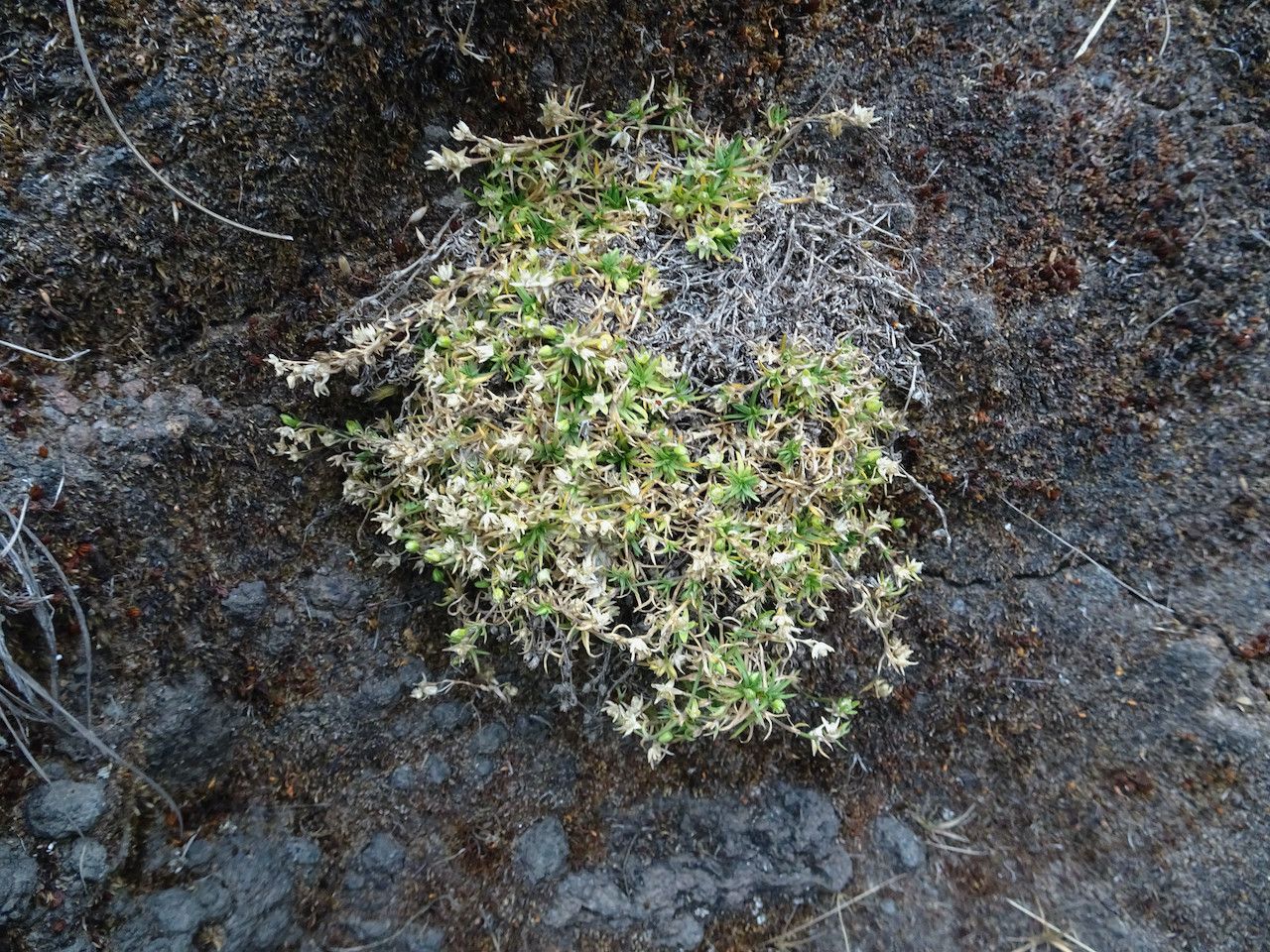
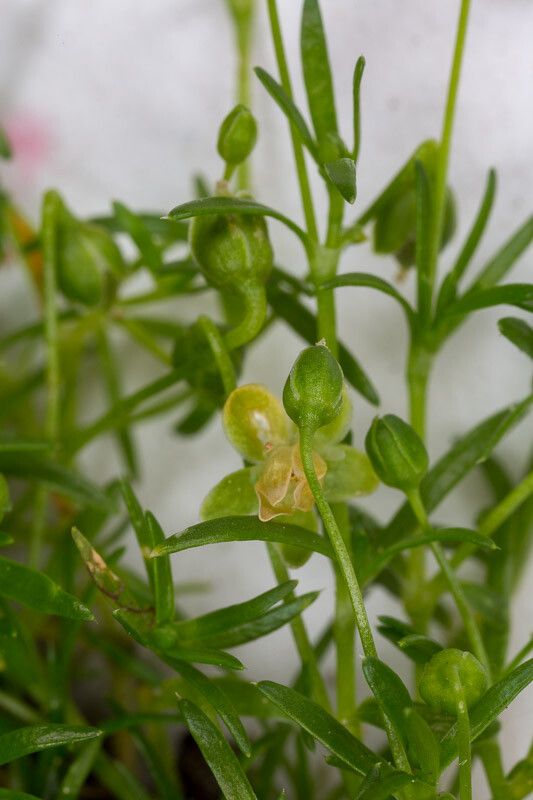
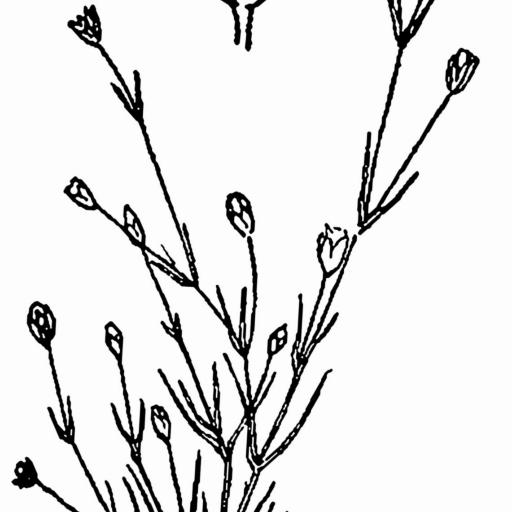
Sagina saginoides is a species of flowering plant in the family Caryophyllaceae known by the common names arctic pearlwort or alpine pearlwort. It has a circumboreal distribution; it can be found throughout the northern latitudes of the Northern Hemisphere. It grows in subalpine and alpine climates and other mountainous habitat at lower elevations. This is a small perennial herb producing a slender to threadlike stem just a few centimetres long, growing decumbent or erect. It is sometimes clumpy in form. The leaves are linear in shape and about 1 to 2 centimetres in length. The inflorescence is a solitary flower with five sepals and five small white petals.
Arctic pearlwort is fairly disease-resistant and generally not prone to illnesses. However, it can be affected by pests and diseases present in its surroundings. Such infections are usually minor. In terms of care, this plant has moderate maintenance needs. It should be pruned regularly to maintain an attractive appearance and healthy growth. Fertilizing can also help encourage flowering. Arctic pearlwort is suitable for anyone with outdoor spaces like a garden or patio and does not demand extensive care experience. It may need more attention when grown indoors.
How to keep Sagina Saginoides.
Light
Arctic pearlwort grows best in sites with moderate sunlight. Its native habitat encouraged growth in places where the sun was partially blocked. During its various growth stages, steady amounts of sunlight are important. Too much light can cause harm, while too little can hinder its development.
Water
Arctic pearlwort thrives in cool, moist conditions, benefiting from regular weekly watering to maintain consistent moisture. This outdoor plant is well-suited to alpine and subarctic regions. It is adapted to frequent rainfall and short growing seasons, making the most of the available water during its peak growth period.
Temperature
Arctic pearlwort originates from regions with temperate climates. Its optimal growth temperature is between 68 to 95 °F (20 to 35 ℃). Temperatures should be adjusted according to the season as needed to maintain its vitality.
Fertilizer
Arctic pearlwort is regarded as a heavy feeder in terms of nutrients. It requires frequent, low-dose applications of nitrogen and potassium fertilizers and occasional treatments with phosphorus, micronutrients, sulfur, and magnesium to sustain healthy growth and bright coloration. Continuous fertilization throughout the growing season is needed to prevent deficiency symptoms and preserve optimal growth.
Pruning
To promote healthy growth, Arctic pearlwort benefits from a spring pruning to remove dead stems. This practice helps improve air circulation, which reduces the risk of diseases. Additionally, thinning crowded areas further promotes air flow. To encourage continuous blooming, regularly remove spent flowers. Always use clean, sharp tools to minimize the risk of infection.
Botanical profile.
- Plant Type
- Herb
- Life Cycle
- Biennial, Perennial
- Genus
- Sagina
- Family
- Caryophyllaceae
- Hardiness Zone
- 3-7
- Mature Height
- 1 cm to 13 cm
- Mature Spread
- 5 cm to 10 cm
- Leaf Color
- Light Green
- Leaf Type
- Semi-evergreen
- Flower Color
- White
- Flower Size
- 0.25 cm to 0.51 cm
- Bloom Time
- Late spring, Early summer, Mid summer
- Planting Time
- Spring, Summer, Autumn
- Harvest Time
- Mid summer, Late summer, Early fall
Other names.
Reader questions.
How should I water my Arctic pearlwort plant?
To properly water the Arctic pearlwort, follow these steps for better plant health and growth. First, always use filtered water at room temperature to prevent any harmful particles that may exist in tap water. The Arctic pearlwort prefers warmer water since it originates from a warm environment; cold water can be damaging to its well-being. Additionally, avoid watering from above as it can lead to issues with the foliage. Instead, focus on applying filtered room temperature water directly to the soil until it is completely saturated. This method is highly beneficial as it provides moisture to the roots and facilitates their spread through the soil, allowing them to gather essential nutrients.
What are the sunlight requirements for Arctic pearlwort?
Arctic pearlwort, or Sagina saginoides, thrives best with moderate sun exposure, requiring about 3-6 hours of sunlight daily. Its natural habitat conditions allow it to grow where the sun is partially occluded, indicating the importance of consistent sunlight quantities at different growth stages for optimum growth. Too much sun might cause damage, whereas too little sun might stunt its growth. It's essential to observe your garden to find spots that offer the right balance of light and shade, ensuring the plants' happiness and health.
What is the ideal temperature range for Arctic pearlwort growth?
The ideal temperature range for the growth of Arctic pearlwort, or Sagina saginoides, is between 68 to 95 °F (20 to 35 °C). As a plant native to temperate regions, it thrives within this temperature spectrum. To maintain its vitality, it's important to adjust the temperature appropriately according to the season, ensuring that it always remains within this ideal range.
What can I do if I give my Arctic pearlwort plant too much water or not enough water?
Overwatering and underwatering both harm the health of your Arctic pearlwort, but overwatering is more common. When it gets too much water, the stems and leaves may wilt and turn yellow. Overwatering for a long time can cause root rot, mold, and mildew, which can kill the plant. Underwatering is less likely due to the plant's tolerance to drought. However, it can still happen and result in brittle, brown leaves. It's crucial to recognize the signs of overwatering early. Some diseases caused by overwatering, like root rot, may not be fixable if not addressed promptly. Reduce watering if you see early signs of overwatering and check the soil's drainage. Replace poorly draining soil with a loose, well-draining potting mix. If your Arctic pearlwort lacks water, simply water more regularly until the signs disappear.
How does artificial lighting support indoor growth of Arctic pearlwort?
For indoor Arctic pearlwort plants that don't get enough natural sunlight, especially during winter or in less sunny indoor spaces, artificial lighting is a crucial solution. Indoor plants require adequate lighting for optimal growth, with LED lights being a popular choice because they can provide specific wavelengths needed by the plants. The general guidance is for full sun plants to get 30-50W/sq ft of artificial light, partial sun plants 20-30W/sq ft, and full shade plants 10-20W/sq ft. The artificial light source should be placed 12-36 inches above the plant and turned on for 8-12 hours per day to mimic natural sunlight conditions.
Does Arctic pearlwort require frost protection measures?
Arctic pearlwort is highly tolerant of cold weather and does not require additional frost protection measures. However, to prepare it for winter and ensure its well-being, it's recommended to water the plant generously before the first freeze of autumn. This practice helps keep the soil moist and transitions it into a frozen state, which prevents drought and water scarcity during the winter and early spring months.
How often should I give water to my Arctic pearlwort?
If your Arctic pearlwort plant is in a pot, the most precise way to determine if it needs water is to check the soil moisture by sticking your finger into it. If the top two to three inches of soil feel dry, then it's time to water the plant. For outdoor Arctic pearlwort plants grown in the ground, you can use a similar method to check the soil. When you find that the top few inches of soil have dried out, it's a sign that you need to water it. Usually, during spring and early fall, you'll need to water this plant about once a week using this method. However, with extremely hot weather, you may need to increase watering to about twice or more per week. It's important to note that mature, well-established Arctic pearlwort plants have the ability to tolerate drought.
What are signs of inadequate light in Arctic pearlwort?
Symptoms of light deficiency in Arctic pearlwort might include smaller new leaves than previous ones, leggy or sparse growth, faster leaf drop, slower or no new growth, lighter-colored new leaves, chlorosis (loss of leaf green color), sunscald, leaf curling, wilting, and leaf scorching. These signs indicate that the plant is not receiving sufficient sunlight, affecting its overall health and ability to photosynthesize properly.
What should be done if Arctic pearlwort experiences temperatures below -35°C?
While Arctic pearlwort is extremely cold-tolerant, temperatures dropping below -35°C can impact the plant, possibly leading to a decrease in sprouting or even a complete lack of sprouting in the spring. If such temperatures are experienced, it is advised to remove any parts of the plant that have failed to sprout once spring arrives.
How much water does my Arctic pearlwort plant require?
When you water your Arctic pearlwort, don't hold back on the amount of water you give. Wait until the top two to three inches of soil are dry and then give it a thorough watering. Make sure to water enough that the soil is completely soaked. You'll know you've added enough water when you see excess water draining from the pot's drainage holes. If you don't see any excess water draining, it means you haven't watered enough. However, be careful not to let the water accumulate in the soil, as that can harm the plant. On the other hand, if water is not draining through the pot, it could mean the soil doesn't have proper drainage, which is not good for the plant's health. Avoid this by ensuring your pot has good drainage. If the plant is outside, one inch of rain per week should be enough.
How can I address light-related issues for Arctic pearlwort?
To optimize Arctic pearlwort's growth related to light conditions, gradually adapt the plants to better sunlight exposure. Indoors, move the plants to sunnier spots each week or use artificial lights for at least 8 hours a day. Outdoors, move your plants to sunnier locations gradually to prevent sunburn. Ensure also to minimize environmental obstructions such as trees by pruning. If necessary, consider transplanting smaller plants during their dormant period to a location with ample sunlight and good drainage. Remember, while parts of the plant that have suffered may not recover, improving light exposure should result in healthy new growth.
How does high temperature affect Arctic pearlwort, and what are the solutions?
Arctic pearlwort is not tolerant of high temperatures. When exposed to temperatures above 35°C, its growth will halt, and the risk of rot increases significantly. To mitigate damage from high temperatures, it's recommended to trim away any sunburned and dried-up parts of the plant. Relocating the plant to a spot with shade during the midday and afternoon sun, or using a shade cloth, can protect it from excessive heat. Additionally, watering the plant in the morning and evening helps keep the soil moist and supports the plant's well-being in high temperatures.