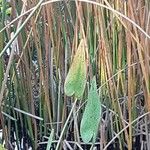
Sagittaria lancifolia
Lance-leaf arrowhead · Arrowhead · Lanceleaf Arrowhead · Scythefruit arrowhead · Bull-Tongue Arrowhead
Description
Source: leafsnapSagittaria lancifolia, the bulltongue arrowhead, is a perennial, monocot plant in the family Alismataceae, genus Sagittaria, with herbaceous growth patterns. It is native to the southeastern United States. It is known from every coastal state from Delaware to Texas. The species is also considered native to Mexico, Central America, the West Indies and northern South America. It has become naturalized on the Island of Java in Indonesia.A common name is "duck potato" because of the large potato-like corms which can form underground.
Care Guide
💧 Water Twice per week
Bull-tongue Arrowhead thrives in moist environments and can endure brief periods of flooding. For optimal growth, water it twice a week to maintain consistently moist soil. This aquatic perennial is ideal for rain gardens and pond edges, as it adapts well to variations in seasonal rainfall.
☀️ Light Full sun
Arrow-head grows best with plenty of sunlight. While it can tolerate being moved to locations with only moderate light, such changes may affect its health and growth. Since this plant comes from places with abundant light, too little sun can lead to reduced vigor and slower growth. Conversely, excessive sunshine can also cause the plant stress.
What are the sunlight requirements for Bull-tongue Arrowhead?
Bull-tongue Arrowhead thrives best in environments that provide full sun, which means it requires above 6 hours of direct sunlight daily. However, the plant is versatile and can also grow in partial sun, receiving about 3-6 hours of sunlight. It's essential to observe how sunlight moves through your garden to find spots that offer the right balance of light and shade, ensuring the plant's health and happiness.
How does sunlight affect the growth and health of Bull-tongue Arrowhead?
Sunlight plays a crucial role in the growth and health of Bull-tongue Arrowhead, promoting essential processes like photosynthesis. This plant enjoys ample sun exposure but can adapt to less sunny locations. However, overexposure to sunlight can dry out the plant, while insufficient light might hinder growth, affecting its overall health. This adaptation is reflective of its natural habitat, which typically receives abundant sunlight.
What should I do if natural sunlight is not sufficient for Bull-tongue Arrowhead?
If natural sunlight is insufficient, particularly during winter or in less sunny indoor spaces, artificial lighting can be a vital solution. It promotes healthy and faster growth. LED lights are recommended because they can provide specific wavelengths needed by the plant. The light intensity should be adjusted based on the plant's needs: 30-50W/sq ft for full sun plants, 20-30W/sq ft for partial sun plants, and 10-20W/sq ft for full shade plants. Ensure the artificial light source is placed 12-36 inches above the plant and is on for 8-12 hours per day to mimic natural daylight hours.
What are the signs of insufficient lighting in Bull-tongue Arrowhead?
Bull-tongue Arrowhead may show several symptoms if it's not receiving enough light. These include smaller new leaves, leggy or sparse growth, faster leaf drop, slower or no new growth, and lighter-colored or yellow leaves (chlorosis). Additionally, insufficient light can cause sunscald, leaf curling, wilting, and leaf scorching under extreme conditions. These symptoms indicate a need for better lighting conditions to support the plant's health.
How can I remedy the light conditions for my Bull-tongue Arrowhead?
To remedy light conditions for your Bull-tongue Arrowhead, gradually increase its exposure to sunlight. For indoor plants, move them to a sunnier spot or use artificial lighting, like desk lamps or professional grow lights, for at least 8 hours a day. For outdoor plants, move them to spots with better sunlight but avoid sudden changes to prevent sunburn. If light obstructions exist, such as trees, consider pruning to allow more sunlight through. For smaller plants, transplanting during the dormant period to a sunnier location can also help. Parts of the plant damaged by insufficient light may not recover, but new growth should be healthy with improved light conditions.
🌡️ Temperature 10–35°C
Arrow-head is native to climates with temperatures from 50 to 95 °F (10 to 35 ℃). It prefers moderate to warm conditions and adapts well in spring and summer, but during winter it may require a cooler indoor environment if temperatures fall below its preferred range.
What is the native environment and temperature range for Bull-tongue Arrowhead?
Bull-tongue Arrowhead, or Sagittaria lancifolia, is native to environments where temperatures typically range from 41 to 100 °F (5 to 38 °C). This plant is well-suited to fluctuating temperatures; however, it prefers moderate conditions that are neither too hot nor too cold. It displays strong cold resistance, making special frost protection measures generally unnecessary. Yet, in conditions where winter temperatures are expected to drop below -25°C, providing cold protection by covering the plant with soil or straw is advisable. To prepare for winter, watering the plant abundantly before the first freeze in autumn is recommended to keep the soil moist and prevent drought and water scarcity during the colder months.
How does Bull-tongue Arrowhead react to low temperatures?
Bull-tongue Arrowhead is notably cold-tolerant and thrives best when temperatures stay above 5°C. During winter, it is important to ensure that the plant is kept above -20°C. If temperatures fall below -25°C, while there may not be noticeable changes during the winter, the plant may experience a decrease in sprouting or potentially fail to sprout at all come springtime. The recommended solution in spring for any non-sprouting parts of the plant is to remove them to promote healthier growth.
What should be done if Bull-tongue Arrowhead is exposed to high temperatures?
In the summer, Bull-tongue Arrowhead should ideally be kept below 38°C. Exposure to temperatures exceeding 43°C can cause the leaves to lighten in color, curl, and become prone to sunburn; in severe cases, the plant might wilt and dry out completely. To mitigate these issues, trim away any sunburned or dried parts of the plant. Moving the plant to a shaded area, especially during the midday and afternoon sun, or using a shade cloth can provide necessary protection. Additionally, watering the plant in the morning and evening will help keep the soil moist and support the plant's health during high temperatures.
💨 Humidity
🪴 Soil
🌱 Fertilizer
🪴 Pot & Repot
✂️ Pruning
The Bull-tongue Arrowhead, known for its lance-shaped leaves, thrives in wetland environments. To maintain its health and appearance, prune the plant in early to late spring to remove dead foliage and improve airflow. After the flowers bloom, trim the flowering stems to encourage more blooms. Remember to clean your tools to prevent the spread of disease. Regular pruning promotes healthy growth and helps manage the plant's size and shape.
🌿 Propagating
🐛 Diseases & pets
☠️ Toxicity
Characteristics
- Plant Type
- Herb
- Life Cycle
- Perennial
- Genus
- Sagittaria
- Family
- Alismataceae
- Hardiness Zone
- 6-9
- Mature Height
- 20 cm to 76 cm
- Mature Spread
- 91 cm
- Leaf Color
- Green
- Leaf Type
- Deciduous
- Flower Color
- White
- Flower Size
- 2.03 cm to 2.54 cm
- Bloom Time
- Summer, Early fall
- Planting Time
- Spring, Summer
- Harvest Time
- Late summer, Fall
- Native Area
- Turkey, Austria, Sweden, Slovakia, Montenegro, Croatia, Slovenia, Belarus, Russia, Iraq, Germany, Estonia, Romania, Latvia, Belgium, Netherlands, France, Portugal, Czech Republic, Bulgaria, Armenia, Poland, Laos, Greece, Ukraine, Serbia, China, Lithuania, Norway, Italy, Kazakhstan, Spain, Switzerland, Denmark, Myanmar, Finland, Albania, Ireland, United Kingdom, Hungary, Azerbaijan, Thailand