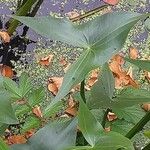
Sagittaria sagittifolia
Arrowhead · Old World arrowhead · Hawaii arrowhead · Water archer · Common arrowhead
Description
Source: leafsnapSagittaria sagittifolia (also called arrowhead due to the shape of its leaves) is a flowering plant in the family Alismataceae, native to wetlands most of Europe from Ireland and Portugal to Finland and Bulgaria, and in Russia, Ukraine, Siberia, Japan, Turkey, China, India, Australia, Vietnam and the Caucasus. It is also cultivated as a food crop in some other countries. In Britain it is the only native Sagittaria. Sagittaria sagittifolia is a herbaceous perennial plant, growing in water from 10–50 cm deep. The leaves above water are arrowhead-shaped, the leaf blade 15–25 cm long and 10–22 cm broad, on a long petiole holding the leaf up to 45 cm above water level. The plant also has narrow linear submerged leaves, up to 80 cm long and 2 cm broad. The flowers are 2-2.5 cm broad, with three small sepals and three white petals, and numerous purple stamens.
Care Guide
💧 Water
Arrow-head plants thrive in wetland habitats, where they prefer high moisture levels and can tolerate brief periods of flooding. They require consistent hydration, with weekly watering being necessary to maintain their health. As an aquatic perennial, the arrow-head benefits from natural rainfall, which supports its growth cycle and helps maintain the optimal soil moisture it needs.
How should I water my Arrow-head plant?
To properly water the Arrow-head plant, it is recommended to use filtered water at room temperature. Tap water may contain harmful particles, so filtered water is preferred. The water should be at room temperature or slightly warmer because the plant is native to warm environments and cold water can be a shock to its system. Additionally, avoid watering the plant from above as it can cause issues with the foliage. Instead, apply the filtered room temperature water directly to the soil until it is fully saturated. This helps moisten the roots and allows them to spread and gather the necessary nutrients.
What should I do if I give my Arrow-head plant too much water or too little water?
Both overwatering and underwatering can harm your Arrow-head plant, but overwatering is more commonly seen. When the plant receives excess water, its stems and leaves may droop and turn yellow. Overwatering for a long time can also cause diseases like root rot, mold, and mildew, which can be fatal for the plant. Underwatering is less likely for the Arrow-head plant because it can tolerate drought to some extent. However, there is still a possibility of underwatering, which can result in brittle and brown leaves. It is crucial to recognize the signs of overwatering early when caring for your Arrow-head plant. Some diseases caused by overwatering, like root rot, may become irreversible if not addressed promptly. If you observe early signs of overwatering, immediately reduce watering frequency. Additionally, assess the soil quality where your Arrow-head plant grows. If the soil does not drain well, replace it with a loose and well-draining potting mix. Conversely, if you notice signs of underwatering, simply increase your watering schedule until the signs improve.
How frequently should I water my Arrow-head plant?
If your Arrow-head plant is in a pot, the best way to determine if it needs water is by sticking your finger into the soil. If the top two to three inches of soil feel dry, it's time to water it. If you have an Arrow-head plant growing outdoors in the ground, you can use a similar method to test the soil. When the top few inches of soil have dried out, it's time to water. During the spring and early fall, you'll likely need to water your plant about once a week using this method. However, during extremely hot weather, you may need to increase watering to twice a week or more. It's worth noting that mature, well-established Arrow-head plants can tolerate periods of drought well.
How much water does my Arrow-head plant need?
To properly water your Arrow-head plant, don't hold back on the amount of water you give it. Wait until the top few inches of soil are dry, and then give it a good, deep watering. Make sure the water completely saturates the soil. You'll know you've added enough water when you see excess water draining out of the bottom of the pot. If you don't see any water draining, you likely haven't watered enough. However, be careful not to let water collect in the soil, as this can harm the plant. On the other hand, if water isn't draining properly, it could mean the soil isn't draining well, which isn't good for the plant's health. If the plant is outside, it should receive about 1 inch of rain per week, which will be enough.
How do I water my Arrow-head plant at different stages of growth?
The water needs of the Arrow-head can vary depending on its growth stages. In the first few years of its life or after being transplanted, it requires more water than usual. During these stages, the Arrow-head focuses on developing new roots to support future growth, so they need extra moisture. However, as the plant matures, it will require less water. Another stage that requires increased watering is during the bloom period when the flower development utilizes a significant amount of moisture.
☀️ Light Full sun
Arrow-head grows best with plenty of sunlight. While it can tolerate being moved to locations with only moderate light, such changes may affect its health and growth. Since this plant comes from places with abundant light, too little sun can lead to reduced vigor and slower growth. Conversely, excessive sunshine can also cause the plant stress.
What are the sunlight requirements for the Arrow-head plant?
The Arrow-head plant thrives best in locations that receive a generous amount of sunlight, needing more than 6 hours of sunlight for optimal growth (full sun), though it can survive in partial sun, which is about 3-6 hours of sunlight. However, both insufficient and excessive sunlight can affect the plant's health, growth rates, and vitality. It's crucial to watch how sunlight moves through your garden and choose locations that offer a balance of light and shade, ensuring the plant's happiness.
Can Arrow-head plants grow under artificial lighting?
Yes, Arrow-head plants can grow under artificial lighting, making it an ideal solution for indoor environments where natural sunlight is insufficient, especially during winter or in less sunny spaces. LED lights are recommended as they can be customized to provide the specific wavelengths of light plants need. Full sun plants require 30-50W/sq ft, partial sun plants need 20-30W/sq ft, and full shade plants require 10-20W/sq ft of artificial light. The light source should be placed 12-36 inches above the plant and should mimic natural daylight hours, meaning most plants will need 8-12 hours of artificial light per day.
What are the symptoms of insufficient light exposure for Arrow-head plants?
Symptoms of insufficient light for Arrow-head plants include new leaves growing smaller than previous ones, elongated spaces between leaves or stems leading to a leggy or sparse appearance, early leaf drop to conserve resources, slower or halted growth as the plant enters survival mode, lighter-colored new leaves indicating a lack of chlorophyll, and symptoms of overexposure like chlorosis, sunscald, leaf curling, wilting, and leaf scorching. These symptoms indicate the plant is not receiving the optimal light conditions needed for healthy growth.
How can I adjust the lighting conditions for my Arrow-head plant?
To adjust lighting conditions for your Arrow-head plant, gradually move it to a location with sufficient sunlight, allowing the plant to adapt to higher light levels. For indoor plants, consider moving them to a south-facing window or implementing artificial lights, such as desk lamps or professional grow lights, ensuring they receive at least 6 hours of direct sunlight or artificial light. Outdoors, avoid sudden changes in light exposure to prevent sunburn. If necessary, prune nearby trees to reduce shade obstructions or transplant smaller plants to sunnier spots, ensuring good sunlight penetration and health of the plant.
🌡️ Temperature 10–35°C
Arrow-head is native to climates with temperatures from 50 to 95 °F (10 to 35 ℃). It prefers moderate to warm conditions and adapts well in spring and summer, but during winter it may require a cooler indoor environment if temperatures fall below its preferred range.
What is the native climate for Arrow-head?
Arrow-head, with its botanical name Sagittaria sagittifolia, is native to climates that range between 50 to 95 °F (10 to 35 °C). It flourishes in moderate to warm temperatures, making it well-suited for spring and summer environments. During winter, if temperatures drop below its preferred range, moving it to a cooler indoor setting might be necessary to keep it thriving. Arrow-head has a notable cold resistance, meaning special frost protection measures are typically not required throughout the winter months. Nonetheless, in locations where winter temperatures are expected to plummet below -25°C, providing some form of cold protection is wise. This can be done by covering the plant with insulating materials like soil or straw, and by watering it abundantly before the first freeze of autumn to ensure the soil is moist and ready to enter a frozen state, helping prevent drought and water scarcity for the plant during the colder months.
How does Arrow-head respond to low temperatures?
Arrow-head is notably cold-tolerant, performing best when the temperature stays above 10°C. Throughout the winter season, it's advised to keep the temperature above -15°C to ensure the plant remains healthy. In cases where the temperature drops below -25°C, Arrow-head may not exhibit noticeable changes during the winter itself; however, a decrease in sprouting or a complete lack thereof might be observed come spring. To address this, any parts of the plant that have failed to sprout in spring should be removed, allowing for the healthy parts of the plant to thrive and grow.
How does Arrow-head react to high temperatures?
During the warmer months, keeping Arrow-head's surrounding temperature below 35°C is essential for its health. Should temperatures soar above 38°C, various stress signs may manifest, including leaves becoming lighter in color, curling, becoming susceptible to sunburn, and in severe cases, the entire plant wilting and drying up. To mitigate these issues, it's recommended to trim away any sunburned or dried-up parts of the plant, relocate it to a shaded area away from the midday and afternoon sun, or use a shade cloth for protection. Additionally, watering the plant during the cooler parts of the day, specifically in the morning and evening, will help maintain soil moisture and support the plant's well-being in high temperatures.
💨 Humidity
🪴 Soil
🌱 Fertilizer
Why should I put fertilizer on my Arrow-head plant?
Fertilization plays a crucial role in the growth of the Arrow-head and other plants as it provides necessary nutrients for both above and below ground development. Although Arrow-heads have relatively low fertilization needs, periodic fertilization can greatly benefit the plant, aiding its survival and promoting the production of long-lasting, beautiful flowers. Therefore, those wanting to enhance the appearance of their Arrow-head should make sure to fertilize it on an annual basis.
When should I fertilize my Arrow-head plant?
For the best results, it is recommended to fertilize an Arrow-head plant in late winter to early spring. This is the period when the plant comes out of its dormant phase and starts growing actively. Fertilizing during this time promotes healthy growth and helps the plant start the season off well. Although fertilizing in early spring is most beneficial, it is also possible to fertilize in the fall. However, it is not advisable to feed the plant during summer or winter.
When is it not a good idea to add fertilizer to my Arrow-head plant?
To properly fertilize your Arrow-head plant, it is recommended to only do so in late winter or early spring. This is because the plant has low fertilization needs and a single feeding during this time is sufficient. Overfertilization can be a problem if you continue to fertilize throughout spring, summer, and fall. However, if you missed fertilizing in spring, it is acceptable to feed the plant in the fall. It is important to note that there is no need to fertilize the plant during the winter when it is in a dormant phase and not actively growing.
What kind of fertilizer does my Arrow-head plant require?
When choosing a fertilizer for your Arrow-head plant, any general-purpose fertilizer with the main nutrients will work well. However, there are specific nutrient blends that can be even more beneficial. Many gardeners believe that a higher amount of phosphorus can result in stronger roots and better flowers. Since Arrow-head is a flowering plant, using a phosphorus-rich fertilizer may be the best approach. Granular or liquid fertilizers can be used as long as they contain plenty of nutrients. Aside from manufactured fertilizers, you can also improve the soil for your Arrow-head plant using organic methods such as compost and manure. These materials can greatly contribute to creating a healthy growing medium for your plant.
How should I fertilize my Arrow-head plant?
The most common way to fertilize an Arrow-head plant is by applying granular or pellet fertilizer to the soil around it. It's important to remember that the best time to fertilize is when the plant is transitioning from its winter dormant phase to a phase of active growth. In early spring, wait for the plant to start sprouting shoots through the soil before applying the fertilizer. Alternatively, some people prefer using liquid fertilizer instead of granular. If you choose this option, dilute the fertilizer with water before applying it. Regardless of the type of fertilizer, it's always a good idea to moisten the soil before, during, and after application.
🪴 Pot & Repot
✂️ Pruning
The arrow-head plant is characterized by its arrow-shaped leaves and delicate white flowers. To ensure healthy growth and maintain its aesthetic appeal, it's important to prune the plant between early and late spring. During this time, remove any dead leaves, thin out overcrowded areas, and trim off spent blooms. These steps will not only promote healthier growth and improve air circulation but also help prevent disease.
🌿 Propagating
🐛 Diseases & pets
☠️ Toxicity
Characteristics
- Plant Type
- Herb
- Life Cycle
- Perennial
- Genus
- Sagittaria
- Family
- Alismataceae
- Hardiness Zone
- 6-9
- Mature Height
- 20 cm to 76 cm
- Mature Spread
- 91 cm
- Leaf Color
- Green
- Leaf Type
- Deciduous
- Flower Color
- White
- Flower Size
- 2.03 cm to 2.54 cm
- Bloom Time
- Summer, Early fall
- Planting Time
- Spring, Summer
- Harvest Time
- Late summer, Fall
- Native Area
- Turkey, Austria, Sweden, Slovakia, Montenegro, Croatia, Slovenia, Belarus, Russia, Iraq, Germany, Estonia, Romania, Latvia, Belgium, Netherlands, France, Portugal, Czech Republic, Bulgaria, Armenia, Poland, Laos, Greece, Ukraine, Serbia, China, Lithuania, Norway, Italy, Kazakhstan, Spain, Switzerland, Denmark, Myanmar, Finland, Albania, Ireland, United Kingdom, Hungary, Azerbaijan, Thailand