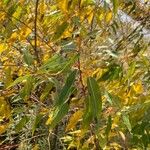
Salix amygdaloides
Peach-leaf willow · Peachleaf willow · Peach-leaved Willow
Description
Source: leafsnapSalix amygdaloides, commonly known as the peachleaf willow, is a deciduous tree species native to North America. As a member of the willow family, it can grow up to 30 feet tall with a spread of up to 20 feet. The tree has an upright growth habit featuring an irregular crown and slender branches that are covered in smooth gray bark. The leaves of Salix amygdaloides are long and narrow, resembling those of peach trees, which is why it is commonly named the peachleaf willow. These leaves are typically green but turn yellow in the fall before dropping off for winter dormancy. In early spring, before the leaves emerge, the tree produces small yellow-green flowers. These flowers develop into small capsules containing numerous tiny seeds that are dispersed by wind or water. Salix amygdaloides thrives in moist soils and is commonly found along streams, rivers, wetlands, or other areas with high water tables. While it is tolerant of drought conditions once established, it may suffer from leaf scorch during prolonged dry spells. The wood from Salix amygdaloides has various practical uses, including basket weaving, furniture making, and fuelwood due to its flexibility and durability. Overall, Salix amygdaloides is an attractive ornamental tree species that provides habitat for wildlife such as birds while also serving important ecological functions, such as erosion control along waterways.
Care Guide
💧 Water Every 7 days
The Peach-Leaved Willow, native to riparian zones, thrives in environments with consistent moisture and humidity. While it has moderate drought tolerance, it grows best with adequate soil moisture but should not be waterlogged. For optimal growth, water it every three weeks. This plant is an excellent choice for rain gardens, as it benefits from natural rainfall in outdoor settings.
☀️ Light Full sun
Peach-Leaved Willow grows best with abundant light but can cope with lower light conditions. Native to areas that receive plentiful daylight, they develop vigorously and tolerate reduced light quite well. Both excessive and inadequate light can harm their health. Their light needs can vary at different stages of growth.
What are the sun requirements for Peach-Leaved Willow?
Peach-Leaved Willow requires a diverse range of sun exposure to thrive. Full sun exposure means the plant should receive above 6 hours of sunlight daily, while partial sun exposure indicates about 3-6 hours of sunlight each day. It's essential to observe the movement of sunlight through your garden over the day to find spots that provide an optimal balance of light and shade, ensuring the plant's health and happiness.
How essential is light exposure for Peach-Leaved Willow's growth?
Light exposure is crucial for the Peach-Leaved Willow, which thrives under abundant sunlight but can adapt to lesser light conditions. Originating from areas with substantial daily light access, these plants exhibit healthy growth when they receive enough light. Excessive or inadequate light may negatively affect their health. It's noteworthy that different growth stages of the Peach-Leaved Willow may have varying light requirements.
How can artificial lighting be utilized for Peach-Leaved Willow?
When natural sunlight is not sufficient, especially during winter or in less sunny spaces, artificial lighting becomes essential for Peach-Leaved Willow's growth. Indoor plants can flourish under artificial light, which can be regulated to provide necessary wavelengths. LED lights are recommended as they can be adjusted to fulfill plant needs. The intensity should range from 10-50W/sq ft depending on the plant's natural sunlight needs, and lights should be placed 12-36 inches above the plant for 8-12 hours per day to simulate natural daylight duration.
What are the symptoms of inadequate or excessive light exposure in Peach-Leaved Willow?
Symptoms of poor light conditions in Peach-Leaved Willow include smaller leaves, leggy growth, faster leaf drop, stalled growth, and pale new leaves. Conversely, excessive sunlight can cause chlorosis, sunscald, leaf curling, wilting, and leaf scorching. These signs indicate the plant's struggle with its light environment, either seeking to maximize insufficient light or protect itself from excessive exposure.
What solutions can alleviate Peach-Leaved Willow's light-related issues?
For indoor Peach-Leaved Willow facing light deficiencies, gradually increase sunlight exposure to at least 6 hours daily, using south-facing windows or artificial lights if necessary. Outdoors, incrementally relocate plants to sunnier areas, being mindful of sudden changes that could cause sunburn. If sunlight is blocked by physical obstructions, consider pruning or transplanting to more suitable locations. Remember, affected parts may not recover, but new growth will be healthy with better light conditions.
🌡️ Temperature 5–32.2°C
Peach-Leaved Willow is indigenous to temperate areas and does best in temperatures from 41 to 90 °F (5 to 32 ℃). To keep them healthy through seasonal changes, it is advisable to adjust temperatures as appropriate to meet their preference for cooler conditions.
What is the native environment of Peach-Leaved Willow?
Peach-Leaved Willow, or Salix amygdaloides, is native to temperate regions where the temperature ranges from 41 to 90 °F (5 to 32 °C). It thrives in cooler climates within this temperature range and has adapted to handle changing seasons. To ensure their health, it's important to adjust their environment to meet their cool temperature needs, especially during seasonal changes.
Does Peach-Leaved Willow need frost protection during winter?
Peach-Leaved Willow possesses strong cold resistance and generally does not require special frost protection measures in winter. However, in conditions where winter temperatures are expected to plummet below -30°C, it's crucial to provide cold protection to prevent damage. Wrapping the trunk and branches with non-woven fabric or cloth can offer sufficient protection. Additionally, watering the plant abundantly before the first freeze of autumn to keep the soil moist is recommended. This technique aids in preventing drought and water scarcity for the plant during the winter and early spring months.
How does low temperature affect Peach-Leaved Willow?
Peach-Leaved Willow is cold-tolerant, ideally thriving in temperatures above 5°C and can generally withstand winters well above -25°C. However, when temperatures fall below -30°C, the plant may not show immediate distress, but its branches can become brittle and dry by spring, leading to the absence of new shoots. To mitigate this, pruning away any dead branches that have failed to produce new leaves in the spring is advisable.
How does high temperature affect Peach-Leaved Willow?
During the summer, it's crucial to keep the Peach-Leaved Willow below 32°C to avoid heat stress. Temperatures exceeding 35°C can result in lighter leaf colors, dry and withered leaf tips, and increase the plant's susceptibility to sunburn. To protect the plant from such conditions, trimming the sunburned and dried parts, relocating it to a shaded area, or using a shade cloth to deflect direct sunlight, especially during midday and afternoon, is recommended. Ensuring the soil remains moist by watering in the morning and evening can also help alleviate stress from high temperatures.
💨 Humidity
🪴 Soil 6-7
🌱 Fertilizer
Fertilize your Peach‑Leaved Willow in early spring to encourage healthy growth. Regular feeding improves its overall health, producing vigorous growth, better tolerance of harsh conditions, and increased resistance to diseases and pests. Keep a set fertilization schedule for your Peach‑Leaved Willow to preserve foliage that is vibrant in color and lush in appearance.
🪴 Pot & Repot
✂️ Pruning
The Peach-Leaved Willow is known for its lance-shaped leaves and rapid growth. To maintain its size and health, it's important to prune the tree in early spring. This practice helps remove dead branches and improves air circulation, which reduces stress and promotes healthy development. Pruning also helps maintain the tree's shape and lowers the risk of pests, resulting in better overall health and appearance.
🌿 Propagating
🐛 Diseases & pets
☠️ Toxicity
Characteristics
- Plant Type
- Tree, Shrub
- Life Cycle
- Perennial
- Genus
- Salix
- Family
- Salicaceae
- Hardiness Zone
- 4-8
- Mature Height
- 3.96 m to 19.81 m
- Mature Spread
- 10.06 m
- Leaf Color
- Green, Blue
- Leaf Type
- Deciduous
- Flower Color
- Yellow, White, Green
- Flower Size
- 2.54 cm
- Bloom Time
- Mid spring, Late spring, Early summer
- Planting Time
- Spring, Summer, Autumn
- Harvest Time
- Early summer, Mid summer
- Native Area
- Mexico