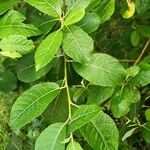
Salix appendiculata
Balkan willow · Large-leaved willow · Pussy Willow · Dawn Willow
Description
Source: leafsnapSalix appendiculata is a plant from the willow genus (Salix). They can be found in France, Italy, Central and Eastern Europe, and on the Balkan Peninsula.
Care Guide
💧 Water
The Balkan willow thrives in moist environments, requiring consistent hydration and soil that remains evenly moist. It has a low tolerance for drought conditions, so it’s important to water it twice a week to keep it healthy. Usually grown outdoors, the Balkan willow is a deciduous tree, meaning it sheds its leaves annually. This shedding affects its watering needs during its dormant period.
☀️ Light Full sun
The Balkan willow comes from open habitats, like sunny meadows and forest edges, that supply abundant light. It does best in full sun but can also handle partial sun, adjusting well to various light conditions.
What are the sunlight requirements for a Balkan Willow (Salix appendiculata)?
The Balkan Willow (Salix appendiculata) thrives under specific sunlight conditions to ensure its happiness and health. It requires 'Full sun' exposure, which means it should receive above 6 hours of sunlight daily. However, it can also grow under 'Partial sun' conditions, requiring about 3-6 hours of sunlight. It's important to observe the movement of sunlight through your garden to choose locations that offer the right balance of light and shade for your plants.
🌡️ Temperature 5–32.2°C
Balkan willow shows strong adaptability to a range of climatic conditions, from blazing summers to cold winters. However, it does have a preferred temperature window for growth. If temperatures rise too high, the plant is vulnerable to heat and humidity stress, which can lead to its death. In areas where temperatures approach the lower limit of its cold tolerance, it is important to provide insulation to protect the plant.
What is Balkan willow?
Balkan willow, scientifically known as Salix appendiculata, is a species of willow. This name specifies a particular type of willow tree or shrub belonging to the genus Salix. Despite the provided information being quite sparse, the botanical designation gives insight into its taxonomy and potentially its ecology, hinting at its native range or habitat preferences, presumably in the Balkan region or adjacent areas.
💨 Humidity
🪴 Soil 6-8
🌱 Fertilizer
To encourage healthy growth, fertilize your Balkan willow in early spring. Regular fertilization improves overall health, producing vigorous growth, greater resilience to harsh conditions, and better resistance to pests and diseases. Maintain a consistent fertilization schedule for your Balkan willow to ensure vibrant foliage with deep color and a lush appearance.
🪴 Pot & Repot
✂️ Pruning
The Balkan willow, with its slender branches and vibrant foliage, thrives when carefully pruned. Effective pruning techniques include thinning to improve air circulation and shaping by removing dead wood. The best time to prune is in early spring, which promotes healthy growth. Making clean cuts helps prevent disease and encourages proper healing.
🌿 Propagating
🐛 Diseases & pets
☠️ Toxicity
Characteristics
- Plant Type
- Shrub
- Life Cycle
- Perennial
- Genus
- Salix
- Family
- Salicaceae
- Hardiness Zone
- 4-8
- Mature Height
- 3.05 m to 6.1 m
- Mature Spread
- 2.13 m to 3.96 m
- Leaf Color
- Green, Dark Green
- Leaf Type
- Deciduous
- Flower Size
- 2.03 cm to 4.06 cm
- Bloom Time
- Early spring, Mid spring
- Planting Time
- Spring, Summer
- Harvest Time
- Late spring, Early summer
- Native Area
- Germany, Austria, Italy, Switzerland, Czech Republic, Serbia, Montenegro, Greece, Croatia, Slovenia, France