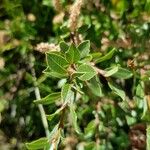
Salix foetida
Plum-leaved willow
Description
Source: wikipedia (CC BY-SA)Salix foetida, the fishy willow, is a species of flowering plant in the family Salicaceae, native to the Alps, Pyrenees, and central Apennine Mountains of Europe. It is found only on continuously moist scree up to 2,600 m (8,500 ft) above sea level.
Care Guide
💧 Water
☀️ Light Full sun
Creeping willow comes from open habitats, such as sunny meadows and forest margins, that provide abundant light. It flourishes in Full Sun but can also endure Partial Sun, adapting well to different sunlight levels.
🌡️ Temperature 0–32.2°C
Creeping willow shows strong adaptability to a range of climates, from hot summers to cold winters. Nevertheless, it has a specific temperature range in which it grows best. If temperatures become too high, the plant can suffer heat and humidity stress, which may cause it to die. In areas where temperatures approach the lower limit of its cold tolerance, it is important to use insulation to protect the plant.
💨 Humidity
🪴 Soil 6-7
🌱 Fertilizer
Fertilize your Creeping willow in early spring to encourage healthy growth. Regular fertilization boosts overall health, producing vigorous growth, greater resilience to harsh conditions, and improved resistance to pests and diseases. Keep a consistent fertilization schedule for your Creeping willow to ensure foliage that is vibrant, deeply colored, and lush in appearance.
🪴 Pot & Repot
✂️ Pruning
🌿 Propagating
🐛 Diseases & pets
☠️ Toxicity
Characteristics
- Plant Type
- Shrub
- Life Cycle
- Perennial
- Genus
- Salix
- Family
- Salicaceae
- Hardiness Zone
- 2-7
- Mature Height
- 61 cm
- Mature Spread
- 1.52 m
- Leaf Color
- Light Green, Gray
- Leaf Type
- Semi-evergreen
- Flower Size
- 1.02 cm to 2.03 cm
- Bloom Time
- Early spring, Mid spring
- Planting Time
- Spring, Summer, Autumn
- Harvest Time
- Late spring, Early summer