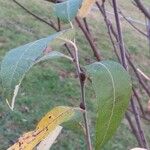
Salix hookeriana
Hooker's willow · Dune willow · Coastal willow · Hooker willow
Description
Source: leafsnapSalix hookeriana is a species of willow known by the common names dune willow, coastal willow, and Hooker's willow.
Care Guide
💧 Water
Dune willow thrives in environments with high humidity and can tolerate salt spray. It prefers consistent moisture, yet is able to survive periods of drought. To prevent over-saturation, water it every three weeks. When grown outdoors, use mulch to help retain moisture during the growing season.
☀️ Light Full sun
The dune willow flourishes when exposed to plenty of sunlight. A lack or surplus of light does not negatively affect its health or growth. It is originally found in areas characterized by abundant light. However, too much or too little light does not harm the plant, because it has evolved adaptability.
What are the sunlight requirements for Dune Willow?
The Dune Willow (Salix hookeriana) thrives under ample exposure to sunlight, showing resilience against both a lack or abundance of it due to its adaptability, as noted in its initial flourishing in light-abundant locations. However, precise requirements include full sun, described as above 6 hours of sunlight, and partial sun, about 3-6 hours of sunlight. Observing how sunlight moves through your garden to find the perfect balance of light and shade is advised to ensure optimal plant health.
Are artificial lights beneficial for indoor Dune Willow plants?
Yes, artificial lighting can be crucial for Dune Willow plants grown indoors, especially when natural sunlight is insufficient, such as in winter or in less sunny spaces. Optimal growth can be supported by adequate lighting, with LED lights being a popular customizable choice to meet the specific light wavelength needs of plants. For full sun plants, 30-50W/sq ft is recommended; for partial sun plants, 20-30W/sq ft; and for full shade plants, 10-20W/sq ft. The light source should be placed 12-36 inches above the plant and kept on for 8-12 hours per day to mimic natural daylight hours.
What are the symptoms of insufficient or excessive sunlight in Dune Willow?
Dune Willow may exhibit symptoms such as smaller new leaves, leggy or sparse growth, faster leaf drop, slower or no new growth, lighter-colored new leaves, chlorosis (leaves turning yellow), sunscald, leaf curling, wilting, and leaf scorching. These symptoms signify either insufficient sunlight leading to less chlorophyll and essential nutrients, or excessive sunlight causing damage through intense exposure. Both conditions impact the plant's photosynthetic capacity and overall health negatively.
How can I address sunlight-related issues in Dune Willow?
Addressing sunlight issues for Dune Willow involves several strategies. Indoors, gradually moving the plant to sunnier spots or using artificial light such as desk lamps or professional grow lights can ensure at least 6 hours of direct sunlight daily. Outdoors, adapting the plant to sunnier locations gradually helps prevent sunburn. Minimizing sunlight obstructions, pruning trees to allow light through, or transplanting during the plant's dormant period to a location with ample sunlight and good drainage are effective outdoor solutions. Note that parts of the plant affected by insufficient sunlight may not recover, but new growth post-adjustment will be healthy.
🌡️ Temperature 5–35°C
Dune willow naturally occurs in areas where temperatures range from 41 to 95 °F (5 to 35 ℃). It favors moderate to warm conditions because these maximize its growth. In colder or hotter seasons, it may need temperature adjustments to maintain healthy development.
What is the native temperature range for Dune Willow?
The Dune Willow, or Salix hookeriana, thrives in regions with a temperature range of 41 to 95 °F (5 to 35 °C). It prefers moderate to warm temperatures to optimize growth. These conditions allow the plant to develop healthily, though adjustments may be needed during cooler or warmer seasons to maintain this suitable environment.
Does Dune Willow require special frost protection during winter?
Dune Willow possesses a strong resistance to cold, generally eliminating the need for special frost protection measures during winter. However, in cases where winter temperatures are expected to drop below -25°C, it's important to protect the plant from the cold by wrapping the trunk and branches with insulating materials like non-woven fabric or cloth. Additionally, watering the plant abundantly before the first freeze is recommended to keep the soil moist, which helps prevent drought and water scarcity during winter and early spring.
How does low temperature affect Dune Willow, and what are the solutions?
Dune Willow is cold-tolerant, ideally kept above 5°C during winter, but should remain above -20°C. If temperatures fall below -25°C, you might not notice immediate changes, but by spring, the branches can become brittle and dry, without new shoots emerging. The solution for these symptoms is to prune any dead branches in spring that have failed to produce new leaves, encouraging healthy new growth.
How does high temperature affect Dune Willow, and what are the solutions?
During summer, it's best to ensure Dune Willow's environment stays below 35°C. Exceeding 38°C can cause the leaves to lighten in color and the tips to become dry and withered, making the plant more prone to sunburn. Solutions include trimming sunburned and dried parts, relocating the plant to a shaded area during the midday and afternoon sun, or using a shade cloth. Additionally, watering the plant in the morning and evening will help maintain soil moisture.
💨 Humidity
🪴 Soil 6-8
🌱 Fertilizer
To encourage healthy growth, fertilize your Dune willow in early spring. Regular fertilization boosts its overall health, leading to vigorous growth, greater resilience to tough conditions, and improved resistance to diseases and pests. Keep to a specific fertilization schedule for your Dune willow to ensure foliage that is vibrant, deeply colored, and lush.
🪴 Pot & Repot
✂️ Pruning
The dune willow is a robust shrub that's perfect for coastal regions. It is known for its thick foliage and rapid growth. To maintain its health, prune the shrub in early spring by removing any dead branches and thinning out crowded areas. This promotes healthy growth. Always use clean, sharp tools when pruning to prevent disease and ensure the plant's long life.
🌿 Propagating
🐛 Diseases & pets
☠️ Toxicity
Characteristics
- Plant Type
- Tree, Shrub
- Life Cycle
- Perennial
- Genus
- Salix
- Family
- Salicaceae
- Hardiness Zone
- 5-9
- Mature Height
- 7.92 m
- Mature Spread
- 10.06 m
- Leaf Color
- Green
- Leaf Type
- Deciduous
- Flower Color
- Yellow, Green
- Flower Size
- 8.89 cm
- Bloom Time
- Early spring, Mid spring
- Planting Time
- Spring, Summer
- Harvest Time
- Late spring, Early summer