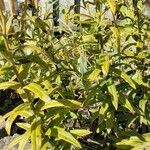
Salix humilis
Prairie willow · Grey Willow · Small Pussy Willow · Upland Willow
Description
Source: leafsnapSalix humilis, commonly known as the Prairie Willow or Dwarf Willow, is a deciduous shrub belonging to the Salicaceae family. This plant is native to North America and thrives in a variety of habitats, including prairies, savannas, and wetlands. Typically, the Prairie Willow grows up to 3 meters tall and spreads about 2 meters wide. It features slender branches adorned with narrow leaves that are green on top and pale underneath. The leaves measure roughly 5-10 cm in length and have serrated edges. In early spring, before the leaves appear, the plant produces small yellow flowers. These flowers bloom on catkins, which can grow up to 5 cm long. Salix humilis prefers moist soil but can withstand drought conditions once it is well established. It is also adaptable to various soil types, including clay soils. This shrub has several practical uses, notably in erosion control. Its extensive root system helps stabilize soil along riverbanks and other areas prone to erosion. Additionally, it provides food for wildlife; birds feed on its seeds, while rabbits consume its bark during the winter months when other food sources are scarce. Overall, Salix humilis is an attractive shrub with many benefits, making it an excellent addition to any garden or landscape project, especially for areas near waterways or wildlife habitats with limited winter food sources.
Care Guide
💧 Water Every 7 days
The prairie willow thrives in environments that mimic its natural wet-dry cycles. It typically needs watering every three weeks, although it can withstand occasional short droughts. This plant does particularly well outdoors and can adapt to different rainfall patterns. This adaptability makes it an excellent choice for temperate climates where natural rainfall helps meet its hydration needs.
☀️ Light Full sun
Prairie willow requires abundant sunlight to grow at its best and will do well when it receives it. It does, however, tolerate lower light levels to some extent. Its native habitat—the open prairies—also reflects its need for plenty of light. Both too little and too much light can hinder its growth and cause unhealthy development.
What are the sunlight requirements for Prairie Willow?
Prairie Willow (Salix humilis) thrives in full sunlight, requiring more than 6 hours of direct sunlight for optimal growth, but it can also manage in partial sun, with about 3-6 hours of sunlight. It's essential to watch the sunlight patterns in your garden to ensure that your plants get the right balance of light and shade, promoting their health and happiness. Originating from open prairies, Prairie Willow is accustomed to ample light exposure. However, it's important to avoid both overly limited and excessive light conditions, as they could hinder the plant's growth and lead to unhealthy development.
How does artificial lighting affect Prairie Willow growth?
In situations where natural sunlight is insufficient, especially during winter or in less sunny indoor locations, artificial lighting can significantly aid in the growth of Prairie Willow. Indoor plants require specific types of artificial light, such as LED lights, which can be tailored to provide the required wavelengths for optimal plant growth. The amount of artificial light needed varies: full sun plants need 30-50W/sq ft, partial sun plants need 20-30W/sq ft, and full shade plants need 10-20W/sq ft. The light source should be placed 12-36 inches above the plant, mimicking natural sunlight conditions, and most plants would benefit from 8-12 hours of light per day.
What are the key symptoms of light deficiency or excess in Prairie Willow?
Prairie Willow shows various symptoms when exposed to suboptimal lighting conditions. Light deficiency can lead to smaller new leaves, leggy or sparse growth, faster leaf drop, slower or halted growth, lighter-colored or irregular new leaves, indicating insufficient sunlight and nutrients. Conversely, excessive sunlight can cause chlorosis (leaves turning yellow due to chlorophyll breakdown), sunscald (damage from intense sunlight exposure), leaf curling (minimizing water loss), wilting (loss of turgor pressure), and leaf scorching (brown, dry edges on leaves), reflecting the plant's struggle with overexposure.
What are the solutions for addressing light-related issues in Prairie Willow?
For indoor Prairie Willow facing light deficiency, gradually moving the plant to a sunnier location, such as near a south-facing window, is recommended. This should provide at least 6 hours of direct sunlight daily. If moving the plant is not feasible, consider using artificial grow lights for at least 8 hours per day. For outdoor plants, it's crucial to adjust the plant's exposure to sunlight gradually to prevent sunburn. If sunlight obstruction is an issue, consider pruning or transplanting the plant during its dormant period to a location with better sunlight and drainage. Although parts of the plant affected by insufficient light may not recover, new growth should be healthy with improved light conditions.
🌡️ Temperature 5–25°C
Prairie willow originates from regions where temperatures typically range from 41 to 77 °F (5 to 25 ℃). It prefers moderate conditions, so avoid subjecting it to extreme heat or cold when gardening. Consider adjusting temperatures seasonally to optimize its growth.
What is the ideal temperature range for Prairie Willow?
Prairie Willow, or Salix humilis, is native to areas where temperatures typically range between 41 to 77 °F (5 to 25 °C). It thrives in moderate conditions and is highly cold-tolerant. It's important to avoid exposing the plant to extreme heat or cold for optimized growth. During winter, it does not require additional frost protection, but watering the plant generously before the first freeze can help maintain soil moisture and protect the plant during the colder months.
How does low temperature affect Prairie Willow and what can be done?
Prairie Willow is extremely cold-tolerant and can withstand winter temperatures above -30°C. However, if temperatures drop below this threshold, the branches may become brittle and dry, and during spring, no new shoots will emerge. To mitigate this, in spring, it's recommended to prune away any dead branches that have failed to produce new leaves, promoting healthier growth.
How does high temperature affect Prairie Willow and what solutions are available?
Prairie Willow struggles in high temperatures, especially when they exceed 25°C, leading to significant leaf drop or, in severe cases, the entire plant may wither and die. To help the plant cope, trim away sunburned and dried-up parts, relocate the plant to a shaded area or use a shade cloth to protect it from midday and afternoon sun. Additionally, watering the plant in the morning and evening can help keep the soil moist.
💨 Humidity
🪴 Soil 6-7
🌱 Fertilizer
To encourage healthy development, apply fertilizer to your Prairie willow in early spring. Consistent feeding improves overall health, leading to robust growth, better tolerance of harsh conditions, and increased resistance to pests and diseases. Stick to a defined fertilization routine for your Prairie willow to keep its foliage vivid, richly colored, and full.
🪴 Pot & Repot
✂️ Pruning
The prairie willow is a robust deciduous shrub known for its dense foliage. For optimal growth and flowering, prune any dead or overcrowded branches in early spring. Regular pruning helps to maintain its shape, prevents it from becoming too tall, and enhances its resilience, making the prairie willow easier to manage.
🌿 Propagating
🐛 Diseases & pets
☠️ Toxicity
Characteristics
- Plant Type
- Shrub
- Life Cycle
- Perennial
- Genus
- Salix
- Family
- Salicaceae
- Hardiness Zone
- 4-6
- Mature Height
- 0.3 m to 3.05 m
- Mature Spread
- 30 cm to 61 cm
- Leaf Color
- Green
- Leaf Type
- Deciduous
- Flower Color
- Yellow
- Flower Size
- 2.54 cm
- Bloom Time
- Late winter, Early spring
- Planting Time
- Spring
- Harvest Time
- Mid spring, Late spring