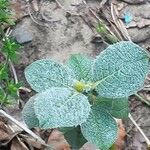
Salix lanata
Woolly willow · Northern Willow · Wooly Willow · Wooly Salix
Description
Source: leafsnapSalix lanata, commonly known as woolly willow or woolly-leaved willow, is a deciduous shrub in the Salicaceae family. Native to the Arctic and subarctic regions of Europe and Asia, this plant can grow up to 2 meters in height and has a dense, bushy structure with numerous branches. The leaves of Salix lanata are oval-shaped with serrated edges and can grow up to 10 cm in length. They are covered with dense white hairs, giving them a distinct woolly appearance. In early spring, the plant produces small yellowish-green flowers before the leaves emerge. Salix lanata prefers moist soils such as those found in bogs, wet meadows, or along riverbanks, but it can also tolerate drier conditions. Its extensive root system makes it particularly useful for erosion control, as it helps stabilize soil on slopes. The bark of Salix lanata has been used for centuries by indigenous people for its medicinal properties, including treating fever, providing pain relief, and reducing inflammation. Overall, Salix lanata is an attractive shrub that offers significant ecological benefits and holds cultural importance due to its medicinal uses.
🎭 Sorrow and grief
Care Guide
💧 Water Every 7 days
The woolly willow needs consistent watering, particularly for seedlings, which should be watered daily during the summer. While mature plants are more adaptable to both drought and water-logged conditions, they still require periodic watering. If the soil is dry, water the plants daily around 5 p.m.; however, refrain from watering if it has been raining, as the soil will already be moist.
☀️ Light Full sun
Goat willow grows best in areas that receive abundant sunlight throughout the day, preferring consistent sun exposure for optimal development. Like in its native habitat, it can tolerate moderate shade but performs best with plenty of sun. Too little or too much light can damage it, leading to problems such as chlorosis or scorched leaves.
How much sunlight does a Woolly willow (Salix lanata) need?
Woolly willow, or Salix lanata, requires specific sun exposure to thrive. For full sun exposure, the plant should receive above 6 hours of sunlight each day. If it is to be planted in partial sun, about 3-6 hours of sunlight is necessary. It's important to observe how sunlight moves through your garden throughout the day to ensure you pick spots that offer the perfect balance of light and shade. This careful selection will help ensure the health and happiness of your Woolly willow.
Are there any special warnings about sun exposure for Woolly willow plants?
Yes, when growing Woolly willow (Salix lanata), it's crucial to monitor the sunlight exposure carefully. The guiding advice is to watch how sunlight gracefully moves through your garden, allowing you to select locations that provide an ideal balance of light and shade. Choosing the right spot is essential for avoiding overexposure or underexposure to sunlight, thereby ensuring the plant’s wellness and growth.
🌡️ Temperature 5–32.2°C
Goat willow comes from areas with moderate climates, ideally between 41 and 89.6°F (5 to 32°C). For best growth, try to reproduce these conditions. Keep a close eye on seasonal temperature changes and make any necessary adjustments to maintain its health.
What is the botanical name of the Woolly willow?
The botanical name of the Woolly willow is Salix lanata.
💨 Humidity
🪴 Soil 6-7
🌱 Fertilizer
The timing of fertilizing Goat willow is important. Apply fertilizer in early spring and continue once a month through early summer. Fertilizer encourages attractive blooms and supplies energy during both dormant and active growth periods.
🪴 Pot & Repot
✂️ Pruning
The woolly willow is a hardy shrub ideal for cold climates, known for its distinctive woolly foliage. To care for this plant, prune it in early spring. Focus on removing dead wood and thinning out crowded branches to improve air circulation. Keep its natural shape to ensure the shrub remains vigorous and resilient. Always use sharp, clean tools for the best results.
🌿 Propagating
🐛 Diseases & pets
☠️ Toxicity
Characteristics
- Plant Type
- Shrub
- Life Cycle
- Perennial
- Genus
- Salix
- Family
- Salicaceae
- Hardiness Zone
- 4-8
- Mature Height
- 7.92 m to 13.11 m
- Mature Spread
- 7.92 m
- Leaf Color
- Green
- Leaf Type
- Deciduous
- Flower Color
- Yellow
- Flower Size
- 0.76 cm to 1.52 cm
- Bloom Time
- Early spring, Mid spring
- Planting Time
- Spring, Summer
- Harvest Time
- Late spring, Early summer, Mid summer
- Native Area
- Turkey, Sweden, Austria, Slovakia, Montenegro, Slovenia, Croatia, Belarus, Uzbekistan, Russia, Germany, Estonia, Koppen, South Korea, Latvia, Romania, Belgium, Netherlands, France, Czech Republic, Bulgaria, Armenia, Poland, Greece, Ukraine, Serbia, China, Lithuania, Norway, Italy, Spain, Switzerland, Denmark, Japan, Mongolia, Finland, Albania, Ireland, United Kingdom, Hungary, Azerbaijan