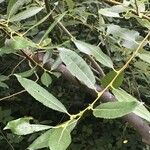
Salix prolixa
MacKenzie's willow · Mackenzie willow
Description
Source: leafsnapSalix prolixa is a species of willow known by the common name MacKenzie's willow. It is native to western North America from Alaska and north-western Canada to the high mountains of California and Utah. It grows in moist habitat such as riverbanks, springs, and marshes. It is a shrub growing 1 to 5 meters tall. The lance-shaped or pointed, oval leaves are up to 15 cm long, hairless, waxy on the undersides, and accompanied by wide stipules. The inflorescence is a catkin of flowers.
Care Guide
💧 Water
Mackenzie's willow requires consistent watering, especially in the summer when seedlings need daily moisture. While mature plants demonstrate some drought resistance, it's generally best to water them around 5 p.m. These willows usually tolerate excess water, so drainage is not typically necessary unless the soil becomes overly saturated during rainy periods.
☀️ Light Full sun
Mackenzie's willow comes from open habitats, like sunny meadows and forest margins, where plenty of light is available. It prefers Full Sun but can also tolerate Partial Sun, adapting well to different sunlight conditions.
What are the sunlight requirements for Mackenzie's willow?
Mackenzie's willow, or Salix prolixa, requires specific sunlight conditions to thrive. For full sun exposure, it needs above 6 hours of sunlight daily. If you're aiming for partial sun, about 3-6 hours of sunlight daily is necessary. It's important to observe the movement of sunlight through your garden carefully. Choosing locations that provide a balance of light and shade ensures the well-being of your Mackenzie's willow, keeping in mind its specific sunlight needs.
🌡️ Temperature 0–32.2°C
Mackenzie's willow shows strong adaptability to different climate conditions, from hot summers to cold winters. It still has an optimal temperature range for growth. If temperatures rise too high, the plant is susceptible to heat and humidity stress that can kill it. In areas where temperatures approach the lower limit of its cold tolerance, it is important to provide insulation to protect the plant.
What is the botanical name of Mackenzie's willow?
The botanical name of Mackenzie's willow is Salix prolixa. This distinguishes it from other willow species, providing a specific identity within the Salix genus.
💨 Humidity
🪴 Soil 6-8
🌱 Fertilizer
To encourage healthy growth, fertilize your Mackenzie's willow in early spring. Regular feeding improves overall health, producing robust growth, greater hardiness in challenging conditions, and enhanced resistance to pests and diseases. Keep a specific fertilization schedule for your Mackenzie's willow to maintain vibrant, deep-colored foliage and a lush appearance.
🪴 Pot & Repot
✂️ Pruning
To ensure your Mackenzie's willow thrives, perform annual pruning in early spring before new growth begins. Remove any damaged or crossing branches to improve air circulation and shape the tree, which enhances its vigor and manageability. Make sure to clean your tools to prevent disease, and use proper pruning techniques to maintain the tree's health and aesthetic appeal.
🌿 Propagating
🐛 Diseases & pets
☠️ Toxicity
Characteristics
- Plant Type
- Tree, Shrub
- Life Cycle
- Perennial
- Genus
- Salix
- Family
- Salicaceae
- Hardiness Zone
- 3-7
- Mature Height
- 3.05 m to 6.1 m
- Mature Spread
- 2.13 m to 3.96 m
- Leaf Color
- Green, Dark Green
- Leaf Type
- Deciduous
- Flower Color
- Yellow
- Flower Size
- 2.03 cm to 4.06 cm
- Bloom Time
- Early spring, Mid spring
- Planting Time
- Spring, Summer, Autumn
- Harvest Time
- Late spring, Early summer