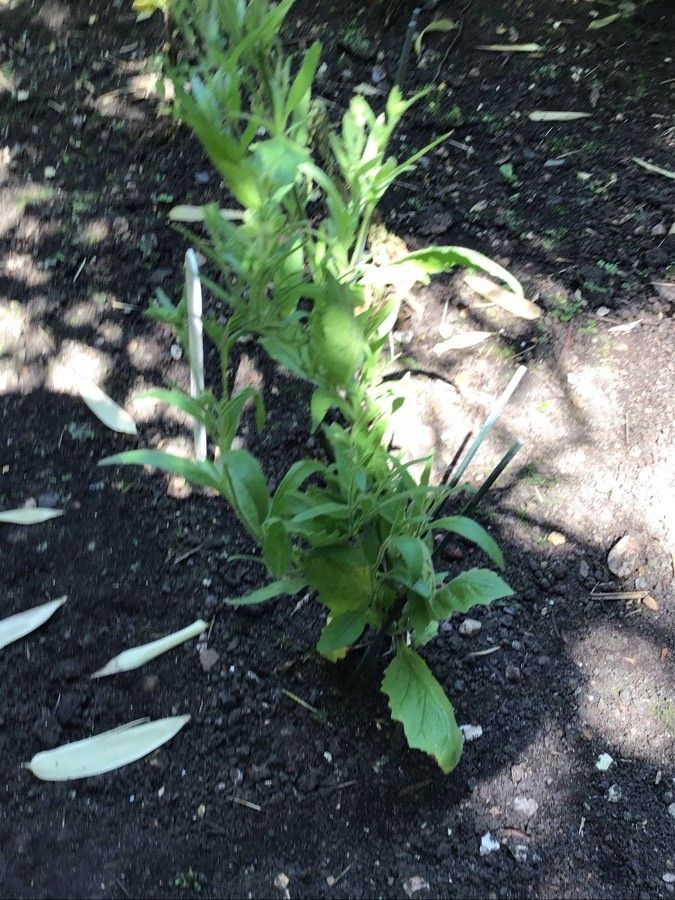
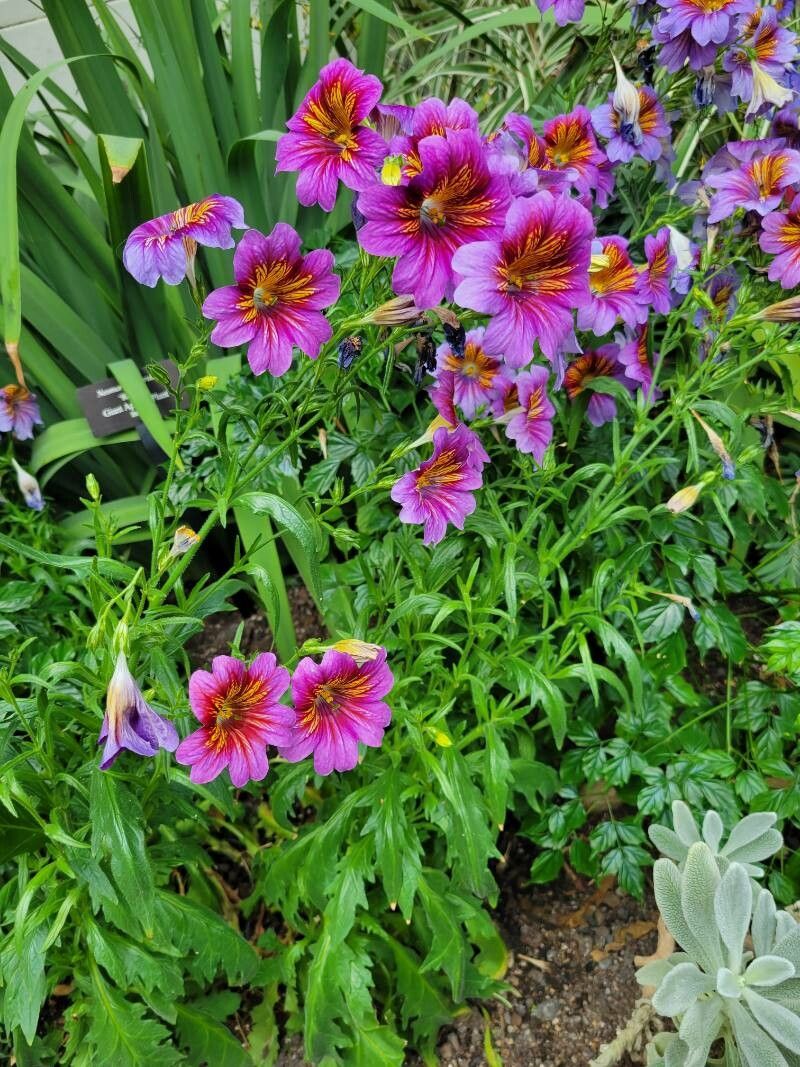
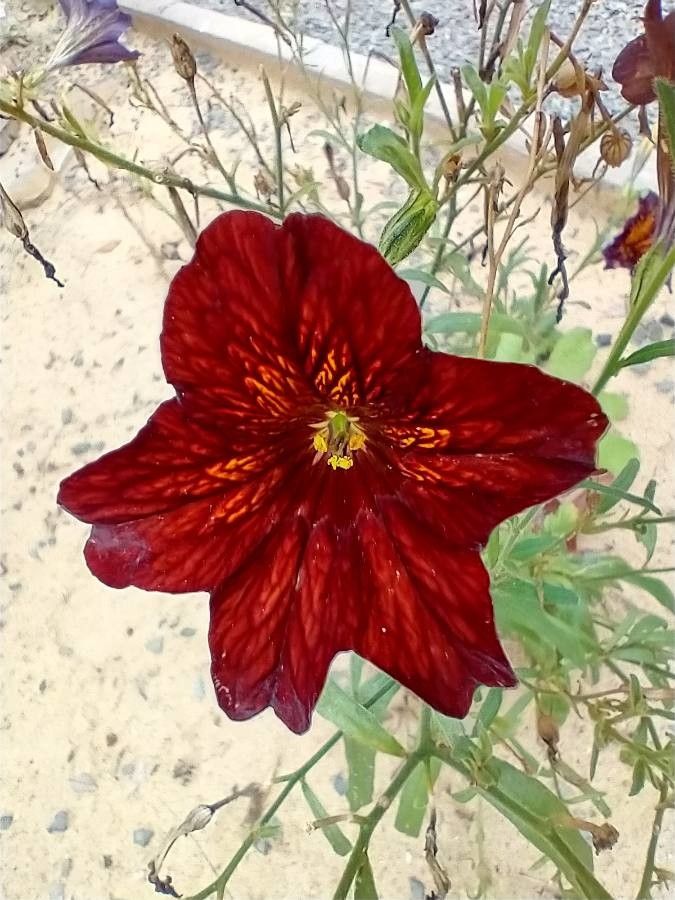
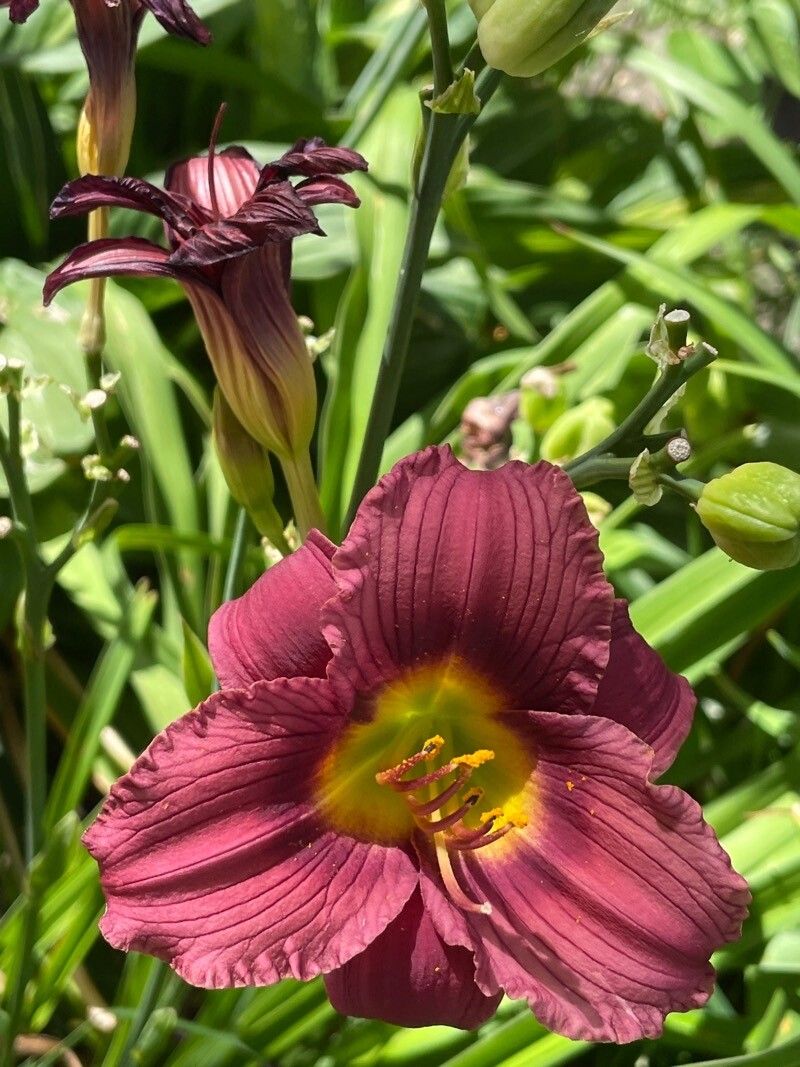
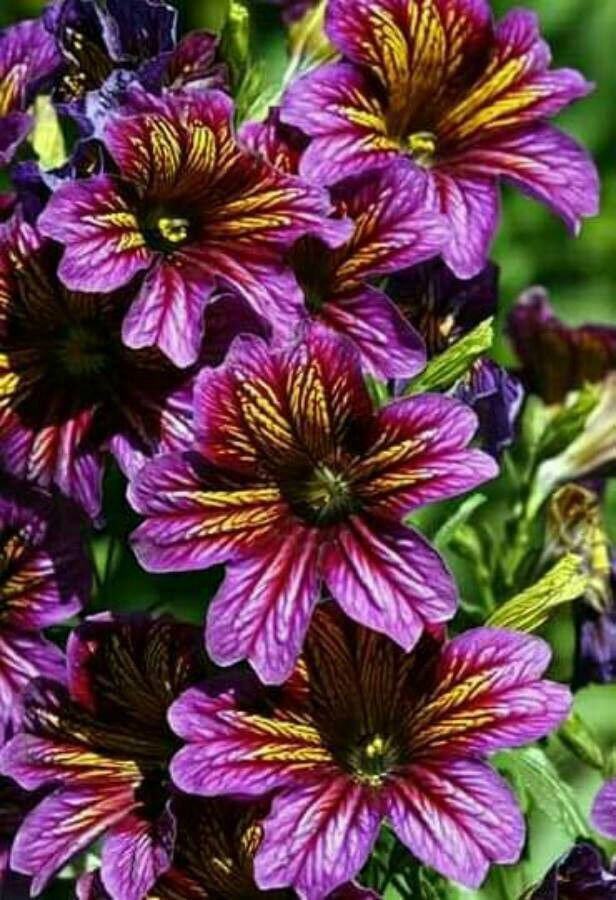
Salpiglossis sinuata, the painted tongue, scalloped tube tongue, velvet trumpet flower, palito amargo ( Spanish : bitter little stick - from the extreme bitterness of its leaves) or panza de burro ( Spanish : donkey's paunch ), is a flowering plant belonging to the subfamily Cestroideae of the nightshade family Solanaceae, native to southern Chile.
The seaside petunia is fairly disease-resistant and usually does not suffer from many illnesses. However, it can be vulnerable to pests and diseases present in its surroundings. These problems are typically not severe. When it comes to care, the plant requires moderate maintenance. Regular pruning is needed to keep a neat appearance and support healthy growth. Fertilizing can also encourage more flowering. The seaside petunia is suitable for anyone with outdoor space, such as a garden or patio, and does not demand much gardening experience. It may need more attention if grown indoors.
How to keep Salpiglossis Sinuata.
Light
Native to areas with abundant sunlight, the seaside petunia naturally requires substantial light. This tendency has a strong effect on its growth. However, too much light can harm the plant, while too little can negatively affect its development. At every stage of growth it needs ample light.
Water
Painted tongue flourishes in moisture-rich environments and requires regular hydration. Ideally, it should be planted in soil that remains consistently moist, with watering done on a weekly basis. Applying mulch is helpful, especially during its active growing season, as it helps retain soil moisture and meets the plant's increased water needs.
Temperature
Seaside petunia comes from temperate areas and prefers a comfortable climate with temperatures between 68 and 95 °F (20 to 35 ℃). Extra care is needed during colder seasons, and it is recommended to move the plant or add insulation to keep appropriate warmth.
Fertilizer
When most Seaside petunia blooms have fully opened, resume fertilizing. During the period of peak flowering, apply fertilizer every three to four weeks, weather permitting. When the Seaside petunia begins producing fewer new blooms, stop fertilizing; there's no need to feed it if it can no longer form additional flowers.
Pruning
Painted tongue is a lively flowering plant known for its trumpet-shaped blossoms. To encourage continuous blooming, prune the plant from early to late spring. Remove any spent flowers and dead foliage during this time. Be sure to clean your tools to prevent the spread of disease and improve air circulation. This process helps maintain a tidy appearance and promotes new growth in the plant.
Botanical profile.
- Plant Type
- Herb
- Life Cycle
- Annual, Perennial
- Genus
- Salpiglossis
- Family
- Solanaceae
- Hardiness Zone
- 7-9
- Mature Height
- 40 cm
- Mature Spread
- 91 cm
- Leaf Color
- Green, Blue
- Leaf Type
- Semi-evergreen
- Flower Color
- Pink, Purple, White
- Flower Size
- 2.54 cm to 5.08 cm
- Bloom Time
- Mid spring, Late spring, Summer, Fall
- Planting Time
- Spring
- Harvest Time
- Late spring, Summer, Fall, Early winter
- Native Area
- Mexico
Other names.
Reader questions.
How should I water my Painted tongue plant in the best way?
To water Painted tongue, you have a few options. You can use a garden hose with a spray nozzle, a watering can, or any other common watering tool. The good news is that Painted tongue isn't too fussy about how it gets water. It can thrive with rainwater, tap water, or filtered water. However, it's best to avoid watering this plant from above because it can harm the leaves and flowers and potentially cause disease. Instead, consider setting up a drip irrigation system, which delivers water evenly and directly to the soil. If you have a container-grown Painted tongue, you can use a cup, watering can, or tap to water it. Just make sure to apply the water directly to the soil.
Why is it necessary to put fertilizer on my Painted tongue plant?
Plants, including Painted tongue, require nutrients to survive. This is common knowledge among gardeners, regardless of their experience. Without adequate nourishment, Painted tongue will die shortly after its first pollination. Therefore, it is crucial to provide the right nutrients in the correct amounts to keep Painted tongue thriving throughout the blooming season. Fertilizer is particularly beneficial as it helps the plant develop a robust and healthy root system. Since Painted tongue has a thin and delicate root structure, it is especially important to support its growth with fertilizer. By fertilizing during planting, Painted tongue can establish a strong foundation that not only provides stability but also enhances its ability to produce stunning flowers. Properly timing the application of fertilizer can also extend the flowering period of Painted tongue.
What are the sunlight requirements for Painted Tongue plants?
Painted Tongue, also known as Salpiglossis sinuata, thrives best in areas that receive full sun, which means above 6 hours of sunlight per day. It can also grow in partial sun, approximately 3-6 hours of sunlight. Observing how sunlight moves through your garden will help you find the perfect balance of light and shade for these plants. Despite its preference for abundant light, Painted Tongue does not require specific light conditions to survive. However, insufficient or excessive light can impact the plant's growth negatively.
What are the ideal temperature conditions for the growth of Painted tongue?
Painted tongue (Salpiglossis sinuata) thrives best in regions where the temperature ranges from 68 to 100°F (20 to 38°C). The plant loves heat and can be adversely affected by cold temperatures. To ensure its growth throughout the seasons, it might be necessary to adjust its surroundings to keep within this preferred temperature range. During colder months, keeping the plant indoors in a bright spot, yet away from direct heat sources, is recommended to maintain temperatures above 20°C, as temperatures nearing 10°C can damage the plant.
What do I do if I give my Painted tongue plant too much water or too little water?
One way to fix underwatering for Painted tongue is simply by watering it more regularly when you notice it lacks moisture. Overwatering, on the other hand, can have more severe consequences, such as disease and death. To prevent this, it's important to choose a suitable location with ample sunlight and good drainage. If you overwater a potted Painted tongue, it may be necessary to transfer it to a new pot with proper drainage and loose soils.
When should I fertilize my Painted tongue plant?
Painted tongue experiences rapid growth after the last frost, marking the ideal time for fertilization. It is recommended to apply fertilizer during the planting phase, whether in the ground or in planters. This initial dose will be sufficient until the blooms are in full bloom later in the year. Once the season is in full swing and the majority of the blooms have reached their full size, it is time to resume fertilizing. This should be done once every three to four weeks, depending on the weather, while the blooms are at their peak output. As Painted tongue begins to produce fewer new blooms, stop fertilizing as there is no need to continue when the plant cannot produce more blooms.
How can artificial lighting benefit indoor Painted Tongue plants?
Indoor Painted Tongue plants require adequate lighting for optimal growth, especially in conditions where natural sunlight is insufficient, like in winter or less sunny spaces. Artificial lights, like LED lights tailored to provide specific wavelengths needed by plants, offer a crucial solution. For full sun plants, 30-50W per square foot is recommended; partial sun plants require 20-30W per square foot, and full shade plants need 10-20W per square foot. The artificial light source should be placed 12-36 inches above the plant to mimic natural sunlight, and most plants benefit from 8-12 hours of light per day.
How should Painted tongue be cared for during low temperature conditions?
In low temperature conditions, Painted tongue requires care to protect it from the cold, as it thrives in warmth and does not tolerate low temperatures well. It's essential to keep it above 20°C during winter and to ensure it does not drop below 10°C. Exposure to temperatures below 5°C may cause the plant's leaves to lighten and signal frost damage as they gradually turn brown or black, along with wilting and drooping. To remedy this, trim off the frost-damaged parts and move the plant to a warmer indoor environment, preferably near a south-facing window for ample sunlight. Additionally, it's important to avoid placing the plant near heaters or air conditioning vents to prevent air dryness.
How often should I give water to my Painted tongue plant?
Painted tongue requires regular watering throughout the growing season. In spring, water the plant once a week. As the season progresses and it gets hotter, increase watering to two to three times per week. However, be careful not to overwater, as this can harm the plant. It's important to keep the soil moist but not soaked, regardless of the frequency of watering. When it comes to potted plants, they may need to be watered more often as the soil can dry out faster. In most cases, water a potted Painted tongue a few times per week compared to just once per week for an in-ground plant.
When is it not a good idea to give fertilizer to my Painted tongue plant?
Fertilizing is important for Painted tongue, but it's crucial to time it correctly. There are instances where it's better to hold off on fertilizing, usually due to weather or other factors that can be controlled. If there are sudden extreme weather changes, like a cold snap in the middle of summer, it's best to wait until the weather stabilizes before fertilizing. Similarly, if the soil is too dry or compacted, it won't effectively absorb the fertilizer, leading it to go directly to the roots, which is not ideal for Painted tongue. Avoid fertilizing during very hot temperatures, as the fertilizer can break down too quickly. It's also important to address and treat any pests or diseases before applying fertilizer again.
What are the common symptoms of inadequate light in Painted Tongue plants?
When Painted Tongue plants receive inadequate light, they may show signs such as smaller new leaves compared to mature ones, leggy or sparse growth, faster leaf drop, slower or no new growth, and lighter-colored new leaves. Excessive sunlight can cause chlorosis, sunscald, leaf curling, wilting, and leaf scorching. These symptoms indicate either a lack of sufficient sunlight or too much exposure, both of which can affect the plant's health and growth.
What steps should be taken if Painted tongue experiences high temperature conditions?
In high temperature conditions, particularly during the summer, Painted tongue should be kept below 38°C to avoid heat-related stress. Temperatures exceeding 43°C can lead to lighter leaf colors and increase the plant's susceptibility to sunburn. If the plant suffers from sunburn or dries up, trim away the affected parts and relocate the plant to provide shade during the midday and afternoon sun. Ensuring the soil stays moist by watering in the morning and evening can also help mitigate the effects of high temperatures.