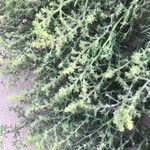
Salsola kali
Roly-poly · Common saltwort · Soft roly-poly · Prickly saltwort · Russian Thistle
Description
Source: leafsnapSalsola kali, commonly known as prickly saltwort or tumbleweed, is a flowering plant species within the Amaranthaceae family. Native to Europe and Asia, it has spread to various other parts of the world, including North America and Australia. Typically found in saline soils, Salsola kali can tolerate high levels of salt. It features a deep taproot that enables it to access water from substantial depths within the soil. The stems appear green or reddish-brown, and the small leaves are often reduced to spines. From June through September, Salsola kali produces small greenish flowers, followed by tiny seeds enclosed in papery bracts. These seeds can be dispersed by wind or water. Historically, the plant has been used for medicinal purposes, with various parts serving as diuretics, laxatives, and treatments for skin conditions. In regions outside its native range, Salsola kali is considered an invasive species due to its ability to outcompete native plants and disrupt ecosystems. In summary, Salsola kali is an intriguing plant with unique adaptations for surviving in harsh environments, though it poses potential threats when introduced beyond its natural habitat.
Care Guide
💧 Water
☀️ Light Full sun
🌡️ Temperature 15–37.8°C
💨 Humidity
🪴 Soil 6-7
🌱 Fertilizer
🪴 Pot & Repot
✂️ Pruning
🌿 Propagating
🐛 Diseases & pets
☠️ Toxicity
Characteristics
- Plant Type
- Herb
- Life Cycle
- Annual
- Genus
- Salsola
- Family
- Amaranthaceae
- Hardiness Zone
- 8-11
- Mature Height
- 0.3 m to 1.22 m
- Mature Spread
- 20 cm to 61 cm
- Leaf Color
- Green, Light Green
- Leaf Type
- Semi-evergreen
- Flower Color
- Pink, White
- Flower Size
- 0.25 cm to 0.51 cm
- Bloom Time
- Summer
- Planting Time
- Spring, Summer, Autumn
- Harvest Time
- Late summer, Early fall, Mid fall