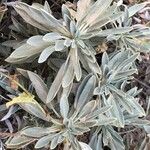
Salvia apiana
White sage
Description
Source: leafsnapSalvia apiana, commonly known as white sage, is a perennial shrub native to the southwestern United States and northwestern Mexico. Growing up to 1.5 meters tall, it features silvery-white leaves covered in fine hairs, giving the plant a fuzzy appearance. In the summer months, it produces small white or pale pink flowers. For centuries, indigenous peoples have utilized white sage for its medicinal properties and as a sacred herb in spiritual ceremonies. Today, it is also commonly used in smudging rituals to cleanse spaces of negative energy. White sage thrives in dry, rocky soils with full sun exposure but can tolerate some shade. Once established, it is drought-tolerant but requires occasional watering during prolonged dry spells. Propagation of white sage can be done using seeds or cuttings, but patience is necessary as it can take several years for seedlings to reach maturity. The plant benefits from occasional pruning to promote bushier growth. While white sage has numerous traditional uses, it should be harvested sustainably and with respect for its cultural significance. Over-harvesting for commercial gain or cultural appropriation by non-indigenous people, especially without proper knowledge of its traditional uses or significance within indigenous cultures, is discouraged.
🎭 Eternal life, extended lifespan, insight
Care Guide
💧 Water Every 7 days
White Sage flourishes in dry environments, demonstrating its ability to withstand drought conditions by requiring water only every 1-2 weeks. As an evergreen plant, it thrives in abundant sunlight and well-drained soil, efficiently conserving water while enduring a range of temperatures.
How should I water my White Sage plant?
Watering your White Sage is a flexible process, as it is not too particular about the method you use. You can easily use common watering tools like watering cans, hoses, or even cups to keep the soil moist. It is important to water directly onto the soil to make sure every part of the root system gets the necessary hydration. Using filtered water is recommended to avoid any harmful particles that may be present in tap water. Additionally, it is best to use water that is at or slightly above room temperature, as extremely cold or hot water can be a shock to the White Sage. However, the plant typically responds well to any water you provide.
What do I do if I give my White Sage plant too much water or too little water?
Outdoor plants, especially newly planted or seedling plants, can be prone to lack of watering. It's important to remember to water them enough for the first few months when they are small or newly planted. This is because once the roots are established, White Sage can rely on rain most of the time. When White Sage is planted in pots, overwatering is often more likely. If you accidentally overwater your White Sage, you should take immediate action to remedy the situation. Stop watering the plant right away to minimize the effects of overwatering. Then, remove the White Sage from its pot and inspect the roots. If you find that none of the roots have developed root rot, you can put the plant back in its container. However, if you see signs of root rot, trim away any affected roots and consider applying a fungicide to prevent further damage. Finally, repot the White Sage in well-draining soil. On the other hand, if your White Sage is underwatered, simply water it more frequently. Underwatering is relatively easy to fix. If you notice the plant's leaves drooping, drying out, and falling off, increasing the watering frequency will help. Correct the watering frequency as soon as you notice underwatering symptoms to ensure the plant's health.
How often should I give water to my White Sage plant?
Most outdoor plants can rely on rainfall for their water needs. However, if your area doesn't get enough rain, you should water your plants every 2 weeks in spring and fall, and more frequently during summer. In winter, when growth is slower, you can water them less. Sometimes, you may not need to water them at all. If you have young or newly planted White Sage, you should water them more often to help them establish and grow. For potted plants, you have two options for determining watering frequency. One is to follow a set schedule, either weekly or every other week. However, this may not always work as it doesn't consider the specific conditions of your White Sage. The other option is to check the soil moisture. Wait until the top two to four inches of soil, about ⅓ to ½ depth of the pots, have dried out completely before watering again. This can vary depending on the season, as the plant may need more water in summer.
How much water should I give to my White Sage plant?
Watering your White Sage may be different than expected. Instead of needing a lot of water, only a few inches of dry soil should prompt watering. Give the plant about five to ten ounces of water when watering, or adjust based on the dryness of the soil. Make sure to moisten all layers of dry soil, and if more than half is dry, give more water until it drains from the pot. If the plant is outdoors and receives sufficient rain, additional watering may not be necessary. For young or newly established White Sage, give it 1-2 inches of rain per week. As it grows, it can mostly rely on rainwater, needing a full watering only if there's been 2-3 weeks of hot weather without rainfall to prevent stress.
How can I know if I'm giving enough water to my White Sage plant?
White Sage often suffers from overwatering, which can be identified through several signs. An overwatered White Sage will typically have yellowing leaves and may shed some leaves. In addition, overwatering can lead to a shriveled appearance and potentially cause root rot. Conversely, an underwatered White Sage will also wilt and may exhibit brown or brittle leaves. Regardless of whether you notice signs of overwatering or underwatering, it is important to take action and revive your White Sage's well-being.
☀️ Light Full sun
White Sage grows best when it gets plenty of sunlight, resembling its native, light-rich environment. It can also tolerate spots with moderate sunlight, which supports healthy growth. Too little or overly intense light can impair its development and may damage the plant.
What are the sunlight requirements for White Sage?
White Sage thrives best in environments that mimic its native, light-abundant habitat, requiring a high degree of sunlight to flourish. It is ideally placed in locations with full sun, which means the plant should receive more than 6 hours of sunlight daily. However, it can also grow in areas with partial sun, about 3-6 hours of sunlight. Ensuring the right balance of light and shade is crucial for the plant's health, as both insufficient and ultra-intense light can hinder its growth. Observing how sunlight moves through your garden will help in choosing spots that provide the optimal light conditions for your White Sage.
How can artificial lighting benefit indoor White Sage plants?
When natural sunlight is insufficient, especially during winter or in less sunny spaces, artificial lighting can provide a vital solution for indoor White Sage plants. It promotes faster, healthier growth by mimicking natural sunlight conditions. LED lights are a popular choice for indoor plant lighting due to their ability to provide specific wavelengths needed by plants. For optimal growth, full sun plants require 30-50W/sq ft of artificial light, partial sun plants need 20-30W/sq ft, and full shade plants need 10-20W/sq ft. The light source should be placed 12-36 inches above the plant to mimic the sun effectively, and the duration should match the length of natural daylight hours, generally 8-12 hours per day.
What are the common symptoms of insufficient sunlight in White Sage?
White Sage shows several symptoms when it's not getting enough sunlight, indicating light deficiency. These include smaller new leaves, leggy or sparse growth causing a thin appearance, faster leaf drop as the plant tries to conserve resources, and halted growth as the plant enters survival mode. Additionally, leaves may develop lighter colors or irregular patterns, indicating a lack of chlorophyll and essential nutrients. These symptoms stress the importance of providing adequate sunlight to maintain the plant's health.
What are the symptoms of too much sunlight in White Sage?
While White Sage thrives in sunlight, too much of it can lead to several adverse symptoms. Chlorosis, which appears as a yellowing of the leaves, signals overexposure to sunlight and a breakdown of chlorophyll. Sunscald is evident through pale, bleached, or necrotic areas on the plant tissue due to intense sunlight exposure. Additionally, leaf curling, wilting, and leaf scorching are defense mechanisms and stress responses to excessive sunlight, highlighting the need for a balanced light environment.
How can I manage light exposure for my White Sage plant?
Managing light exposure for your White Sage involves both observation and adjustment. For indoor plants, gradually move them to sunnier locations each week until they receive at least 6 hours of direct sunlight daily, utilizing south-facing windows for maximum sunlight exposure. Supplementing with artificial light can also support growth. Outdoors, gradually acclimate your plants to brighter areas while avoiding sudden light intensity changes to prevent sunburn. Additionally, reducing nearby obstructions or transplanting smaller plants to sunnier locations can improve light access. Note that while parts of the plant affected by insufficient light may not recover, new growth will be healthy following improved light conditions.
🌡️ Temperature 15–37.8°C
White Sage originates from regions where temperatures range between 59 and 100 °F (15 to 38 ℃). It favors warm conditions and may require extra care during colder seasons. Modifying its environment to resemble its natural habitat can boost its growth.
What is the native climate for White Sage?
White Sage, scientifically known as Salvia apiana, thrives in areas with temperatures that range between 59 and 100 °F (15 to 38 °C). It prefers warm climates and may require additional care during colder seasons. To promote optimal growth, it's beneficial to replicate its natural habitat by adjusting its environment accordingly. While White Sage possesses some level of cold tolerance, typically not requiring special measures when temperatures stay above -5°C, precautions should be taken if the temperature is expected to drop below this threshold. In such cases, using plastic film, fabric, or other materials for temporary cold protection is advisable, ensuring to remove these once the temperature rises again.
How does White Sage respond to low temperatures?
White Sage has a moderate tolerance to low temperatures, ideally growing in conditions above 15°C. In winter, it's critical to ensure the temperature does not fall below -5°C. Should the temperature drop below -10°C, the leaves might begin to droop, leading to a potential full wilt and leaf loss in severe cases. To prevent frost damage, trimming the affected parts is advisable. Additionally, to protect the plant from low temperatures in the future, wrapping it with non-woven fabrics or cloth, and building a wind barrier, can significantly help in safeguarding it against the cold.
How does White Sage respond to high temperatures?
During the summer months, it's crucial to maintain White Sage's environment below 38°C. Exposure to temperatures above 43°C can cause the leaves to lighten in color, tips to dry and wither, leaves to curl, and increase the risk of sunburn. To mitigate these issues, any sunburned or dried parts of the plant should be trimmed away. Moving the plant to a shaded location or using a shade cloth can protect it from the intense midday and afternoon sun. Additionally, watering the plant in the morning and evening helps in keeping the soil moist and further alleviating the stress from high temperatures.
💨 Humidity normal (40-60%)
This plant will thrive in moderate humidity, which is probably the level in your home. However, misting it a few times a week can be very beneficial. Make sure the room has good ventilation.
🪴 Soil 6-7
🌱 Fertilizer
Proper timing matters when feeding White Sage. Apply fertilizer in early spring and continue once a month until early summer. Fertilizer promotes attractive blooms and gives energy during both dormant and active growth periods.
Why should I put fertilizer on my White Sage plant?
To keep your White Sage plant healthy and robust, it's important to regularly fertilize it regardless of the type you own. By providing the proper nutrients, you can promote stronger growth and enhance its resistance to harsh conditions, diseases, and pests. Maintaining the attractive foliage of the plant is also vital, so sticking to a consistent fertilization schedule tailored to your specific White Sage can help it develop deep-colored leaves and an overall lush appearance.
When should I fertilize my White Sage plant?
To ensure healthy growth, fertilize your White Sage for the first time in late winter or early spring. This will provide the necessary nutrients for the plant to thrive when the weather warms up. If you live in a warm climate region, it is advisable to give your White Sage another round of fertilizer in early fall. This will not only provide additional nutrients for the upcoming growing season but also make your plant more resilient to winter cold and prevent foliage damage. Fertilizing earlier in the fall will give the new branches ample time to grow and withstand the cold winters.
When is the best time to not use fertilizer on my White Sage?
There are specific times throughout the year when it is not advisable to fertilize your White Sage plant. The first occurrence is during the winter months, specifically early and mid-winter, when the plant is dormant and does not require any nutrients. It is also not recommended to fertilize the plant during late spring and all of summer due to the hotter and drier weather conditions. These conditions increase the likelihood of negative effects from fertilization. To prevent any issues, it is best to stick to a fertilization schedule that only involves feeding the plant during early spring and early fall.
Which fertilizer should I use for my White Sage plant?
White Sage primarily needs nitrogen as its most important nutrient, but phosphorus and potassium are still important. It is recommended to provide a balanced fertilizer like a 10-10-10 to ensure your White Sage receives sufficient amounts of all three main nutrients. However, for optimal growth, a more nuanced ratio of nutrients, with slightly higher nitrogen content, such as a 10-6-4 ratio, often works better. You can choose between granular or liquid-based fertilizers when applying them.
How can I help my White Sage grow better?
To fertilize your White Sage, you have two options: using granular fertilizer or liquid fertilizer. For granular fertilizer, simply sprinkle it on the soil at the right time. The slow-release nature of granular fertilizer lets nutrients be released slowly over time. It's best to lightly water your White Sage before applying the fertilizer. If you prefer liquid fertilizer, mix it with water and pour the mixture onto the soil around the base of your White Sage. This method is less common. Sometimes, it's helpful to perform a soil test before fertilizing to determine if you need to adjust the pH levels.
🪴 Pot & Repot Every 12 months
White Sage needs excellent drainage in pots to promote healthy growth and prevent root rot.
✂️ Pruning
White sage features silvery-white leaves and possesses aromatic qualities. To keep the plant healthy and encourage new growth and denser foliage, it is best to prune it in early to late winter. When pruning, cut back one-third of the plant, focusing on the older wood. Be sure to use clean, sharp tools to prevent the spread of disease.
🌿 Propagating
🐛 Diseases & pets
☠️ Toxicity
The California white sage is not considered toxic as it has been in the use of humans for centuries. However, some signs of toxicity are found in children and newborn babies.
Characteristics
- Plant Type
- Shrub
- Life Cycle
- Perennial
- Genus
- Salvia
- Family
- Lamiaceae
- Hardiness Zone
- 8-11
- Mature Height
- 1.22 m
- Mature Spread
- 1.52 m
- Leaf Color
- Gray, Silver, Green
- Leaf Type
- Evergreen
- Flower Color
- White
- Flower Size
- 1.52 cm to 2.03 cm
- Bloom Time
- Late spring, Early summer, Mid summer
- Planting Time
- Spring, Autumn
- Harvest Time
- Mid summer
- Native Area
- Mexico