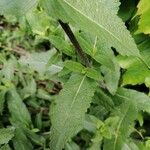
Salvia nemorosa
مریمگلی · مریم گلی باغی، مریم گلی مزرعه روی، · Woodland sage · Balkan Clary · Wood sage
Description
Source: leafsnapSalvia nemorosa, commonly known as woodland sage or meadow sage, is a perennial herbaceous plant in the mint family. Native to Europe and Asia, it has become a popular garden plant due to its attractive flowers and ease of cultivation. Typically, the plant grows up to 60 cm in height with an upright habit. Its narrow, lance-shaped leaves are gray-green and have a slightly hairy texture. From late spring through summer, Salvia nemorosa produces tubular, two-lipped flowers on long spikes that rise above the foliage. These blooms are usually blue or purple, but can also be pink or white. Salvia nemorosa prefers full sun but can tolerate partial shade. It thrives in well-drained soil and requires moderate watering during the growing season. Once established, the plant is also drought-tolerant. Beyond its ornamental value, Salvia nemorosa has been used for centuries for medicinal purposes due to its anti-inflammatory properties and its ability to relieve headaches and digestive issues. Overall, Salvia nemorosa is an excellent choice for gardeners seeking an easy-to-grow perennial with attractive blooms. It will attract pollinators such as bees and butterflies to your garden while also providing medicinal benefits.
💡 According to legend, the god of flowers found herself in trouble while on Earth and was being pursued. As she reached a plain with nowhere to hide, she sought help from the roses and lilacs, but both refused. Only the woodland sage came to her aid, quickly blooming to conceal her. As a result, roses developed thorns, and lilacs acquired an unpleasant scent, while the woodland sage was rewarded with many healing properties.
🌳 Beyond its decorative role in landscaping, woodland sage has uses that are not widely known. One noteworthy application is extracting a delicate blue dye from its flowers, which has traditionally been used in artisanal crafts. Furthermore, the plant’s hardiness and resilience make it an excellent choice for green roofs and urban gardens, where it helps boost urban biodiversity and supports community greening efforts.
🎭 Happiness in the family, family values
Care Guide
💧 Water Every 3 days
Woodland sage, which originally comes from woodland clearings, thrives in consistently moist, well-draining soil. It is recommended to water it weekly, maintaining moderate humidity. The growth and flowering of this herbaceous perennial are closely linked to water availability during its active growing season, making it well-suited for outdoor gardens that experience natural rainfall.
When Should I Water My Woodland Sage?
Proper watering is crucial for the health and vitality of woodland sage, affecting its growth, blooming, and resistance to health issues. To determine when to water, check the soil's moisture by inserting your finger about an inch deep. If the soil at this depth feels dry, it's time to water your plant. Additionally, the appearance of woodland sage's leaves can indicate its watering needs; drooping or wilting suggests it’s time to water. However, be cautious of overwatering, as it can lead to wilting from root issues. Woodland sage typically requires more water during its bloom period and the hotter months, though it needs less during its dormancy period in winter. Nonetheless, always look for other signs of the plant's water needs as they vary with seasonal changes. Inadequate watering timing can lead to several problems, such as root rot, disease, and poor nutrient absorption, which may severely affect the plant's growth or even cause death.
How Should I Water My Woodland Sage?
Woodland sage, with its medium water requirement, tolerates occasional watering mistakes but does not fare well with waterlogged conditions, highlighting the importance of good drainage. A watering can with a thin spout is recommended for watering this plant, directing water towards the base to avoid wetting the foliage, which can cause fungal diseases. Alternatively, bottom-watering is beneficial, especially during the growth phase, by allowing the plant to absorb water from the bottom up, promoting deep root growth without over-saturating the soil surface. Employing a moisture meter can also be invaluable to avoid over or under-watering by assessing the soil's wetness accurately. To prevent root rot, aim to water just enough, being mindful to slightly under-water if unsure. When watering, focus your efforts at the base of the plant where it's most needed, avoiding the foliage to prevent disease.
How Much Water Does Woodland Sage Really Need?
The amount of water woodland sage requires varies depending on several factors including pot size, root depth, plant size, and its current life stage. This plant thrives in consistently moist but not waterlogged soil. Given its shallow roots, typically 4-8 inches deep, it's important to prevent the top layer of soil from completely drying out, as this can cause stress and wilting. Smaller pots may necessitate more frequent watering to ensure that moisture reaches the root zone adequately. Meanwhile, younger or smaller plants generally require less water than their mature counterparts. Proper hydration is evident through vibrant and healthy foliage, strong stems, and continued growth and flowering. Conversely, signs of underwatering include limping, wilting, or yellowing leaves, while overwatering can lead to root rot, characterized by yellowing leaves, weak stems, and potential mold or fungus presence. Over and under-watering can have detrimental effects, including suffocating roots or causing plant stress, thus impacting growth and flowering. To maintain optimal moisture, water slowly to allow deep soil penetration and avoid frequent shallow watering, which encourages weak root growth. Regular soil moisture checks will help adjust watering frequency to meet the plant's needs.
What Kind of Water is Best for Woodland Sage?
For woodland sage, the best types of water include distilled water, due to its purity and lack of contaminants, and rainwater, which is natural and free from chemicals with a balanced pH level. Tap water can be used if other sources are not available, though it may contain chlorine and chemicals that could harm the plant. Filtered water is a suitable alternative, provided it removes harmful contaminants. Woodland sage has moderate sensitivity to chlorine and fluoride found in tap water, which can cause leaf burn and stress to the plant. Letting tap water sit for at least 24 hours before use can allow chlorine to evaporate, making it safer for the plant. Using a filtration system that removes chlorine and other harmful contaminants is also beneficial. The plant prefers water at room temperature, between 68-72°F (20-22°C); avoid using water that's too cold or too hot, as extreme temperatures can shock the plant.
How Do Woodland Sage's Watering Needs Change with the Seasons?
Watering needs for woodland sage vary throughout the year due to changes in growth activity and environmental conditions. In spring, as the plant emerges from dormancy, increase watering gradually to support the increased metabolic rate and growth, ensuring the soil is kept moderately moist. Come summer, the water usage peaks due to higher temperatures and increased evaporation, requiring more frequent watering to maintain a consistently moist root zone. However, avoid over-watering. As autumn sets in and temperatures drop, reduce watering to match the plant's decreased metabolic rate and prepare it for dormancy, aiming for only slightly moist soil conditions. During winter, the plant's dormant state necessitates minimal watering. Over-watering in this period can cause root rot, as the decreased evaporation rate and the plant's lower hydration needs result in prolonged soil wetness. Therefore, it's crucial to adjust watering practices to prevent the soil from becoming either too dry or waterlogged.
☀️ Light Full sun
Woodland sage favors plentiful light and performs best in sunshine for much of the day. It can, however, tolerate somewhat shaded spots. Its original habitat, the open woods, reflects this need for ample light. Too little light can result in stunted growth, while too much may scorch the leaves.
What are the sunlight requirements for woodland sage?
Woodland sage thrives in conditions where it can bask in the sunshine for most of the day, benefiting from full to partial sun exposure. Specifically, 'full sun' means the plant should receive more than 6 hours of sunlight daily, while 'partial sun' refers to about 3-6 hours of sunlight each day. It's essential to observe the movement of sunlight through your garden and find spots that offer an optimal mix of light and shade, pertaining to your plants' needs. This thoughtful placement is key to ensuring the well-being of your woodland sage, aiding it in its growth and development.
How does artificial lighting benefit indoor woodland sage plants?
For indoor woodland sage plants, when natural sunlight is lacking, especially during winter or in areas of your home that don't receive much sunlight, artificial lighting can be a lifesaver. These lights should be tailored to mimic natural sunlight, ensuring your plant continues to grow strong and healthy. LED lights are often recommended because they can be adjusted to provide the exact wavelengths needed by your plants. The intensity of artificial light required varies with the type of plant: full sun plants need 30-50W/sq ft, partial sun plants 20-30W/sq ft, and full shade plants 10-20W/sq ft. Positioning the light source about 12-36 inches above your plant and keeping it on for 8-12 hours a day can replicate the natural day cycle, promoting optimal growth.
What are the symptoms of inadequate light in woodland sage?
When woodland sage doesn't receive enough light, several symptoms might appear, signaling the plant's struggle. New growth may present itself with smaller leaves, and the plant might exhibit leggy or sparse growth due to longer stretches between leaves or stems, resulting in a less robust appearance. An accelerated leaf drop can occur as the plant tries to conserve resources, leading to delayed or completely halted growth when energy reserves are low. Insufficient light could also lead to the development of lighter-colored new leaves or even chlorosis, a condition where leaves lose their green tint and turn yellow, both indicative of a lack in essential nutrients and chlorophyll. Conversely, too much sunlight can cause sunscald, leaf curling, wilting, or leaf scorching, all harmful to the plant's health and growth.
How can I improve the lighting conditions for my indoor and outdoor woodland sage plants?
To enhance growth and ensure the health of your woodland sage, adapting your plant to increasing levels of sunlight gradually is crucial. For indoor plants, start by moving them closer to south-facing windows where sunlight is abundant, or use artificial lights such as desk lamps or professional plant grow lights for at least 8 hours a day, adjusting their position weekly to gradually increase light exposure. Outdoor plants also benefit from a gradual relocation to sunnier spots, preventing sunburn by avoiding abrupt changes in light exposure. Addressing ground-level plants might involve reducing obstructions like pruning trees to let more sunlight through or transplanting to a sunnier location during the plant's dormant phase for better light access and drainage. It's important to note that while parts of the plant already damaged by insufficient light may not recover, new growth will be healthy if the light conditions are improved.
🌡️ Temperature 5–35°C
The woodland sage is a temperate plant that grows best in a temperature range of 41 to 95 ℉ (5 to 35 ℃). It comes from areas with cool summers and cold winters, such as central and eastern Europe. During the growing season, it is recommended to maintain temperatures around 68 to 77 ℉ (20 to 25 ℃). In winter, with appropriate protection it can endure temperatures down to 23 ℉ (-5 ℃).
What temperature is best for Woodland sage to grow?
Woodland sage's temperature requirements vary depending on the time of year. There are two main seasons to consider: the growing season and the dormancy season. During the growing season, which begins when Woodland sage starts to sprout, the ideal temperature range is between 65℉ and 80℉ (18℃ and 27℃). If the temperature drops below 15℉ (-10℃), the plant will suffer and its leaves may turn brown and wilt. However, if it's a short cold snap, Woodland sage may be able to survive with some assistance. In the warmer parts of the year, Woodland sage also needs protection from excessively high temperatures. The temperature range of 95℉ to 105℉ (35℃ to 40℃) is the upper limit for this plant. Anything above that will adversely affect the foliage and blooms of Woodland sage. High temperatures can lead to wilting, drooping, and even sunburn on the leaves, making it difficult for the plant to recover. Luckily, there are several quick and easy ways to combat this issue.
The temperature needs for baby Woodland sage plants during their first year.
If this is the first year that you have planted your Woodland sage outside, it may require extra care during the coldest months. Frost can be particularly damaging to first-year Woodland sage and may prevent it from regrowing in the spring. To protect it, make sure the temperature stays above 40℉(5℃) until it becomes established. You can achieve this by bringing the plant indoors for a month or two, or by using mulch or fabric barriers to shield it from frost. During the first year or two, it's a good idea to plant Woodland sage in a shadier location as smaller and weaker plants struggle to maintain their own temperature in the heat. Limit the direct sunlight exposure to no more than five hours a day, especially if the daytime temperature exceeds 80℉(27℃). To handle the summer heat, use shadecloth and water or mist the plant regularly.
How can I keep Woodland sage safe from really hot or really cold temperatures?
To protect Woodland sage from cold temperatures during the growing season, there are a few steps you can take. If you have it in a container, simply bring it inside with indirect light until temperatures rise above 15℉(-10℃) again. If it's planted in the ground, use mulch or horticultural fabric to create a barrier around the plant for insulation against frost and cold wind. On the other hand, if temperatures climb above 80℉(27℃) in the shade, limit the sage's sunlight exposure to six hours or less per day, especially in the morning. Putting up shade cloth or plastic mesh can reduce direct sunlight during the hottest parts of the day. Additionally, consider installing a misting system to release cooling mist around the plant base and lower ground temperatures throughout the day.
Suggestions for the ideal temperature during the dormant season for Woodland sage.
Woodland sage needs cold temperatures during winter to remain dormant until it's ready to sprout. Sprouting too early, before the last frost, can be fatal, especially if the sage has already started growing. Ideally, winter temperatures should be below freezing, but up to 40℉ (5℃) is tolerable. In temperate climates like woodland rainforests, an unexpected warm spell can cause Woodland sage to sprout prematurely. If frost is still a risk, you can cover the sprout with clear plastic on stakes to protect it. This cover should be removed once the frost danger has passed. While Woodland sage can sometimes resprout on its own, using this method increases the chances of successful regrowth.
💨 Humidity
🪴 Soil 6-7
🌱 Fertilizer
The best time to fertilize Woodland sage is in early spring, as it comes out of dormancy and begins active growth. Fertilizing supplies essential nutrients for healthy growth. Although Woodland sage has relatively low fertilizer requirements, applying fertilizer annually can improve its survival and encourage better, longer-lasting flowers.
🪴 Pot & Repot 2-3 years
When repotting Woodland sage, select a pot 1-2 inches (2.5–5.1 cm) larger that has ample drainage. Use a well-draining potting mix. Repot in spring or fall, making sure the root ball is slightly lower than the rim of the flower pot. Water thoroughly after repotting and place in a warm spot with indirect sunlight.
✂️ Pruning
Woodland sage is characterized by its tall flower spikes and aromatic leaves, and it thrives in well-drained soil. To keep the plant healthy and vigorous, prune it in early spring to remove any dead growth and encourage new shoots. Additionally, trim the faded blooms in late spring to extend its flowering period. Regular seasonal pruning improves airflow, reduces the risk of disease, and helps maintain the plant's shape.
🌿 Propagating
🐛 Diseases & pets
☠️ Toxicity
Characteristics
- Plant Type
- Herb
- Life Cycle
- Perennial
- Genus
- Salvia
- Family
- Lamiaceae
- Hardiness Zone
- 4-9
- Mature Height
- 46 cm to 61 cm
- Mature Spread
- 46 cm to 61 cm
- Leaf Color
- Green, Gray, Silver
- Leaf Type
- Deciduous
- Flower Color
- White, Purple, Blue, Pink, Violet
- Flower Size
- 2.54 cm
- Bloom Time
- Late spring, Early summer, Mid summer
- Planting Time
- Spring
- Harvest Time
- Summer