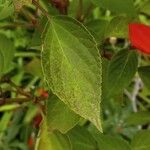
Salvia splendens
Bonfire salvia · Scarlet sage · Tropical sage
Description
Source: leafsnapSalvia splendens, commonly known as scarlet sage or tropical sage, is a popular ornamental plant in the mint family. Native to Brazil, it is widely cultivated for its attractive flowers and foliage. The plant grows between 2 to 3 feet tall and features dark green, ovate-shaped leaves with slightly serrated edges. Its bright red, tubular flowers, which have two lips and grow in clusters on long spikes, rise above the foliage. Salvia splendens thrives in well-drained soil with moderate moisture and loves the sun. Depending on the climate, it can be grown as either an annual or perennial. Scarlet sage blooms from late spring to fall, provided it receives adequate sunlight and water. The plant attracts hummingbirds, bees, and butterflies, making it an excellent choice for pollinator gardens or wildlife habitats. Traditionally, Salvia splendens has been used for medicinal purposes, such as treating digestive disorders like diarrhea and dysentery, due to its anti-inflammatory properties. Overall, Salvia splendens is an easy-to-grow ornamental plant that adds vibrant color to any garden space, while also benefiting pollinators and offering potential medicinal uses.
💡 Legend has it that scarlet sage was originally white and thrived on the plains, which were frequent battlegrounds. Tens of thousands of soldiers fought, bled, and died in these areas. Their blood transformed the sage to its now distinctive red color.
🌳 Scarlet sage, aside from its decorative value, may serve as a natural dye source because of its vivid flowers. Research indicates its pigments can be used to color fabrics in an eco-friendly manner, providing a sustainable alternative to synthetic dyes.
🎭 Symbolizing the heart of love
Care Guide
💧 Water Every 3 days
Scarlet sage, native to tropical regions, thrives in moist, humid environments and needs to be watered weekly for optimal growth. Although it can withstand short periods of dryness, rainwater helps enhance its blooming process. This makes scarlet sage an ideal outdoor plant for producing vibrant flowers.
How can I know if I'm giving my Scarlet sage enough water?
Avoiding overwatering your Scarlet sage can be somewhat difficult due to conflicting factors. On one hand, these plants have deep roots that require weekly soil moisture. On the other hand, Scarlet sage are highly susceptible to root rot, which can cause browning of the leaves. Underwatering is less likely as these plants can survive without much watering, but if they go too long without water, they will start wilting and developing dry leaves.
What's the difference between watering Scarlet sage inside and outside?
Most Scarlet sage prefer to grow outdoors for a few reasons. Firstly, these plants tend to be tall, which can make them difficult to accommodate indoors. Secondly, Scarlet sage requires more daily sunlight than most indoor settings can provide. If you do manage to find a suitable indoor location, be prepared to water your Scarlet sage more frequently than you would if it were growing outdoors. This is because indoor settings are typically drier than outdoor environments, largely due to HVAC units. Additionally, the soil in containers can dry out faster compared to soil in the ground.
☀️ Light Full sun
Scarlet sage prefers bright sunlight for much of the day. Its health and vivid red blooms rely largely on ample light. It can tolerate limited sun, but that may diminish plant vigor and flower production. However, excessively intense light can reduce foliage quality.
What are the sunlight requirements for Scarlet Sage?
Scarlet Sage (Salvia splendens) thrives best in full sun conditions, which means it requires more than 6 hours of sunlight daily to maintain its health and vibrant red blooms. It can manage in partial sun, about 3-6 hours of sunlight, but this may affect the plant's vigor and bloom production. The plant's location should ensure a perfect balance of light and shade, watching how sunlight moves through the garden to achieve this balance.
Can I use artificial lighting for Scarlet Sage when natural sunlight is insufficient?
Yes, artificial lighting can be a vital solution for Scarlet Sage, especially indoors when natural sunlight is insufficient, like during winter or in less sunny spaces. LED lights are a popular choice because they can provide specific wavelengths needed by plants. Full sun plants need 30-50W/sq ft of light, partial sun plants 20-30W/sq ft, and shade plants 10-20W/sq ft. The light source should be placed 12-36 inches above the plant to mimic natural sunlight, and most plants need 8-12 hours of light per day.
What are the symptoms of light deficiency in Scarlet Sage?
Symptoms of light deficiency in Scarlet Sage include lack of obvious abnormalities but potentially adverse effects on future flowering and fruiting, faster leaf drop due to low light conditions as the plant conserves resources, slower or no new growth as the plant enters survival mode, chlorosis or the loss of leaf green color, sunscald characterized by pale or necrotic areas on the plant due to intense light, leaf curling as a defense mechanism against extreme sunlight, wilting from overexposure increasing water loss, and leaf scorching showing as brown, dry patches on leaves.
How can I provide the best light conditions for my Scarlet Sage?
To ensure optimal growth for your Scarlet Sage, gradually move it to a sunnier location to receive at least 6 hours of direct sunlight daily, ideally near a south-facing window. If moving the plant is not possible or for additional light support, consider using artificial light, keeping lamps on for at least 8 hours a day or investing in professional plant grow lights. Outdoor plants should be gradually moved to sunnier spots to adapt without risk of sunburn. If your plants are blocked from sunlight by obstructions like trees, consider trimming to allow more light through or transplant smaller plants during their dormant period to a brighter location.
🌡️ Temperature 20–37.8°C
The scarlet sage originates in tropical and subtropical regions, where temperatures range from 20 to 38 ℃ (68 to 100 ℉). It performs best in warm, sunny sites and prefers soil that drains well. In cooler conditions, the scarlet sage may need protection from frost and cold winds. During hot summer months, provide enough water to prevent the plant from drying out.
What is the native climate of Scarlet Sage?
The Scarlet Sage is native to tropical and subtropical climates, thriving in temperatures ranging from 20 to 38°C (68 to 100°F). It prefers warm, sunny environments, and well-draining soil. Being extremely heat-loving, the Scarlet Sage requires protection from frost and cold winds in cooler temperatures. Adequate watering is important during hot summer months to prevent the plant from drying out. In autumn, it's recommended to bring outdoor-grown Scarlet Sage indoors, placing it near a bright window yet away from heaters to maintain temperatures above 20°C, as temperatures nearing 5°C can be detrimental.
How does low temperature affect Scarlet Sage and what are the solutions?
Scarlet Sage prefers warm temperatures and does not tolerate low temperatures well. It flourishes best when temperatures are above 20°C and should be maintained above 5°C during winter. Exposure to temperatures below 1°C may cause the leaves to lighten in color, and following frost damage, the color gradually turns brown or black, accompanied by symptoms such as wilting and drooping. To address this, it's advised to trim off the frost-damaged parts and immediately move the plant to a warm indoor environment for cold protection. Placing the plant near a south-facing window ensures ample sunlight, but it should not be placed near heaters or air conditioning vents to avoid excessive dryness.
What are the effects of high temperature on Scarlet Sage and how can they be mitigated?
During summer, it's crucial to keep the Scarlet Sage's temperature below 38°C. If the temperature exceeds 43°C, the plant's leaves may lighten, making it more susceptible to sunburn. To combat this, trim away the sunburned and dried parts of the plant, and move it to a location where it is shaded from the midday and afternoon sun. Additionally, it's beneficial to water the plant in the morning and evening to maintain soil moisture, helping to mitigate the effects of high temperatures.
💨 Humidity normal (40-60%)
This plant will thrive in moderate humidity, which is probably the level in your home. However, misting it a few times a week can be very beneficial. Make sure the room has good ventilation.
🪴 Soil 5-6
🌱 Fertilizer
After most of Scarlet sage's blooms have opened fully, resume fertilizing. When the blooms are at their peak, fertilize once every three to four weeks, weather permitting. Then, once the plant begins to produce fewer new blooms, stop fertilizing — there is no need to fertilize when it can no longer produce more blooms.
🪴 Pot & Repot
When repotting Scarlet sage, choose a pot that is 1-2 inches (2.5–5.1 cm) larger in diameter and make sure it has good drainage. Use a well-draining potting mix and consider adding perlite for extra drainage. Repot in spring or early summer, water thoroughly afterward, and keep it in a shady spot at first.
✂️ Pruning
Scarlet sage flourishes when pruned correctly. This involves removing faded blooms and trimming damaged stems. Pruning from early to late spring helps improve the plant's shape, enhances air circulation, and encourages new growth. Following expert guidelines ensures the plant receives the best care and remains healthy and vibrant.
🌿 Propagating
🐛 Diseases & pets
☠️ Toxicity
Salvia is thought to be safe for both adults and young children. Although many decorative types may not have the most palatable tastes, they are not poisonous to humans when eaten. Dogs are known to be especially hazardous to red sage variants classified as Salvia splendens if consumed in big amounts.
Characteristics
- Plant Type
- Herb
- Life Cycle
- Annual, Perennial, Biennial
- Genus
- Salvia
- Family
- Lamiaceae
- Hardiness Zone
- 10-11
- Mature Height
- 0.4 m to 1.22 m
- Mature Spread
- 30 cm to 61 cm
- Leaf Color
- Green
- Leaf Type
- Evergreen, Semi-evergreen
- Flower Color
- Red
- Flower Size
- 2.54 cm to 7.62 cm
- Bloom Time
- Late spring, Summer
- Planting Time
- Spring
- Harvest Time
- Summer, Early fall
- Native Area
- Brazil, Colombia, Venezuela