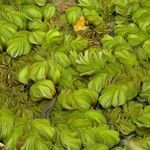
Salvinia molesta
Giant salvinia · African payal · African pyle · Koi kandy · Aquarium watermoss
Description
Source: leafsnapSalvinia molesta, commonly known as giant salvinia, is a free-floating aquatic fern native to South America. Due to its rapid growth and ability to form dense mats on the surface of water bodies, it has become an invasive species in many parts of the world. These dense mats can block sunlight and oxygen from reaching other aquatic plants and animals, leading to a decline in biodiversity. Giant salvinia has small leaves arranged in pairs along its stem. These leaves are covered with fine hairs that trap air bubbles, allowing the plant to float on the water's surface. The plant reproduces quickly through fragmentation, whereby small pieces break off from the main plant and grow into new individuals. Efforts to control giant salvinia populations globally have involved physical removal or chemical treatments. However, prevention is crucial. Avoiding the introduction of this invasive species into new areas by cleaning boats or equipment before moving them between water bodies can help prevent its further spread.
Care Guide
💧 Water Every 3 days
Water ferns, native to tropical regions, flourish in humid and moist conditions. They need to be watered weekly to achieve optimal growth. As aquatic plants, water ferns can float on the surface of the water, making them perfect for garden ponds. There, they not only provide shade but also create a habitat for aquatic life.
☀️ Light Full sun
Water fern flourishes in abundant sunlight, which is essential for its healthy development. Native to sunlit habitats, it is not known to tolerate other conditions. Excessive exposure doesn't harm it, whereas inadequate light can restrict its growth.
What are the requirements for Water fern to thrive?
Water fern, botanically known as Salvinia molesta, thrives in full sunlight, requiring above 6 hours of sunlight daily to maintain healthy growth. It is crucial to observe the movement of sunlight through your garden to find the ideal balance of light and shade that ensures the plant's well-being. Originating from sun-rich environments, Water fern does not favor insufficient light conditions, which could inhibit its growth. However, it is tolerant of excessive sun exposure.
How essential is sunlight for Water fern, and can it tolerate artificial lighting?
Sunlight is instrumental for the healthy growth of Water fern, a plant accustomed to ample sunlight in its native habitat. Insufficient natural light can hinder its growth, but it responds well to artificial lighting as a viable solution, particularly during winter or in less sunny spaces. For optimal growth under artificial light, using LED lights is recommended due to their ability to be customized for specific wavelengths needed by the plant. Full sun plants require 30-50W/sq ft, partial sun plants 20-30W/sq ft, and full shade plants 10-20W/sq ft of artificial light. The light source should be placed 12-36 inches above the plant and turned on for 8-12 hours per day to mimic natural daylight hours.
What are the common symptoms of insufficient or excessive sunlight exposure in Water fern?
When Water fern is cultivated under inadequate light conditions, it may show symptoms such as smaller new leaves, leggy or sparse growth, faster leaf drop, slower or no new growth, and lighter-colored new leaves or chlorosis, indicating a lack of chlorophyll. Excessive sunlight can lead to sunscald, leaf curling, wilting, and leaf scorching, which are signs of damage or stress due to intense light exposure. These symptoms suggest that the plant is struggling with the current light conditions, either trying to conserve resources in low light or protect itself from damage under excessive light.
How can I manage sunlight exposure for Water fern, both indoors and outdoors, to address these symptoms?
To manage sunlight exposure for Water fern effectively, gradually transition the plant to receive at least 6 hours of direct sunlight daily, especially if it's been under insufficient light. Indoors, you can move the plant to a sunnier location each week or use artificial lighting, such as desk lamps or professional grow lights, for at least 8 hours daily. Outdoors, it's vital to adjust the plant's location to a sunnier spot gradually, avoiding abrupt changes that could cause sunburn. If natural light is blocked by obstacles like trees, consider pruning to increase sunlight or transplanting smaller plants to a brighter location during their dormant period, ensuring they receive sufficient light for healthy growth.
🌡️ Temperature 15–37.8°C
The water fern is native to environments that favor temperatures between 68 and 100.4 °F (20 and 38 ℃). For optimal growth, keep this temperature range. Seasonal adjustments may be necessary to reproduce these ideal conditions.
What is the native temperature range for optimal growth of Water fern?
Water fern thrives in environments with temperatures ranging from 68 to 100.4 °F (20 to 38 °C). Maintaining this temperature range is crucial for the fern's optimal growth. Depending on the season, it may be necessary to adjust the environmental conditions to replicate these ideal temperatures for the water fern, scientifically known as Salvinia molesta.
How does Water fern tolerate cold temperatures and what measures should be taken when temperatures drop below 0°C?
Water fern possesses some degree of cold tolerance and generally does not require special measures when temperatures are above 0°C. However, if temperatures are expected to fall below 0°C, protective steps should be taken. These include wrapping the plant with plastic film, fabric, or other insulating materials to shield it from the cold. Once temperatures rise again, these protective coverings should be removed to prevent potential harm to the plant.
What are the symptoms and solutions for Water fern when exposed to low temperatures?
At low temperatures, especially below 0°C, Water fern may show moderate tolerance but performs best above 20°C. During winter, ensuring the temperature remains above 0°C is crucial. If temperatures fall below -10°C, leaves might droop and, in severe cases, wilt and fall off. The recommended solution is to trim off the frost-damaged parts. To preempt further cold damage, wrapping the plant with insulating materials like non-woven fabric or cloth and setting up a wind barrier for protection against cold winds is advisable.
How should Water fern be cared for during high temperature conditions?
In summer, it's important to ensure that Water fern's environment does not exceed 38°C. Above 43°C, the plant may exhibit stress signs such as lighter leaf color, dry and withered leaf tips, leaf curling, and an increased risk of sunburn. To mitigate these issues, trim away sunburned and dried parts of the plant. Relocating the plant to a shaded area or using a shade cloth to protect it from intense midday and afternoon sun can be beneficial. Additionally, watering the plant in the morning and evening helps keep the soil moist and supports the plant's health during high temperatures.
💨 Humidity
🪴 Soil
🌱 Fertilizer
For regular care of water ferns, apply a balanced fertilizer once a month. To promote growth, you can use a high-nitrogen fertilizer. Adjust the fertilization frequency based on the season, reducing it during cooler months. Apply the fertilizer evenly to protect the aquatic ecosystem, which will ensure the ferns maintain vigorous health and lush leaves. This approach is effective for both novice and experienced gardeners.
🪴 Pot & Repot
✂️ Pruning
Water fern is known for its rapid growth and invasive nature, which requires careful management. To keep it under control, prune the plant from early to late spring. Trim any dead fronds and remove excess biomass to prevent blockages and stop it from spreading. Use manual tools for precise trimming, which will help promote balanced growth and maintain a healthier ecosystem.
🌿 Propagating
🐛 Diseases & pets
☠️ Toxicity
Characteristics
- Plant Type
- Herb
- Life Cycle
- Annual, Perennial
- Genus
- Salvinia
- Family
- Salviniaceae
- Hardiness Zone
- 8-11
- Mature Height
- 30 cm
- Mature Spread
- 5 cm
- Leaf Color
- Light Green, Forest Green
- Leaf Type
- Evergreen