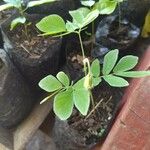
Samanea saman
Raintree · Cow-tamarind · Monkeypod · French-tamarind · Saman
Description
Source: leafsnapSamanea saman, commonly known as the rain tree or monkey pod tree, is a large, fast-growing tropical tree that belongs to the Fabaceae family. Native to Central and South America, it has been widely planted in other tropical regions worldwide due to its ornamental value and various practical uses. The rain tree can reach heights of up to 25 meters and boasts a broad crown that can spread as wide as 50 meters in diameter. Its leaves are bipinnate, meaning they are divided into smaller leaflets arranged on either side of a central axis. These small, oval-shaped leaflets have a glossy green appearance. One of the most distinctive features of Samanea saman is its large seed pods, which resemble giant beans or flat brown pancakes. These pods can grow up to 20 centimeters long and contain numerous small seeds surrounded by sweet pulp. Besides its ornamental appeal, Samanea saman offers numerous practical benefits. It provides shade for crops and livestock, helps with erosion control on steep slopes, and supplies timber for construction and furniture making. Additionally, its leaves and seeds have high protein content, making them excellent fodder for animals. Overall, Samanea saman is an impressive plant species with both aesthetic charm and practical applications, making it an important component of many tropical ecosystems around the world.
🌳 Aside from its more familiar uses, rain tree’s bark has been used to obtain natural gum, which serves as an environmentally friendly substitute for synthetic gums. Additionally, tannins from its bark and leaves can be used to produce dyes. The tree also acts as a reliable bioindicator of soil manganese levels, making it useful for biogeochemical prospecting.
Care Guide
💧 Water Every 7 days
☀️ Light Full sun
Rain tree thrives in a setting that receives a substantial amount of light during the day. The conditions of its native habitat support this level of sunlight, encouraging healthy growth. Conversely, insufficient light can cause less-than-ideal growth. Likewise, an excessive amount of sunlight may damage the plant.
🌡️ Temperature 0–37.8°C
Rain tree is native to climates where temperatures range from 32 to 100.4°F (0 to 38℃). It flourishes under these conditions and can make seasonal adjustments when necessary. Care should be taken to manage extreme temperatures.
💨 Humidity
🪴 Soil 6-7
🌱 Fertilizer
Timing is important when fertilizing Rain tree. Apply fertilizer in early spring and continue monthly until early summer. Fertilizer encourages attractive blooms and supplies energy during both dormant and active growth stages.
🪴 Pot & Repot
✂️ Pruning
🌿 Propagating
🐛 Diseases & pets
☠️ Toxicity
Characteristics
- Plant Type
- Tree
- Life Cycle
- Perennial
- Genus
- Samanea
- Family
- Fabaceae
- Hardiness Zone
- 2-11
- Mature Height
- 18.9 m to 24.99 m
- Mature Spread
- 29.87 m
- Leaf Color
- Dark Green
- Leaf Type
- Deciduous
- Flower Color
- Pink, White
- Flower Size
- 2.54 cm to 5.08 cm
- Bloom Time
- Early summer, Mid summer
- Planting Time
- Spring, Summer
- Harvest Time
- Early spring, Mid spring, Late summer, Fall, Winter