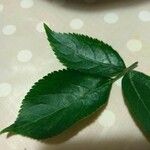
Sambucus nigra
آقطی سیاه · آقطی ابلق، سوداغ · Common Elder · Elderberry · Black elderberry
Description
Source: leafsnapSambucus nigra, commonly known as elderberry, is a deciduous shrub or small tree that belongs to the Adoxaceae family. Native to Europe and North America, this plant can reach a height of up to 10 meters. It is easily recognizable by its dark green, pinnately compound leaves with 5 to 9 leaflets, and its clusters of small white or cream-colored flowers that bloom in late spring or early summer. In late summer, the elderberry plant produces small, blackish-purple berries that are edible when cooked. These berries have been prized for centuries for their medicinal properties, as they are rich in antioxidants, vitamins A and C, flavonoids, and anthocyanins. Traditionally, the elderberry plant has been utilized to treat various ailments, including colds, flu symptoms, and inflammation. Its unique flavor profile also makes it a popular ingredient in the production of wines and cordials. Elderberry plants thrive in moist soil conditions but are drought-tolerant once established. They grow best in full sun but can also adapt to partial shade. Overall, Sambucus nigra is an attractive shrub that offers both ornamental value with its beautiful spring flowers and medicinal benefits from its summer berries. It is an excellent addition to any garden landscape, providing aesthetic appeal and health benefits simultaneously.
🌳 The elderberry is highly valued for its berries, which are often used in desserts and wines. Beyond culinary uses, it is grown as an ornamental plant and, with its white flowers, attracts pollinators. Rich in flavonoids and anthocyanins, the plant is drawing interest in cosmetic science. Notably, its flowers can also be used to produce yeast, useful for making one's own supply during shortages.
🎭 Closures and renewal, recovery.
Care Guide
💧 Water Every 7 days
Elder plants thrive in moist environments with consistent humidity and balanced water needs. For optimal growth, water them once every 1-2 weeks. As a deciduous plant, elder sheds its leaves annually, requiring extra water to support new growth during this period.
When Should I Water My Elder?
To determine when to water your elder (Sambucus nigra), check the soil moisture 1-2 inches deep; water if it feels dry. Wilting or droopy leaves signal under-watering, while yellowing can indicate both over and under-watering. During the bud formation stage, ensure consistent watering, especially in high temperatures and sunlight exposure, to prevent stress and dehydration. Avoid watering when the soil is moist to prevent root diseases, and don't wait too long to water, as excessive dryness can lead to wilting, stunted growth, or even plant death. These signs are crucial for managing your elder's watering schedule effectively.
How Should I Water My Elder?
Water your elder efficiently by considering its unique needs. Bottom-watering, by placing the pot in a tray of water, allows the plant to absorb moisture from the bottom up, reducing the risk of overwatering. Use a watering can with a narrow spout for direct watering at the base, minimizing foliage wetness that can cause fungal diseases. A moisture meter is useful for accurate soil moisture assessments, helping prevent over and under-watering. Ensure even water distribution by watering around the plant base and monitoring soil moisture levels regularly, letting the soil slightly dry before the next watering.
How Much Water Does Elder Really Need?
Elder requires regular watering due to its shallow root system, with factors like pot size and plant size influencing the amount. Generally, water thoroughly until it reaches the pot's bottom, with 1-2 liters per session for a mature plant in a 5-liter pot. Signs of adequate hydration include vibrant, glossy leaves, and moderately moist soil. Overwatering and underwatering can lead to issues like yellowing leaves, wilting, and root diseases. Ensure proper drainage and occasionally flush the soil with distilled water if using hard water to prevent lime deposit build-up.
What Kind of Water is Best for Elder?
Elder thrives best with rainwater due to its natural composition, but it can also tolerate distilled or filtered water. In areas where tap water is used, let it sit for 24 hours to evaporate chlorine, preventing growth issues. Elder is sensitive to chlorine and fluoride, which can cause yellowing or browning of leaves. Water free from heavy metals, and at room temperature, suits elder well, especially soft to moderately hard water. Regularly flushing with distilled water might be necessary to clear lime deposits from hard water.
How Do Elder's Watering Needs Change with the Seasons?
Elder's watering needs vary seasonally. In spring, water more as the plant enters its active growth phase, but ensure good drainage. Summer demands more frequent watering due to higher temperatures and increased plant activity. Water should be applied sparingly in autumn as the plant approaches dormancy and even less in winter when the plant is dormant. The aim is to maintain slightly moist soil, adjusting watering routines based on rainfall and temperature to prevent waterlogging or excessive dryness.
☀️ Light Full sun
Elderberry thrives in regions blessed with plentiful sunlight throughout the day, but it can also cope well in places receiving moderate sunshine. The ability of this plant to adapt comes from its native environment. Too much or too little sunlight could put it under strain, impacting its vibrancy and overall look.
What are the sunlight requirements for plants?
Plants have different sunlight requirements to thrive. Full sun plants require more than 6 hours of sunlight daily, while partial sun plants do well with about 3-6 hours of sunlight. It's essential to observe the movement of sunlight through your garden to find spots that offer the right balance of light and shade, ensuring your plants are happy and healthy.
How do elder plants react to different sunlight conditions?
Elder plants flourish when they receive abundant sun exposure throughout the day but can adapt to moderate sun as well. They exhibit versatility due to their native environments, allowing them to handle varying degrees of sun exposure. However, both over and underexposure to sunlight can stress elder plants, potentially affecting their vitality and appearance. Proper balance is key to maintaining the elder's health.
What is the role of artificial lighting for indoor plants?
Artificial lighting can be crucial for indoor plants, especially when natural sunlight is inadequate, such as during winter or in spaces that don't get much natural light. Using artificial lights can promote healthier, faster growth. LED lights are preferred for their ability to provide specific light wavelengths needed by plants. Full sun plants require 30-50W/sq ft of artificial light, partial sun plants need 20-30W/sq ft, and full shade plants benefit from 10-20W/sq ft. The light source should be placed 12-36 inches above the plant and kept on for 8-12 hours daily to imitate natural light conditions.
What symptoms indicate that an elder plant is not receiving enough light?
When elder plants do not get sufficient light, they may show several symptoms, including smaller new leaves, leggy or sparse growth, early leaf drop, halted growth, pale new leaves, chlorosis, sunscald, leaf curling, wilting, and leaf scorching. These symptoms can indicate that the plant is struggling with suboptimal lighting conditions, affecting its ability to photosynthesize and grow healthily.
How can you improve the light conditions for elder plants?
Optimizing light conditions for elder plants can involve several strategies, depending on their location. Indoors, gradually moving plants to sunnier locations to achieve at least 6 hours of direct sunlight daily is beneficial, as is utilizing artificial light when natural light is insufficient. Outdoors, it's crucial to gradually accustom plants to more sunlight to prevent sunburn. Reducing obstructions by pruning or transplanting can allow more sunlight to reach the plants. Remember, while it may not be possible to reverse damage from insufficient light, new growth will be healthier once better light conditions are established.
🌡️ Temperature 5–35°C
Elderberry thrives in its natural habitat at temperatures between 5 and 35 degrees Celsius (41 to 95 degrees Fahrenheit). It can withstand winter temperatures as low as -30 degrees Celsius (-22 degrees Fahrenheit), however, protection is needed from frost during spring frosts. In the summer, it is recommended to situate the plant in areas that are damp and partially shaded.
What are the ideal temperature conditions for elder (Sambucus nigra)?
Elder (Sambucus nigra) thrives in native growth environments with temperatures ranging from 5 to 35 °C (41 to 95 °F). It exhibits strong cold resistance, handling winters as cold as -30 °C (-22 °F). Although it generally does not require special frost protection, in spring, it should be protected from frost, and during summer, planting in moist, partially shaded areas is advisable. If winter temperatures are expected to drop below the plant's cold tolerance threshold, implementing cold protection by wrapping the trunk and branches with non-woven fabric or cloth and watering abundantly before the first freeze in autumn helps maintain soil moisture, preventing drought and water scarcity during winter and early spring.
What steps should be taken if elder experiences low temperatures?
Elder is remarkably cold-tolerant, doing best when temperatures stay above its suitable growth temperature minimum and keeping it above its tolerable growing temperature minimum during winter. If temperatures fall below its growth limit, there might not be visible changes during winter, but in spring, you may notice the branches become brittle, dry, and devoid of new shoots. The best solution for this is to prune away any dead branches that have failed to produce new leaves in spring.
How should elder be cared for during high temperatures?
During summer, elder plants should be kept below their suitable growth temperature maximum to prevent adverse effects. Exceeding the tolerable growing temperature max can cause the leaves to lighten in color, tips to dry and wither, and increase susceptibility to sunburn. To mitigate these issues, trim away sunburned and dried parts, move the plant to a shaded location, or use a shade cloth. Ensuring the plant is watered in the morning and evening to keep the soil moist will also help protect it from high temperature stress.
💨 Humidity normal (40-60%)
This plant will thrive in moderate humidity, which is probably the level in your home. However, misting it a few times a week can be very beneficial. Make sure the room has good ventilation.
🪴 Soil 5-6
🌱 Fertilizer
Encourage the robust development of your Elderberry by fertilizing it at the start of spring. Regular fertilization boosts the health of the plant overall, leading to energetic growth and increased ability to withstand harsh conditions, as well as better resistance to disease and pests. Abide by a definite fertilization routine for your Elderberry to maintain lively leaves with rich color and a bountiful look.
Why do I have to put fertilizer on my Elder plant?
Regardless of the type of Elder you have, regular fertilization is important for ensuring the plant's overall health. Providing the proper nutrients will promote stronger growth and make the Elder more resistant to challenging conditions, as well as better equipped to fend off diseases and pests. The foliage of the Elder is particularly appealing, so it's essential to prioritize its protection. This can be achieved by establishing a consistent fertilization routine tailored to the specific needs of your Elder. By following this schedule, your Elder will produce leaves with vibrant colors and a lush appearance.
When should I fertilize my Elder?
The first time you should fertilize your Elder is in late winter or early spring. This will give your Elder the necessary nutrients to start growing healthily once the weather warms up. In warm climate regions, it can also be beneficial to provide an extra fertilizer feeding in early fall. This adds nutrients to the soil that the Elder will use in the next growing season and helps it become more resilient to winter cold without foliage damage. Fertilizing earlier will also ensure that the new branches have enough time to grow strong before the cold winter arrives.
When is it not a good idea to put fertilizer on my Elder plant?
There are a few times during the year when you should avoid fertilizing your Elder plant. The first time is in the early and mid-winter months when the plant is dormant and doesn't require any feeding. It is also not recommended to fertilize the plant in late spring and throughout the summer. During this period, the weather is usually hotter and drier, making it more likely for the plant to have a negative reaction to fertilization. To prevent any issues, it is best to follow a fertilization schedule that includes feeding only in early spring and early fall.
What kind of fertilizer does my Elderly person need?
Elder plants typically require a good amount of nitrogen, but that doesn't mean phosphorus and potassium aren't important. In fact, a balanced fertilizer like 10-10-10 can be effective for supplying all three nutrients. However, a more precise nutrient ratio often results in optimal growth for elder plants. Higher nitrogen ratios, such as 10-6-4, often yield positive results. You can choose between granular or liquid-based fertilizers when applying them.
How can I make my Elder plant grow better?
To fertilize your Elder using granular fertilizer, simply sprinkle it on the soil at the right time. This type of fertilizer releases nutrients slowly over time. It's recommended to lightly water your Elder before applying the fertilizer. Alternatively, you can use liquid fertilizer, although it is less common. To do this, mix the fertilizer with water and pour it on the soil around the base of your Elder. Sometimes, it's helpful to perform a soil test before fertilizing to check if pH adjustments are necessary.
🪴 Pot & Repot 2-3 years
When you're looking to repot an Elderberry, select a container that's 1-2 inches (2.5-5 cm) larger and has sufficient drainage. Utilise a potting mix that drains effectively. The best times to repot are during the spring or autumn, making sure the root ball sits a bit beneath the rim of the pot. After you've repotted, generously water the plant and position it in a warm location that receives diffused sunlight.
✂️ Pruning
The elder is a deciduous shrub known for its fragrant flowers and dark berries. To promote healthy growth, prune it in early spring. This helps remove weak stems and improves air circulation. Cut back old wood to encourage robust flowering. Regular pruning also helps maintain the shrub's size, shape, and fruit production.
🌿 Propagating
🐛 Diseases & pets
☠️ Toxicity
Characteristics
- Plant Type
- Shrub
- Life Cycle
- Perennial
- Genus
- Sambucus
- Family
- Viburnaceae
- Hardiness Zone
- 5-10
- Mature Height
- 3.96 m to 10.06 m
- Mature Spread
- 6.1 m
- Leaf Color
- Green, Yellow
- Leaf Type
- Deciduous
- Flower Color
- White, Cream
- Flower Size
- 0.51 cm to 0.51 cm
- Bloom Time
- Late spring, Early summer
- Planting Time
- Spring, Autumn
- Harvest Time
- Mid summer
- Native Area
- Turkey, Sweden, Austria, Slovakia, Montenegro, Slovenia, Croatia, Belarus, Russia, Iraq, Germany, Estonia, Romania, Latvia, Belgium, Moldova, Portugal, Netherlands, France, Tunisia, Czech Republic, Bulgaria, Armenia, Poland, Greece, Ukraine, Lebanon, Serbia, Lithuania, Norway, Syria, Italy, Spain, Switzerland, Denmark, Finland, Iran, Albania, Ireland, United Kingdom, Hungary, Algeria, Azerbaijan