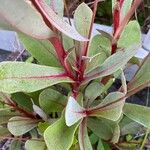
Samolus ebracteatus
Limewater Brookweed · Mojave water pimpernel · Bractless brookweed
Description
Source: leafsnapSamolus ebracteatus, the limewater brookweed, is a plant species known to Mexico, Central America, the West Indies, and to the United States (Florida, Nevada, Texas, Louisiana, Oklahoma, Kansas and New Mexico). It is found in wetlands, including seashore salt marshes, and near springs and intermittent rivers in desert areas.Samolus ebracteatus is a perennial herb up to 60 cm (24 inches) tall. Pinkish or white flowers are borne in a terminal raceme.The species is quite variable, with some recognizing 5 varieties and others not recognizing any subspecific taxa.
Care Guide
💧 Water
Bractless brookweed thrives in moist environments, which reflect its wetland origins. While it can tolerate short periods of dryness, it truly flourishes with consistent moisture and typically requires weekly watering. It is best suited for outdoor cultivation, where it can benefit from natural rainfall. Its growth is closely linked to the availability of water.
☀️ Light Full sun
Bractless brookweed grows best with plentiful sunlight, indicating a preference for open, sunlit habitats. It can tolerate situations in which sunlight is not continuous. Its condition may worsen in shaded spots where light is filtered or limited.
What are the sunlight requirements for Bractless brookweed?
Bractless brookweed thrives best in environments that provide an abundance of sunlight, indicating a preference for open and sunny areas. To cater to its needs, it is essential to ensure the plant receives more than 6 hours of direct sunlight daily for full sun exposure, while partial sun exposure consists of about 3-6 hours of sunlight. Natural light is pivotal for its health, and the plant's well-being could decline in shaded areas where light is scarce or filtered. It is vital to watch how sunlight moves through your garden, finding spots that offer a balance of light and shade to guarantee the happiness and health of your plants.
How does artificial lighting benefit indoor Bractless brookweed plants?
In cases where natural sunlight is insufficient, particularly during winter or in areas that do not receive enough sun, artificial lighting becomes a crucial factor for the growth of indoor Bractless brookweed plants. Adequate artificial lighting promotes faster and healthier growth. LED lights are recommended due to their ability to mimic the specific wavelengths of light needed by plants. Full sun plants require 30-50 watts per square foot of artificial light, partial sun plants need 20-30 watts per square foot, and full shade plants require 10-20 watts per square foot. The light source should be placed 12-36 inches above the plant, emulating natural sunlight, and it is recommended to maintain the artificial lighting for 8-12 hours per day to mimic the natural daylight hours for your plant species.
What symptoms indicate light deficiency in Bractless brookweed?
Symptoms of light deficiency in Bractless brookweed are not always readily apparent, especially when the plant is kept indoors with inadequate lighting. Such symptoms include smaller new leaves compared to the previous ones, leggy or sparse growth indicating a stretch for light, faster leaf drop to conserve resources, slower or no new growth as the plant enters survival mode, and the development of lighter-colored or chlorotic leaves which signifies a lack of chlorophyll. Excessive sunlight can also lead to leaf scorching, sunscald, leaf curling as a defense mechanism, wilting due to loss of water, and chlorosis where leaves turn yellow from the breakdown of chlorophyll, affecting photosynthesis.
What solutions are recommended for Bractless brookweed experiencing light deficiencies?
To address light deficiencies in Bractless brookweed, especially for indoor plants, gradually moving the plant to a sunnier location each week until it receives at least 6 hours of sunlight daily is advisable. Utilize a south-facing window and keep the curtains open during the day for maximum exposure. If moving the plant is not an option, or for additional light, consider artificial lighting, like desk or ceiling lamps for at least 8 hours daily, or invest in professional plant grow lights. For outdoor plants, similarly, gradually moving them to sunnier spots helps avoid sunburn. If plants are in the ground, identify and reduce obstructions such as overhanging branches, and consider transplanting smaller plants during their dormant period to a location with ample sunlight and good drainage. Note that while some parts of the plant affected by insufficient sunlight may not recover, new growth will be healthy with improved light exposure.
🌡️ Temperature 15–37.8°C
Bractless brookweed adapts well to heat, tolerating high temperatures and wide temperature fluctuations. In hot conditions, care should be taken with watering and by providing adequate shade to avoid sunburn. Conversely, Bractless brookweed is fairly sensitive to low temperatures. Although it can handle some cold, very low temperatures can result in frost damage.
💨 Humidity
🪴 Soil 5-7
🌱 Fertilizer
One fertilizer application in spring is typically adequate for Bractless brookweed, though repeated feedings can maximize growth. Apply fertilizer every one to one and a half months. Fertilization improves leaf appearance and function, encouraging even color and a healthy texture. It also promotes root development and nutrient uptake for long-term plant health.
🪴 Pot & Repot
✂️ Pruning
Bractless brookweed is a low-growing wetland plant characterized by its green leaf rosettes. Essential pruning involves removing dead leaves from early to late spring, which helps stimulate new growth. Regular pruning not only encourages denser foliage but also prevents overcrowding. Be sure to use clean, sharp tools to minimize the risk of disease.
🌿 Propagating
🐛 Diseases & pets
☠️ Toxicity
Characteristics
- Plant Type
- Herb
- Life Cycle
- Perennial
- Genus
- Samolus
- Family
- Primulaceae
- Hardiness Zone
- 8-11
- Mature Height
- 61 cm
- Mature Spread
- 10 cm to 20 cm
- Leaf Color
- Light Green
- Leaf Type
- Evergreen
- Flower Color
- White
- Flower Size
- 2.54 cm
- Bloom Time
- Late spring, Summer, Early fall
- Planting Time
- Spring, Summer, Autumn
- Harvest Time
- Mid summer, Late summer, Fall