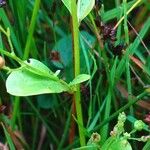
Samolus valerandi
علف جویبار، · Brookweed · Pineland Pimpernel · Seaside Brookweed · Thin Leaf Brookweed
Description
Source: leafsnapSamolus valerandi, commonly known as marsh pennywort or sea pennywort, is a perennial herbaceous plant that belongs to the family Primulaceae. Native to Europe and North America, it thrives in wetlands, marshes, and along the edges of streams and ponds. The plant exhibits a prostrate growth habit with succulent stems that can extend up to 30 cm in length. It has small, oval-shaped leaves with a glossy green appearance. The flowers are small, white or pinkish, and feature five petals arranged in clusters at the ends of the stems. Throughout history, Samolus valerandi has been valued for its medicinal properties, particularly its anti-inflammatory effects. It has been used as a herbal remedy for respiratory ailments such as asthma and bronchitis. Additionally, the plant serves as an important food source for various insects, including bees, butterflies, moths, and flies, which feed on its nectar. Birds also consume its seeds. In summary, Samolus valerandi is a fascinating herbaceous perennial that enhances wetland habitats with its beauty while offering medicinal benefits. It is a valuable addition both ecologically and medicinally.
Care Guide
💧 Water Every 7 days
Seaside brookweed originally thrives in moist environments and requires consistent moisture to grow well. Although it can tolerate moderate drought, it truly flourishes with regular watering, which helps maintain its evergreen nature and preserves its foliage throughout the year. Providing an adequate water supply is essential for keeping its greenery lush and persistent.
How should I water my Seaside brookweed?
When watering the Seaside brookweed, it is important to use filtered water at room temperature. Tap water may contain harmful particles that can negatively affect the plant. The water should be at room temperature or slightly warmer because the Seaside brookweed thrives in warm environments and cold water can be a shock to its system. To avoid complications with foliage, it is best to avoid watering from above. Instead, water the plant by applying filtered room temperature water directly to the soil until it is completely soaked. This method of watering is beneficial as it helps moisten the roots and allows them to spread through the soil to collect necessary nutrients.
What should I do if I give my Seaside brookweed too much or too little water?
Overwatering and underwatering can harm your Seaside brookweed, but overwatering is a more common problem. When the plant gets too much water, its stems and leaves may wilt and turn yellow. Over time, overwatering can also cause diseases like root rot, mold, and mildew, which can be fatal for your plant. Underwatering is less likely for the Seaside brookweed because it can tolerate drought. However, it can still happen and will cause the leaves to become brittle and brown. It's important to recognize the signs of overwatering early on. Some diseases caused by overwatering, like root rot, may be irreversible if not addressed promptly. If you see these signs, reduce your watering schedule immediately and check the drainage of the soil. If the soil doesn't drain well, replace it with a loose, well-draining potting mix. If you notice signs of underwatering, simply water your plant more frequently until the signs disappear.
How many times should I water my Seaside brookweed?
If your Seaside brookweed is in a pot, you can check if it needs water by touching the soil. Stick your finger into the soil and if the top two to three inches are dry, it's time to add water. If your Seaside brookweed is planted outdoors in the ground, you can use the same method. Check if the top few inches of soil are dry, and if they are, it's time to water. In the spring and early fall, you'll generally need to water once a week. However, during extremely hot weather, you may need to water twice a week or more. It's worth noting that mature, well-established Seaside brookweed can withstand drought quite well.
How much water does my Seaside brookweed require?
When it's time to water your Seaside brookweed, don't hesitate to give it a generous amount of water. Make sure the top two to three inches of soil are dry before watering and then give it a thorough watering, enough to completely soak the soil. You'll know you've added enough water when you see excess water draining from the pot's drainage holes. If water is not draining, you may have underwatered the plant or have poorly draining soil, both of which should be avoided. Avoid letting water accumulate in the soil, as it can be harmful to the plant. If the plant is outside, 1 inch of rain per week should be sufficient.
How do I water my Seaside brookweed when it is growing at different stages?
The water needs of the Seaside brookweed vary throughout its growth stages. When the plant is young or has been recently transplanted, it requires more water to support root development and future growth. As it matures, the water requirement decreases. Additionally, during the bloom period, the plant may need more water to support flower development.
☀️ Light Partial sun
Seaside brookweed does best when it gets continuous full sunlight, which encourages healthy development. It is native to coastal areas where it receives a large amount of sun. If light is insufficient it can have trouble growing and may show signs of weakening. Conversely, excessive sun does not harm it because it has no upper limit to its light tolerance.
What are the sunlight requirements for Seaside brookweed?
Seaside brookweed requires full sun, which means it needs above 6 hours of sunlight daily to thrive. It's native to coastal locations where it benefits from a substantial amount of sunlight. The plant's health is optimal when exposed to consistent full daylight. However, it's sensitive to light conditions; inadequate light can hinder its growth and cause signs of weakening, but it tolerates well to high levels of sunlight without any harm.
How can artificial lighting be used for Seaside brookweed indoors?
For indoor Seaside brookweed plants, artificial lighting is a worthwhile solution when natural sunlight is insufficient, especially during winter or in less sunny spaces. LED lights are recommended as they can be customized to provide specific wavelengths needed for the plant's growth. The artificial light requirements vary by sun exposure levels; full sun plants need 30-50W/sq ft, partial sun plants need 20-30W/sq ft, and shade plants need 10-20W/sq ft. The light source should be 12-36 inches above the plant, and the duration should mimic natural daylight hours, typically 8-12 hours per day.
What are the symptoms of inadequate light exposure in Seaside brookweed?
Seaside brookweed exhibits several symptoms when subjected to inadequate light exposure, including the growth of smaller new leaves, leggy or sparse growth, faster leaf drop, slower or halted new growth, and lighter-colored new leaves. Other issues like chlorosis, sunscald, leaf curling, wilting, and leaf scorching can arise either from insufficient light or excessive sunlight exposure.
What solutions are recommended for light exposure issues with Seaside brookweed?
Addressing light exposure issues involves both preventive and corrective actions. Indoors, progressively moving plants to sunnier spots each week until achieving at least 6 hours of direct sunlight daily is key. Utilizing a south-facing window and keeping curtains open during the day or employing artificial lighting, like desk or ceiling lamps for at least 8 hours daily, can be beneficial. Outdoors, gradually relocating plants to brighter areas helps them adapt without the risk of sunburn. Obstruction reduction, like pruning trees that block sunlight, and transplanting during a plant's dormant period to a location with ample sunlight and good drainage, are effective strategies for outdoor and ground-planted Seaside brookweed.
🌡️ Temperature 5–35°C
Seaside brookweed originates in temperate areas and does well in temperatures from 41 to 95 °F (5 to 35 ℃). In colder months, prevent temperatures from falling below 41 °F (5 ℃) to ensure optimal growth.
What temperatures can Seaside brookweed tolerate?
Seaside brookweed, botanically known as Samolus valerandi, is native to temperate regions and can thrive in a temperature range of 41 to 95 °F (5 to 35 °C). It exhibits strong cold resistance and usually does not require special frost protection measures during winter. However, it's crucial to ensure the temperature does not drop below 41 °F (5 °C) for optimal growth. If winter temperatures are expected to drop below -25°C, providing cold protection by covering the plant with soil or straw is important. To further protect the plant, abundant watering before the first freeze in autumn is recommended to keep the soil moist and help prevent drought and water scarcity during winter and early spring.
How does low temperature affect Seaside brookweed and what should I do?
Seaside brookweed is cold-tolerant, best thriving when the temperature remains above 5°C. During winter, it's crucial to prevent the temperature from dropping below -20°C. If temperatures fall below -25°C, the plant may not show immediate changes, but there could be a significant decrease in sprouting or even no sprouting at all by springtime. To manage this, it's advised to remove any parts of the plant that have failed to sprout in the spring.
How does high temperature affect Seaside brookweed and what are the solutions?
During the summer, it's key to ensure Seaside brookweed's environment does not exceed 35°C. Temperatures above 38°C can lead to the leaves lightening in color, becoming prone to curling, susceptible to sunburn, and in severe cases, causing the entire plant to wilt and dry out. To mitigate these issues, trim away the sunburned and dried-up parts of the plant. Relocating the plant to a shaded area during the midday and afternoon sun, or using a shade cloth, can prevent further damage. Additionally, watering the plant in the morning and evening to maintain soil moisture is essential for the plant's health during high temperatures.
💨 Humidity high (>60%)
This plant needs special care because it loves high humidity levels of 60-80% or more. The best way to achieve this is by placing a humidifier near the plant. Daily misting is also essential! Make sure the room has good ventilation.
🪴 Soil
🌱 Fertilizer
For seaside brookweed, apply balanced-nutrient fertilizers every three months, with reduced amounts in the winter. Use liquid fertilizers during periods of active growth, but be careful not to over-fertilize, as this can damage the plant. Make seasonal adjustments and follow the instructions on the labels to ensure you are meeting the specific needs of seaside brookweed. This will help maintain its optimal health.
🪴 Pot & Repot 2-3 years
Repot seaside brookweed every 2 to 3 years during early spring. Use a slightly larger pot that has good drainage. After repotting, ensure the soil remains consistently moist and place the plant in bright, indirect light to help it recover and encourage healthy growth.
✂️ Pruning
Seaside brookweed is characterized by its lush foliage and small white flowers, thriving in areas close to water. To promote healthy growth, prune the plant from early to late spring, concentrating on removing dead or overcrowded stems. Light trimming helps maintain the plant's shape and encourages blooming. Additionally, this practice enhances airflow and sunlight exposure, helping to prevent disease.
🌿 Propagating
🐛 Diseases & pets
☠️ Toxicity
Characteristics
- Plant Type
- Herb
- Life Cycle
- Perennial
- Genus
- Samolus
- Family
- Primulaceae
- Hardiness Zone
- 5-9
- Mature Height
- 34 cm
- Mature Spread
- 10 cm to 20 cm
- Leaf Color
- Green, Blue
- Leaf Type
- Evergreen
- Flower Color
- White
- Flower Size
- 0.25 cm
- Bloom Time
- Late spring, Summer
- Planting Time
- Spring, Summer, Autumn
- Harvest Time
- Mid summer, Late summer, Early fall, Mid fall