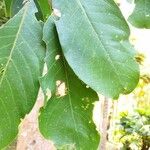
Sandoricum koetjape
Santol · Kechapi · Red santol · Sentol · Sentul
Description
Source: leafsnapSandoricum koetjape, the santol, sentul or cotton fruit, is a tropical fruit native to maritime Southeast Asia (Malesia).
Care Guide
💧 Water
Cotton fruit flourishes in humid tropical environments, where it prefers regular watering—ideally once a week—but can tolerate short periods of drought. As an evergreen plant, it requires consistent soil moisture to prevent leaf drop. When grown outdoors, it benefits from rainwater, which naturally meets its watering needs.
☀️ Light Full sun
Cotton fruit grows best in full sun, though it also copes well with slightly reduced light. Native to sunny habitats, the plant’s development and overall health are significantly influenced by light exposure. Too little light can lead to slower growth, while too much can cause stress.
What are the sunlight requirements for Cotton fruit?
Cotton fruit, or Sandoricum koetjape, requires full sun, defined as more than 6 hours of sunlight daily, to thrive optimally. It can also adapt to partial sun, which amounts to about 3-6 hours of sunlight. When selecting a planting location, it's essential to observe how sunlight moves through the garden to ensure the plants receive the perfect balance of light and shade, promoting their health and growth.
How does sunlight exposure affect the growth and health of Cotton fruit?
Cotton fruit originates from environments abundant in sunlight, making sunlight exposure crucial for its growth and health. Ideally, the plant should be fully exposed to the sun, although it can adapt to slightly dimmer conditions. Insufficient sunlight can lead to slower growth, while too much sunlight can stress the plant. Additionally, artificial lighting can support indoor Cotton fruit plants by providing the necessary wavelengths for optimal growth, with recommendations varying based on the specific sunlight needs of the plant.
What are the effects of insufficient or excessive sunlight on Cotton fruit, and how can they be remedied?
Cotton fruit may exhibit several symptoms due to inappropriate light levels, such as small leaves, leggy growth, faster leaf drop, slower or no new growth, lighter-colored new leaves, chlorosis, sunscald, leaf curling, wilting, and leaf scorching. To address these issues, gradually increasing sunlight exposure or using artificial lighting can be effective. For indoor plants, moving them to a sunnier location or using artificial lights for at least 8 hours daily can help. Outdoor plants can be gradually moved to better-lit spots. Pruning or transplanting might be necessary to reduce obstructions and ensure ample sunlight.
🌡️ Temperature 20–37.8°C
In its native growing environment, cotton fruit prospers at temperatures between 68 and 100 °F (20 to 38 ℃). To accommodate seasonal changes, adjusting temperature within this range is essential for the healthy growth of cotton fruit.
What is the preferred growth temperature for Cotton fruit?
Cotton fruit, also known by its botanical name Sandoricum koetjape, thrives best in its native growth environment where the temperature ranges from 68 to 100 °F (20 to 38 °C). This plant is extremely heat-loving, making it essential to modulate the temperature within this range to support its healthy growth. It is particularly susceptible to cold temperatures, which can cause harm. During winter, maintaining temperatures above 20°C is beneficial for the plant's growth, while any temperatures approaching 5°C can be detrimental.
How should Cotton fruit be cared for in autumn and winter?
In the autumn, it is advised to bring outdoor-grown Cotton fruit indoors to protect it from the cold. Placing it near a bright window allows it to get enough light, but it should be kept away from heaters to avoid excessively dry air. Ensuring that the temperature remains above 20°C during winter is crucial for the Cotton fruit's growth. This careful management helps prevent the damage cold temperatures could cause to the plant.
What are the symptoms of low temperature exposure in Cotton fruit and how can they be addressed?
Cotton fruit, favoring warm conditions, shows distinct symptoms when exposed to low temperatures. These include lightening of the leaves' color when temperatures drop below 1°C, eventually turning brown or black with signs of wilting and drooping after frost damage. To address this, it's recommended to trim off the frost-damaged parts and move the plant to a warm environment indoors. Positioning the plant near a south-facing window can ensure it receives ample sunlight while avoiding placement near heaters or air conditioning vents to prevent air dryness.
How should Cotton fruit be handled during high temperature periods?
During summer, when temperatures rise, Cotton fruit should be kept below 38°C to prevent stress from high heat. Exposure to temperatures exceeding 43°C may lighten the leaves' color and increase susceptibility to sunburn. To mitigate this, trim away the sunburned and dry parts and move the plant to a shaded location, particularly away from the harsh midday and afternoon sun. It's also beneficial to water the plant in the morning and evening to maintain soil moisture.
💨 Humidity
🪴 Soil 6-7
🌱 Fertilizer
Use organic fertilizers (e.g., fish emulsion, compost) instead of chemical fertilizers for Cotton fruit. Give young plants higher nitrogen and phosphorus in spring. Mix compost or fertilizer into the soil before or after planting. For mature plants, apply a balanced fertilizer or one targeted to specific deficiencies in spring. Nutrient deficiency leads to small leaves, short branches, yellow or bronze leaves, acidic fruits, early fruit drop, and fruit splitting.
🪴 Pot & Repot
✂️ Pruning
Cotton fruit trees, known for their thick leaves and large fruits, benefit greatly from regular pruning. The best time to prune these trees is in winter when they are dormant. During this period, focus on removing dead wood, thinning out branches, and shaping the tree to promote growth. This process improves air circulation and increases fruit yield, helping to maintain a healthy plant.
🌿 Propagating
🐛 Diseases & pets
☠️ Toxicity
Characteristics
- Plant Type
- Tree
- Life Cycle
- Perennial
- Genus
- Sandoricum
- Family
- Meliaceae
- Hardiness Zone
- 10-11
- Mature Height
- 45.72 m
- Mature Spread
- 0.91 m to 1.52 m
- Leaf Color
- Dark Green, Forest Green
- Leaf Type
- Evergreen
- Flower Color
- White, Yellow
- Flower Size
- 1.02 cm
- Bloom Time
- Mid spring, Late spring, Early summer
- Planting Time
- Autumn
- Harvest Time
- Mid summer, Late summer, Early fall, Mid fall
- Native Area
- Malaysia, Indonesia, Cambodia, Vietnam, Myanmar, Singapore, Laos, Brunei, Thailand