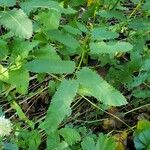
Sanguisorba canadensis
White burnet · Wild burnet · Canadian burnet · Canada Burnet · Bottlebrush
Description
Source: leafsnapSanguisorba canadensis, the white burnet or Canadian burnet, is a species of flowering plant in the Rose family Rosaceae, native to North America. This herbaceous perennial commonly grows in bogs, swamps, and roadsides from Labrador to Georgia. It grows four to five feet (1.2 to 1.5 m) tall, with creamy white flowers in cylindrical spikes, appearing from summer into autumn.Unlike its close relatives, Sanguisorba officinalis (great burnet) and Sanguisorba minor (salad burnet), the leaves must be cooked to be eaten, in order to remove the bitterness.
🌳 Canadian burnet may not be famous for its usefulness in everyday human endeavors, yet it plays an important role in ecological restoration. As a species that does well in waterlogged areas and along riparian margins, it is used in projects designed to rehabilitate wetlands. Its sturdy root system helps hold soil in place and supplies shelter and food for a range of wildlife species, making it an environmental asset that is often overlooked in discussion.
Care Guide
💧 Water
Originating in moist meadows, Canadian burnet thrives in damp conditions but can also tolerate some drought. For optimal growth, it needs weekly watering and does best outdoors, where it can benefit from natural rainfall during its active growing season.
What should I do if I give too much or too little water to my Canadian burnet?
Overwatering and underwatering can harm your Canadian burnet, but overwatering is the more common issue. Excessive watering can cause wilting and yellowing of the stems and leaves. It can also lead to diseases like root rot, mold, and mildew, which can be fatal for your plant. Underwatering is less likely, as Canadian burnet has good drought tolerance. However, it is still possible, resulting in brittle and brown leaves. It is important to identify early signs of overwatering and act promptly. Some diseases caused by overwatering, such as root rot, may be irreversible if not addressed early. If you notice these signs, reduce your watering schedule and check the soil drainage. Replace poorly draining soil with a loose, well-draining potting mix. If your Canadian burnet shows signs of underwatering, increase watering until the signs improve.
How much water does my Canadian burnet plant need?
If your Canadian burnet is in a pot, the most precise way to determine if it needs water is to check the soil with your finger. If the top two to three inches of soil are dry, it's time to water it. The same method can be used for Canadian burnet plants grown outdoors in the ground. Once again, if the first few inches of soil have dried out, it's time to water. During spring and early fall, watering once a week is usually sufficient. However, during extremely hot weather, you may need to water the plant twice a week or more. It's important to note that mature and well-established Canadian burnet plants have impressive drought tolerance.
How much water does my Canadian burnet plant require?
When watering your Canadian burnet, it's important to be generous with the amount of water you give. Wait until the first two to three inches of soil are dry, then water the plant thoroughly. Make sure the soil is completely soaked, adding enough water so that it drains out of the bottom of the pot. If you don't see excess water draining, you may have not watered enough, but be careful not to let water accumulate in the soil which can harm the plant. On the other hand, if water doesn't drain well, it indicates poorly draining soil which is bad for the plant's health. If the plant is outside, 1 inch of rain per week is adequate.
How do I water my Canadian burnet at different stages of growth?
The water needs of the Canadian burnet can vary depending on its growth stages. When the plant is in its early years or has just been transplanted, it requires more water. This is because during these stages, the plant puts a lot of energy into developing new roots which are essential for future growth. These new roots perform better with slightly more moisture. However, as the Canadian burnet matures, it will require less water. Another stage in which the plant may need more water is during its bloom period. Flower development requires a significant amount of moisture, hence the need for additional watering at this time.
How should I give water to my Canadian burnet in different seasons?
The water needs of the Canadian burnet change throughout the year. In the summer, especially during the hottest months, the plant requires the most water. Depending on how quickly the soil dries out, you may need to water it more than once a week. On the other hand, during the winter, the plant goes into a dormant phase and requires much less water. It might not need any watering at all during this time. If you do choose to water it, you should only do so about once a month. Overwatering in the winter can increase the risk of disease for the Canadian burnet.
☀️ Light Full sun
The canadian burnet requires a substantial amount of sunlight to grow vigorously, though it can also tolerate less luminous conditions. It originates from habitats with considerable sun exposure; however, excessive light can scorch its leaves, while insufficient light may slow its development. Therefore, sunlight plays a decisive role in its vitality.
What are the sunlight requirements for Canadian burnet?
Canadian burnet requires a considerable amount of sunlight for robust growth and is tolerant of less intense light conditions as well. It thrives best in environments that provide it with significant exposure to sunlight, which is crucial for its vitality. In terms of specific requirements, full sun exposure means the plant should receive more than 6 hours of sunlight daily, while partial sun refers to about 3-6 hours of sunlight. It's important to monitor how sunlight moves through your garden to find the perfect spots that offer a balance of light and shade for your plants.
How can artificial lighting be used for indoor Canadian burnet plants?
For indoor Canadian burnet plants or when natural sunlight is insufficient, especially in winter or less sunny locations, artificial lighting becomes necessary for optimal growth. LED lights are recommended because they can be adjusted to provide the specific light wavelengths needed. Full sun plants should get 30-50W/sq ft of artificial light, partial sun plants 20-30W/sq ft, and full shade plants 10-20W/sq ft. The artificial light source should be placed 12-36 inches above the plant to mimic natural sunlight, and the duration should mimic natural daylight hours, with most plants needing 8-12 hours of light per day.
What are the common symptoms of inadequate sunlight in Canadian burnet?
Common symptoms of inadequate sunlight in Canadian burnet include smaller new leaves, leggy or sparse growth, faster leaf drop, slower or no new growth, lighter-colored new leaves, and specific conditions like chlorosis (leaves turning yellow), sunscald (damage from intense light), leaf curling (as a defense against excessive sunlight), wilting (due to increased water loss), and leaf scorching (brown, dry patches on leaves due to excessive sunlight). Each symptom indicates the plant's struggle with its light environment, whether from too little or too much exposure.
How can I address sunlight-related issues for Canadian burnet?
To address sunlight-related issues for Canadian burnet, gradually acclimate your plant to receive the appropriate amount of sunlight, ideally at least 6 hours daily for outdoor plants. Use a south-facing window for indoor plants, keeping curtains open during the day, or use artificial lights if the plant is large or immobile. For outdoor plants, slowly move them to sunnier spots each week to avoid sunburn. If your plants are affected by low light, new growth should improve with increased light exposure. Additionally, reduce obstructions by pruning trees or moving plants to sunnier locations and ensure good drainage if transplanting.
🌡️ Temperature 5–32.2°C
Canadian burnet originates from areas with temperatures that range from 41 to 90 °F (5 to 32 ℃). When grown in cultivation, watch seasonal shifts to avoid chilling or excessive heat.
What are the ideal growing conditions for Canadian burnet?
Canadian burnet thrives in climates where temperatures range from 41 to 90 °F (5 to 32 °C). It's indigenous to areas with such temperature fluctuations and possesses strong cold resistance, meaning special frost protection measures are typically unnecessary. However, it does require some care with seasonal changes to prevent chilling or overheating. During winter, especially if temperatures are expected to drop below -30°C, it is important to provide some degree of cold protection by covering the plant with soil or straw and ensuring the soil is moist before the first freeze to prevent drought and water scarcity.
How does Canadian burnet react to low temperatures?
Canadian burnet is notably cold-tolerant, flourishing best when temperatures stay above 5°C. While it can generally withstand winter conditions without noticeable change, temperatures dropping below -30°C may lead to a decrease in sprouting or even a lack of sprouting come springtime. To manage this, it's advised to remove any parts of the plant that have failed to sprout as the weather warms in the spring.
What should I do if Canadian burnet is exposed to high temperatures?
Canadian burnet should ideally be kept under 32°C during the summer months. Exposure to temperatures above 35°C can cause its leaves to lighten in color, become prone to curling, suffer from sunburn, and in extreme cases, the entire plant may wilt and dry out. To mitigate these effects, trim away the sunburned and dried-up parts of the plant. Additionally, relocating the plant to a shaded area during the midday and afternoon sun, or using a shade cloth, can be beneficial. Keeping the soil moist through morning and evening watering is also crucial in high temperatures.
💨 Humidity
🪴 Soil 5-7
🌱 Fertilizer
The best time to fertilize a Canadian burnet is in early spring, when it is coming out of dormancy and starting active growth. Fertilizing supplies essential nutrients needed for healthy development. While Canadian burnet has fairly low fertilizer requirements, an annual application can improve its chances of survival and encourage healthier, longer-lasting flowers.
Why should I add fertilizer to my Canadian burnet?
Fertilization is important for the Canadian burnet because it provides essential nutrients for both above and below ground growth. While the overall fertilization needs for the Canadian burnet are relatively low, annual fertilization can be highly beneficial. It helps to keep the plant alive and may also enhance flower quality and longevity. Therefore, those wanting their Canadian burnet to thrive should make sure to fertilize it on a yearly basis.
When should I put fertilizer on my Canadian burnet plant?
The best time to fertilize a Canadian burnet is in late winter to early spring, when it is transitioning from dormancy to active growth. This ensures the plant starts the season with healthy growth. Fertilizing in fall is also acceptable, but it is not recommended to fertilize in summer or winter.
When is it not a good idea to fertilize my Canadian burnet plant?
To properly care for your Canadian burnet, it is best to only fertilize it during the late winter and early spring. This plant has minimal fertilization needs, so a single feeding during this time should be sufficient. Overfertilizing can be problematic and is easily avoided by refraining from fertilizing during the spring, summer, and fall, unless you missed fertilizing in the spring, in which case feeding in the fall is acceptable. It's important to note that there is no need to fertilize the plant during the winter when it is in a dormant growth phase and not actively growing.
What kind of fertilizer does my Canadian burnet plant need?
For a Canadian burnet, almost any general-purpose fertilizer with a balanced amount of the three main plant nutrients will work well. However, there are a few specific nutrient blends that can be even more beneficial. Many gardeners believe that higher amounts of phosphorus result in stronger roots and better flowers, which is ideal for Canadian burnet since it is a flowering plant. Whether you choose a granular or liquid form, just make sure the fertilizer contains plenty of nutrients. Additionally, you can improve the soil for your Canadian burnet using organic methods like compost, manure, and similar materials. These will help create a healthy growing medium for your plant.
How can I provide nutrients to my Canadian burnet plant?
The most common way to fertilize a Canadian burnet is by applying granular or pellet fertilizer to the soil around your plant. It's important to note that the best time to fertilize is when the plant is transitioning from its dormant phase to active growth, typically in early spring when shoots start to emerge. If you prefer liquid fertilizer instead, make sure to dilute it with water before applying. Whether using granular or liquid fertilizer, it's always recommended to moisten the soil before, during, and after application.
🪴 Pot & Repot
✂️ Pruning
Canadian burnet is characterized by its tall, slender stems and fluffy white flower clusters. To maintain its health and promote robust growth, prune the plant from early to late spring. This involves removing damaged stems and thinning out overcrowded areas to improve air circulation. Be sure to use clean, sharp tools during pruning to prevent disease and keep the plant healthy.
🌿 Propagating
🐛 Diseases & pets
☠️ Toxicity
Characteristics
- Plant Type
- Herb
- Life Cycle
- Perennial
- Genus
- Sanguisorba
- Family
- Rosaceae
- Hardiness Zone
- 4-8
- Mature Height
- 0.61 m to 1.22 m
- Mature Spread
- 91 cm
- Leaf Color
- Green
- Leaf Type
- Deciduous
- Flower Color
- White
- Flower Size
- 2.54 cm
- Bloom Time
- Early summer, Mid summer
- Planting Time
- Spring, Summer
- Harvest Time
- Mid summer
- Native Area
- Russia, Koppen, Japan, China