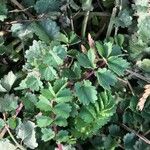
Sanguisorba minor
توت روباهی، · Salad Burnet · Garden burnet · Small burnet · Little burnet
Description
Source: leafsnapSanguisorba minor, commonly known as Salad Burnet, is a perennial herbaceous plant within the Rosaceae family. Native to Europe and Western Asia, it has also been naturalized in North America. The plant can grow up to 60 cm tall and features a basal rosette of dark green, pinnate leaves. These leaves possess a mildly bitter taste with a hint of cucumber, making them a delightful addition to salads. From June through August, Salad Burnet produces small red or pink flowers on long stems. These flowers are hermaphroditic, containing both male and female reproductive organs. Salad Burnet thrives in well-drained soil with full sun exposure, though it can also tolerate partial shade. Once established, it is drought-tolerant but requires regular watering during the growing season. Historically, the plant has been used for medicinal purposes due to its anti-inflammatory properties and ability to aid digestion. It was also an herbal remedy for wounds during World War I. Moreover, Salad Burnet attracts pollinators such as bees and butterflies with its nectar-rich flowers, making it an excellent addition to any garden or landscape design. Overall, Sanguisorba minor is a versatile herbaceous perennial suitable for both indoor and outdoor cultivation. It offers numerous benefits, from culinary and medicinal uses to enhancing the beauty of any garden design in which it's included.
Care Guide
💧 Water Every 3 days
Although burnet is drought tolerant, it should be maintained just damp as it grows for the optimum flavor. Although this plant will not tolerate wet roots, it should not be allowed to dry out completely. Watering the plants on a weekly basis, at least one inch will keep them cool and fruitful throughout the summer.
☀️ Light Full sun
Salad burnet prefers locations that receive direct sunlight for most of the day. It can also tolerate and grow in spots that get sun only part of the day. Too much or too little sunlight can result in poor growth and reduced plant health. Coming from sun-rich regions, salad burnet performs best with adequate sunlight.
🌡️ Temperature 5–32.2°C
Salad burnet is indigenous to cooler regions and grows best in temperatures between 41 and 89.6 °F (5 and 32 ℃). Although it can tolerate conditions outside this span, precautions are advisable during extreme heat or freezing. Provide shade or frost protection as required.
💨 Humidity
🪴 Soil 6-7
🌱 Fertilizer
To maximize Salad burnet's yield and flavor, provide ample nitrogen throughout the growth cycle, including pre-planting and at harvest. Plants that are well-watered and fertilized produce abundant, healthy leaves and reduce bitterness. Before planting, enrich the soil with organic matter such as compost or manure, ideally 2 to 8 weeks beforehand.
🪴 Pot & Repot
✂️ Pruning
To encourage fresh green growth, remove flower stalks as they mature. Younger leaves and plants are more sensitive and delicious than older leaves and plants. Each year, divide the salad burnet to produce new plants. Salad burnet spreads by rhizome, so keep an eye on it.
🌿 Propagating
🐛 Diseases & pets
☠️ Toxicity
Characteristics
- Plant Type
- Herb
- Life Cycle
- Perennial
- Genus
- Sanguisorba
- Family
- Rosaceae
- Hardiness Zone
- 4-8
- Mature Height
- 15 cm to 30 cm
- Mature Spread
- 20 cm to 40 cm
- Leaf Color
- Green, Gray
- Leaf Type
- Evergreen
- Flower Color
- Pink
- Flower Size
- 0.51 cm to 1.02 cm
- Bloom Time
- Late spring, Early summer, Mid summer
- Planting Time
- Spring, Winter
- Harvest Time
- Early summer, Mid summer
- Native Area
- Libya, Egypt, Turkey, Austria, Slovakia, Montenegro, Slovenia, Morocco, Croatia, Belarus, Russia, Iraq, Germany, Estonia, Romania, Latvia, Belgium, Moldova, Portugal, Netherlands, France, Tunisia, Czech Republic, Cyprus, Bulgaria, Poland, Greece, Ukraine, Lebanon, Serbia, Lithuania, Afghanistan, Syria, Italy, Spain, Switzerland, Denmark, Iran, Albania, Ireland, United Kingdom, Hungary, Algeria