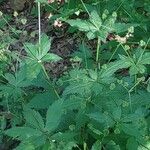
Sanicula canadensis
Canada sanicle · Canadian black snakeroot · Canadian blacksnakeroot · Black Snakeroot · Canada Black-snakeroot
Description
Source: leafsnapSanicula canadensis, commonly known as Canadian blacksnakeroot or black snakeroot, is a perennial herbaceous plant that belongs to the Apiaceae family. Native to North America, it thrives in various habitats, including woodlands, meadows, and wetlands. This plant grows up to 60 cm tall and features a hairy stem with alternate leaves that are deeply lobed or toothed. Its small, greenish-white flowers are arranged in clusters at the top of the stem. The fruit is a small, bur-like structure covered with hooked bristles that attach to clothing or animal fur for dispersal. Native Americans have historically used Sanicula canadensis for medicinal purposes to treat ailments such as snakebites, toothaches, coughs, and colds. The plant contains compounds like saponins, known for their anti-inflammatory properties. Ecologically, the plant plays an important role by providing food for pollinators like bees and butterflies and serving as a habitat for various insects. Overall, Sanicula canadensis is an important native perennial herb with medicinal properties and significant ecological value in its natural habitat.
🌳 Canadian black snakeroot has an important role in the life cycle of some butterfly species. These plants act as key host plants for caterpillars, supplying food and shelter that enable butterfly populations to continue. This reciprocal relationship often goes unrecognized but is essential for preserving local biodiversity and the overall health of the ecosystem.
🎭 Fortune, wealth
Care Guide
💧 Water Every 7 days
Canadian black snakeroot thrives in moderately moist environments, benefiting from weekly watering to maintain the ideal moisture levels. Its growth cycle is influenced by rainfall patterns, so effective water management is essential during the growing season. This plant is typically found outdoors in its natural habitat.
How should I water my Canadian black snakeroot?
To properly water the Canadian black snakeroot, it is best to use filtered water at room temperature. Tap water may contain harmful particles, so filtered water is preferred. It is important to use room temperature or slightly warmer water since the Canadian black snakeroot is accustomed to a warm environment. Cold water can be a shock to its system. Additionally, overhead watering should be avoided as it can lead to problems with the foliage. Instead, gently water the soil with filtered, room temperature water until it is fully saturated. This helps to moisturize the roots and allows them to spread through the soil to gather necessary nutrients.
What do I do if I give too much or too little water to my Canadian black snakeroot?
Overwatering is a more common issue for the health of your Canadian black snakeroot. When it receives too much water, its stems and leaves may wilt and turn yellow. Overwatering over a long period can also cause diseases like root rot, mold, and mildew, which can be fatal for the plant. Underwatering is less common, but it can still happen. When it occurs, the leaves of your Canadian black snakeroot become brittle and brown. It's important to notice the signs of overwatering early and take action. Some diseases caused by overwatering, like root rot, may not be fixable if you wait too long. Reduce your watering schedule immediately if you see early signs of overwatering. Also, check the soil quality. If it drains poorly, replace it with a loose, well-draining potting mix. If your Canadian black snakeroot shows signs of receiving too little water, simply water it more regularly until those signs go away.
How much should I water my Canadian black snakeroot plant?
If your Canadian black snakeroot is in a pot, the most accurate way to determine if it needs water is by sticking your finger in the soil. If the top two to three inches of soil are dry, it's time to water it. The same method can be used if you're growing the snakeroot outdoors in the ground. If the top few inches of soil have dried out, it's time to water. Usually, during spring and early fall, you'll need to water this plant about once a week using this method. However, during extremely hot weather, you may need to water it twice a week or more. Nevertheless, mature and well-established Canadian black snakeroot plants can endure drought well.
How much water does my Canadian black snakeroot plant need?
When it's time to water your Canadian black snakeroot, don't hold back on the amount of water you give. Make sure the top two to three inches of soil are dry before watering. Give the plant a generous, thorough watering so that the soil is completely soaked. The water should be enough that it flows through the drainage holes at the bottom of the pot. If you don't see any excess water draining, you may not have given enough water. However, be careful not to let water collect in the soil, as this can be harmful to the plant. On the other hand, if water is not draining properly from the pot, this might indicate that the soil doesn't drain well, which is not good for the plant's health. If the plant is outdoors, receiving about 1 inch of rain per week should be sufficient.
How should I water my Canadian black snakeroot as it grows?
The water needs of the Canadian black snakeroot vary depending on its growth stages. In the first few years and after transplanting, it requires extra water to support root development and future growth. As the plant matures, it needs less water overall. Additionally, during the bloom period, the plant uses more water for flower development, so it may need additional watering during this time.
☀️ Light Partial sun
Canadian black snakeroot grows best in moderate light but can tolerate intense sun or deep shade. Light strongly influences its development, with sunlight levels changing across its growth stages. Since it comes from habitats with variable sun exposure, too much or too little light can weaken the plant and harm its health.
What are the sunlight requirements for Canadian Black Snakeroot?
Canadian Black Snakeroot needs moderate sunlight but can thrive in both higher and lower light conditions. It requires about 3-6 hours of sunlight (partial sun) for optimal growth but can also manage in full sun or full shade, which means it can handle more than 6 hours of sunlight. The plant is adaptable to varying sunlight intensities, a trait originating from its natural habitats, which offer different levels of light exposure. However, too much or too little light can weaken the plant and affect its health. Artificial lighting, like LED lights, can be used indoors to provide the necessary light requirements. Depending on the plant's needs, the artificial light should offer 10-50W/sq ft, with the source placed 12-36 inches above the plant for 8-12 hours a day to mimic natural sunlight conditions.
What are the symptoms of inappropriate light conditions for Canadian Black Snakeroot?
When Canadian Black Snakeroot is grown under inappropriate light conditions, several symptoms can manifest. Light deficiency often leads to smaller new leaves, leggy or sparse growth, faster leaf drop, slower or halted new growth, and lighter-colored or irregularly patterned new leaves indicating a scarcity of chlorophyll and essential nutrients. Moreover, excessive sunlight can cause chlorosis, sunscald, leaf curling, wilting, and leaf scorching, all of which significantly impact the plant's health. Both insufficient and excessive light exposure disrupt the plant’s ability to photosynthesize effectively, leading to poor health and reduced growth.
How can I optimize light conditions for Canadian Black Snakeroot?
To optimize light conditions for Canadian Black Snakeroot, gradual adaptation to changing light conditions is critical. If your plant is indoors and large or not easily movable, you can use artificial lighting, such as a desk or ceiling lamp for at least 8 hours daily, or invest in professional plant grow lights. For outdoor plants, gradually move them to sunnier spots each week to adapt without getting sunburned. If your garden has light obstructions, consider pruning or transplanting smaller plants during their dormant period to a sunnier location with good drainage. Although parts of the plant affected by insufficient sunlight may not recover, new growth following adequate light exposure will be healthy. This combined approach, accommodating both natural and artificial lighting, supports the plant's overall well-being.
🌡️ Temperature 0–35°C
Canadian black snakeroot is native to habitats with moderate temperatures of 68 to 95°F (20-35°C). It thrives in those temperate conditions. Adaptable, it requires minor habitat adjustments with seasonal shifts to keep temperatures within its comfort zone for optimal growth.
What is the optimal temperature range for Canadian black snakeroot?
Canadian black snakeroot thrives in environments with moderate temperatures ranging from 68 to 95°F (20-35°C). It flourishes in temperate ambiances and is adaptable, requiring slight adjustments to its habitat during seasonal changes to maintain the temperature within its comfort zone for optimal growth.
How does Canadian black snakeroot handle cold temperatures?
Canadian black snakeroot has strong cold resistance and special frost protection measures are usually not necessary during winter. However, if temperatures are expected to drop below -40°C, it is important to provide cold protection by covering the plant with materials such as soil or straw. Additionally, before the first freeze in autumn, watering the plant abundantly to ensure the soil remains moist and enters a frozen state helps prevent drought and water scarcity for the plant during winter and early spring.
What should you do if Canadian black snakeroot experiences low temperatures?
Canadian black snakeroot is cold-tolerant and thrives best when the temperature is above 20°C, but should be kept above 0°C during winter. At temperatures below -40°C, there may be a decrease in sprouting or even no sprouting during springtime. In such cases, in spring, it's recommended to remove any parts of the plant that have failed to sprout.
How should Canadian black snakeroot be cared for in high temperatures?
During summer, it is important to keep Canadian black snakeroot below 35°C. Should the temperature exceed 41°C, the leaves may become lighter in color, prone to curling, susceptible to sunburn, and in severe cases, the entire plant might wilt and dry up. The solution involves trimming away the sunburned and dried-up parts, moving the plant to a shaded location or using a shade cloth to protect it from the midday and afternoon sun, and watering the plant in the morning and evening to keep the soil moist.
💨 Humidity
🪴 Soil 5-7
🌱 Fertilizer
Canadian black snakeroot is considered a heavy feeder in terms of nutrients. It needs frequent, low doses of nitrogen and potassium fertilizers and periodic applications of phosphorus, micronutrients, sulfur, and magnesium to maintain good growth and bright coloration. Continuous fertilization throughout the growing season is needed to prevent deficiency symptoms and maintain optimal growth.
🪴 Pot & Repot
✂️ Pruning
To help your Canadian black snakeroot thrive, consider strategic pruning in early to late spring. Start by removing any dead stems to improve airflow and reduce the risk of disease, which will encourage healthy and bushy growth. Additionally, trim the plant back to its basal foliage to maintain its natural shape and vigor.
🌿 Propagating
🐛 Diseases & pets
☠️ Toxicity
Characteristics
- Plant Type
- Herb
- Life Cycle
- Biennial, Perennial
- Genus
- Sanicula
- Family
- Apiaceae
- Hardiness Zone
- 2-10
- Mature Height
- 0.3 m to 1.37 m
- Mature Spread
- 91 cm
- Leaf Color
- Green, Yellow
- Leaf Type
- Deciduous
- Flower Color
- White
- Flower Size
- 2.54 cm
- Bloom Time
- Late spring, Early summer
- Planting Time
- Spring
- Harvest Time
- Early summer, Mid summer