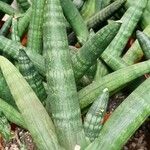
Sansevieria cylindrica
African bowstring hemp · African Spear · Cylindrical snake plant · Spear sansevieria · St George's lance
Description
Source: leafsnapSansevieria cylindrica, also known as the cylindrical snake plant or African spear plant, is a succulent species native to Angola. It is a popular houseplant due to its unique cylindrical shape and low maintenance requirements. The leaves of Sansevieria cylindrica grow upright and can reach up to 7 feet in height. These leaves are dark green with light green horizontal stripes running along their length. This plant is renowned for its air-purifying properties, as it can remove toxins such as formaldehyde, benzene, and xylene from indoor air. It also has a high tolerance for low light conditions, making it an ideal choice for indoor spaces with limited natural light. Sansevieria cylindrica requires minimal care and can thrive in various conditions, including low humidity levels and infrequent watering. It prefers well-draining soil that allows excess water to escape from the roots. Propagation of Sansevieria cylindrica is simple through division or leaf cuttings, making it an excellent choice for beginner gardeners looking to expand their collection of houseplants. Overall, Sansevieria cylindrica is an attractive and easy-to-care-for houseplant that offers numerous benefits, including air purification. It is a popular choice among homeowners looking to improve their indoor environment while adding some greenery to their living spaces.
💡 In a village, it was often reported that animals were eating the crops. To address this issue, one villager cleverly painted tiger stripes on the leaves of a green plant and placed it in the field. Surprisingly, this simple trick significantly reduced the amount of crop damage. Over time, other villagers began to imitate this method and continued the practice through generations. As a result, the plant became known for its distinctive tiger stripe pattern and is now recognized as the Sansevieria.
🌳 Contrary to the idea that the cylindrical snake plant is only an attractive houseplant, it has significant uses beyond looks. Mature cylindrical snake plant specimens produce fibers that can be made into sturdy ropes, comparable to synthetic alternatives. It also purifies the air by absorbing harmful gases like formaldehyde and benzene. Moreover, the juice from cylindrical snake plant leaves is used in beauty products for its skin-nourishing qualities, much like aloe vera.
🎭 Firmness and courage
Care Guide
💧 Water Every 14 days
The cylindrical snake plant thrives in arid conditions due to its high drought tolerance, needing water only every three weeks. It prefers well-draining soil and makes an excellent indoor plant, known for its air purification qualities and low moisture requirements. This makes it suitable for environments with consistently regulated humidity.
If I give my Cylindrical snake plant too much or too little water, what should I do?
Cylindrical snake plants are usually resilient to underwatering, but if you forget to water them for a month or more, they may appear thirsty or damaged. Signs of underwatering include a lackluster and wrinkled appearance, dried up leaves, or brown and crispy foliage. To remedy this, give your plant plenty of water by submerging the pot in water for 5-10 minutes until the soil feels moist on the surface. On the other hand, overwatering can be fatal to Cylindrical snake plants. It causes root rot, which prevents the roots from absorbing nutrients and water. Signs of overwatering include yellow, swollen, and translucent leaves, which may burst open. If left untreated, the plant may turn brown or black and the leaves may fall off easily. To address overwatering, change the growing conditions, improve air ventilation, and adjust watering frequency. Saving an overwatered plant is difficult but possible. Check the roots and soil by removing the plant from its pot and rinsing the roots in room-temperature water. If the roots are dark brown or black, soft, mushy, or slimy, it indicates root rot. If most of the roots are affected, it may be difficult to save the plant. However, if only a portion of the roots are affected, there is a chance of salvation. Remove unhealthy roots with a sterilized cutting tool and dip the healthy roots in fungicide. Then, repot the plant in fresh, well-draining soil. Although not always successful, this process often leads to recovery and new growth in the next growing season.
How frequently should I water my Cylindrical snake plant?
To determine how often to water a Cylindrical snake plant, it is best to check the soil's moisture level. You can do this by either sticking your finger in the pot or using a moisture meter. When using a deep pot, a stick or chopstick can be used to check the soil below the surface. If the soil feels even slightly moist, wait a few days and check again. Generally, most people will need to water their Cylindrical snake plant every two weeks in summer and once a month in winter. However, there are factors that can affect the frequency of watering. The section below provides some considerations to help determine the appropriate watering schedule.
What do I need to think about when watering my Snake Plant that has a cylindrical shape?
To properly water your Cylindrical snake plant, it's important to consider several environmental factors. These include the size of the container, type of soil, temperature, and humidity. The container and soil you choose will determine how often and how much water to use. Make sure your container has drainage holes to allow excess water to escape. Smaller containers hold less moisture, so they need to be watered more frequently. Larger pots retain more moisture and require less frequent watering. Avoid using an oversized pot, as this can easily lead to overwatering. When repotting, move to a container just one size larger than the current one. Shallow containers work best for Cylindrical snake plants due to their shallow root systems. In terms of seasons, Cylindrical snake plants need less water in winter and more during the active growing seasons of spring and autumn. In winter, the plant's growth slows down, and evaporation is reduced in cooler air, leading to longer-lasting moisture in the soil. The general climate in your location also plays a role. If you live in a humid area with regular rainfall, you'll need to water less frequently than in a dry, arid climate. Keep in mind that conditions can vary within the same geographic location depending on the season and the use of indoor heating and air conditioning. For outdoor planting, once the Cylindrical snake plant establishes a root system in the ground, it usually doesn't need additional watering apart from natural precipitation and dew. However, during extended dry periods, occasional watering may be necessary. In areas where only container planting is possible, you can move the plant outside during appropriate temperatures in spring and summer, then bring it back inside as temperatures drop. Outdoor Cylindrical snake plants generally require more water than indoor ones due to increased sun exposure, even if they are on a shaded porch.
How do I water my snake plant that is shaped like a cylinder?
To properly water the Cylindrical snake plant, it is best to thoroughly soak the soil and allow it to dry out before watering again. This plant can tolerate some drought, so it is okay to let it become quite dry before watering. It is always better to underwater than to overwater this type of plant. When you do water, make sure to evenly soak the soil throughout the entire pot, rather than concentrating the water in one spot. The amount of water needed will depend on the size of the container and how well the soil absorbs water. Allow the water to drain out from the bottom of the pot and leave it in the saucer for about 20-30 minutes to absorb into any dry pockets of soil. Then, discard any excess water to avoid waterlogging the soil. Bottom-watering is another effective method for watering the Cylindrical snake plant, as it ensures that the soil is thoroughly moistened. This entails placing the pot in a saucer of water and allowing the soil to absorb moisture through the drainage holes. You can tell that the soil has absorbed enough water when the top layer feels moist. This method may take longer than top-watering, but it provides a reliable way to evenly distribute water throughout the pot. The Cylindrical snake plant is naturally found in relatively dry habitats with infrequent rainfall. To mimic this environment, bottom-water your plant only when the soil is completely dry. It is preferable to deeply water the plant less frequently than to lightly water it more often.
☀️ Light Partial sun
The cylindrical snake plant favors light to moderate sunlight but can also adjust to complete shade or full sun. Hailing from habitats with varied light conditions, it withstands shifting illumination. Nevertheless, either too much or too little light can damage its growth and vigor.
What are the sunlight requirements for the cylindrical snake plant?
The cylindrical snake plant, also known as Sansevieria cylindrica, thrives in conditions ranging from light to moderate sun exposure and can adapt to complete shadow or full sun situations. Native to environments with diverse lighting, this plant can withstand varying levels of light. Remember, both too much and too little sunlight can hinder its growth and overall health. It's essential to observe how sunlight moves through your space to find the optimal balance of light and shade, ensuring your plant's happiness. When natural sunlight is insufficient, artificial lighting can be a beneficial solution for indoor plants, providing them with the necessary light conditions for healthy growth.
What are the symptoms of incorrect lighting for cylindrical snake plants?
Cylindrical snake plants show different symptoms depending on their exposure to light. Inadequate light can lead to lighter-colored new leaves due to insufficient chlorophyll, leggy or sparse growth, small leaves, slower or no new growth, and chlorosis, where leaves lose their green color and turn yellow. Conversely, excessive sunlight might cause sunscald, leaf curling as a defense against too much sun, wilting from increased water loss, and leaf scorching, where leaves develop dry, crispy edges. Monitoring these symptoms can help you adjust your plant's lighting conditions for better health and growth.
How can I address lighting issues for my cylindrical snake plant?
To optimize your cylindrical snake plant's growth in response to light concerns, gradually adapt it to varying conditions by increasing sunlight exposure each week, aiming for 3-6 hours of direct sunlight daily. If the plant is too large or not easily movable, consider artificial lighting solutions such as keeping a lamp on for at least 8 hours a day or using professional grow lights. For outdoor plants, avoid sudden changes in light intensity by gradually transitioning them to sunnier spots. If sunlight is blocked by objects like trees, prune branches or, for smaller plants, consider transplanting during their dormant period to a location with better sunlight and drainage. Keep in mind that parts of the plant affected by previous light conditions might not recover, but new growth should be healthy with proper care.
🌡️ Temperature 20–41.1°C
The cylindrical snake plant originates from areas where temperatures average between 20 ℃ and 41 ℃ (68 ℉ to 106 ℉). It grows best in temperatures of about 21 to 32 ℃ (70 to 90 ℉). During colder periods it can tolerate lows of 13 ℃ (55 ℉), but should be kept away from drafts. In summer it can endure temperatures up to 38 ℃ (100 ℉) if given some shade and additional watering.
What is the optimal temperature range for the Cylindrical snake plant?
The Cylindrical snake plant, also known by its botanical name Sansevieria cylindrica, prefers temperatures between 21 to 32 \u2103 (70 to 90 \u2109) for optimal growth. This plant is native to regions where temperatures range from 20 \u2103 to 41 \u2103 (68 \u2109 to 106 \u2109). It is a heat-loving plant that can tolerate cooler temperatures down to 13 \u2103 (55 \u2109) during colder months, as long as it is kept away from drafts. During the summer, it can withstand temperatures up to 38 \u2103 (100 \u2109) with adequate shading and increased watering.
How should I care for my Cylindrical snake plant in winter?
During winter or when the outdoor temperature drops below 5\u00b0C, the Cylindrical snake plant enters a dormant state and should be moved indoors to continue its cultivation in a warm environment. It is recommended to place the plant near a south-facing window to ensure it receives as much sunlight as possible. If natural light is insufficient, consider using supplemental lighting. Additionally, when the temperature falls below 20\u00b0C, the plant’s growth slows, and watering should be reduced or completely stopped to prevent root rot. Outdoor plants should not be watered in low temperatures, and if possible, consider using a temporary greenhouse or wrapping the plant with plastic film or fabric for insulation.
What should I do if my Cylindrical snake plant is exposed to low temperatures?
If your Cylindrical snake plant is exposed to temperatures below its comfort range and especially below 1\u00b0C, it may become weak, wilt, and be vulnerable to root rot. In the event of mild frost damage, symptoms might not appear immediately but expect gradual wilting after a week. To address frost damage, trim off the frostbitten areas and check for root rot. If the roots have rotted, they need to be removed, and the plant can be propagated through cuttings. Subsequently, move the plant to a warmer indoor location preferably near a south-facing window to maximize sunlight exposure. Supplemental lighting can be used if natural light is not sufficient.
How do I care for my Cylindrical snake plant during high temperatures?
In the summer, when temperatures soar, it’s crucial to ensure that the Cylindrical snake plant is not exposed to temperatures above 41\u00b0C to prevent growth cessation, water loss, wilting, and an increased risk of sunburn. If the plant suffers damage from high temperatures or sunburn, remove the affected parts. Provide shade during the intense afternoon sunlight until the plant recovers and resumes growth. If root rot occurs, cease watering until new roots develop, facilitating recovery.
💨 Humidity normal (40-60%)
This plant will thrive in moderate humidity, which is probably the level in your home. However, misting it a few times a week can be very beneficial. Make sure the room has good ventilation.
🪴 Soil 6-7
🌱 Fertilizer
For the Cylindrical snake plant, light applications of fertilizer once or twice a year during the growing season are sufficient. Do not fertilize in winter or summer when the plant is dormant. Cut back on fertilizer for repotted plants and wait a couple of months after repotting before fertilizing. Fertilizing supports healthy growth and encourages blooming.
Why should I give fertilizer to my Cylindrical snake plant?
Fertilizing a cylindrical snake plant is a great way to provide nutrients to the growing medium. Even though it already stores water and nutrients, applying plant food during the growing season can further support healthy growth. Additionally, fertilizing can encourage mature specimens to produce blooms.
When should I fertilize my Cylindrical snake plant?
Cylindrical snake plants only require a small amount of fertilizer during the growing season, which should be applied 1-2 times a year. It is recommended to fertilize them in the spring and autumn, but avoid doing so in the winter and summer when the plants are dormant. If you have recently repotted your snake plant, be cautious with fertilization and reduce the amount used. It is best to wait a couple of months after repotting before applying any fertilizer.
When is the best time to not add fertilizer to my Cylindrical snake plant?
The Cylindrical snake plant, like other plants, goes through a dormant period where you should avoid using fertilizer. This happens in both summer and winter, when the plant stops growing. It's also best to avoid fertilizing for a few months after repotting in the spring.
What kind of plant food does my snake plant in a cylinder-shaped pot need?
To properly fertilize a Cylindrical snake plant, it is recommended to use a liquid plant food specifically made for succulents and cacti. It's important to dilute the fertilizer with water to half-strength to prevent excessive build-up in the soil. Apply the fertilizer to the base of the plant and ensure thorough watering, allowing excess moisture to drain from the container or seep into the ground.
How can I give my Cylindrical snake plant the nutrients it needs?
When fertilizing Cylindrical snake plant, liquid plant food is the easier option to use. However, you can also use granules. Just follow the instructions on the packaging, and remember to dilute liquid fertilizers to half-strength. Whether you choose granules or liquid plant food, always apply it to the soil. Cover the granules with a thin layer of soil and water, regardless of the type of plant food you are using.
🪴 Pot & Repot Every 2 years
When repotting a cylindrical snake plant, choose a pot just a bit larger than the current one with good drainage. Use a gritty, well-draining cactus or succulent mix. Gently remove the plant from its old container, brush away excess soil, and set it at the same depth. Wait a few days before watering to allow any root damage to heal. Repot in spring or fall and place it in a brightly lit location.
✂️ Pruning
The cylindrical snake plant grows quite quickly. To maintain its appearance and encourage new growth, promptly remove any yellowing or dried leaves.
🌿 Propagating
🐛 Diseases & pets
☠️ Toxicity
This plant will not be associated with the word ‘snake’ if it was not poisonous. Cylindrical snake plants are absolutely poisonous to cats and dogs. It contains mild toxins such as saponins and organic acids. Contact with the plant’s sap can cause minor skin irritation in humans. If ingested, some of the symptoms of poisoning are refusal to eat, depression, vomiting, diarrhea, and drooling. If you see your pets showing these symptoms, contact a veterinarian right away.
Characteristics
- Plant Type
- Succulent, Herb
- Life Cycle
- Perennial
- Genus
- Sansevieria
- Family
- Asparagaceae
- Hardiness Zone
- 10-13
- Mature Height
- 0.61 m to 1.83 m
- Mature Spread
- 49 cm
- Leaf Color
- Green
- Leaf Type
- Evergreen
- Flower Color
- White, Pink
- Flower Size
- 2.54 cm
- Bloom Time
- Summer, Early fall
- Planting Time
- Spring, Summer, Autumn, Winter
- Harvest Time
- Late summer, Fall
- Native Area
- Africa