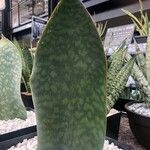
Sansevieria masoniana
سانسوریا مهتابی · Whale Fin Snake Plant · Mother in laws tongue
Description
Source: leafsnapSansevieria masoniana, also known as Mason's Congo or Whale Fin Sansevieria, is a flowering plant species belonging to the family Asparagaceae. Native to the Democratic Republic of Congo, this plant can grow up to 2 meters tall. It features thick, fleshy leaves shaped like a whale's fin, which are green with light green variegation. The leaves can reach up to 1 meter in length and 15 cm in width. Sansevieria masoniana is an easy-to-care-for houseplant that thrives in bright, indirect light but can also tolerate low-light conditions. It prefers well-draining soil and should be watered sparingly due to its drought-tolerant nature. With air-purifying qualities, this plant is an excellent choice for indoor spaces such as offices or bedrooms where air quality may be compromised. During the summer months, Sansevieria masoniana produces fragrant white flowers on tall spikes. Overall, Sansevieria masoniana is a unique and attractive houseplant with low maintenance requirements, making it an excellent choice for both novice and experienced gardeners.
💡 This species bears a striking resemblance to a giant mother-in-law's tongue plant and is easy to grow both indoors and outdoors. It is sometimes called "whale's fin" or "shark's fin" because its leaves resemble the dorsal fin of a shark or whale as it cuts through water.
🌳 Apart from its traditional role as a houseplant, mason congo has few widely recognized uses. Nevertheless, its hardiness and striking appearance make it a common pick for exotic and ornamental indoor plant collections, appreciated for its decorative leaves and air-purifying properties. Even though there are no established applications in other areas like medicines or material production, its resilience and biological characteristics leave open the possibility of finding uses in yet-unexplored fields.
🎭 Well-being and long life
Care Guide
💧 Water Every 14 days
The Mason Congo is a resilient plant that thrives in low-water conditions. Thanks to its drought tolerance, it only needs watering every three weeks. As a primarily indoor plant, it not only adapts well to home environments but also improves air quality by releasing moisture.
What should I do if I give my Mason congo plant too much or too little water?
Mason Congo and other succulents are able to survive without water for long periods, so it is uncommon to find one suffering from underwatering. However, if you forget to water your Mason Congo for a month or more, you will likely see signs of thirst or damage from lack of water. Signs of underwatering include a lackluster and wrinkled appearance, dried up leaves that have turned brown and crispy, and completely dry soil. To rehydrate an underwatered Mason Congo, submerge the pot in water for 5-10 minutes until the soil feels moist on the surface. On the other hand, overwatering is dangerous for Mason Congo and can lead to root rot, which prevents the roots from absorbing nutrients and water. Root rot occurs when the soil becomes too wet, allowing fungi and bacteria to thrive and feed on the roots. Symptoms of overwatering include yellow, swollen, and translucent organs, which may burst open. If left untreated, the plant may turn brown or black and the leaves might fall off easily. To address overwatering, adjust the growing conditions and provide more air ventilation. If root rot has already occurred, remove the plant from its pot, rinse the roots in room-temperature water, and remove any dark brown or black, soft, mushy, or slimy roots. If the majority of the roots are affected, it may be impossible to save the plant. However, if only a portion of the roots are affected, there is a chance for recovery. Remove the unhealthy roots, dip the remaining healthy roots in a fungicide, and repot the Mason Congo in fresh, well-draining soil. While this may not always save a succulent with root rot, it often leads to a full recovery and new growth in the next growing season.
How often do I need to water my Mason congo plant?
Determining how often to water a Mason Congo plant is not a fixed rule. The best way is to check the soil and water only when it is completely dry. You can either insert your finger into the pot or use a moisture meter to check the soil beneath the surface. If the plant is in a deep pot, you can use a stick or chopstick to do this. If the soil feels even slightly damp, wait a few days and check again. In general, most people will need to water a Mason Congo plant about every two weeks in summer and once a month in winter. However, there are several factors that can affect this frequency. Below, you will find some considerations that can help determine how often to water.
What things should I think about when watering my Mason congo?
To properly water your Mason Congo plant, you need to consider various environmental factors. The size of the container and the type of soil used will determine the frequency and amount of water needed. It is important to use a container with good drainage to allow excess water to escape. Smaller containers hold less moisture, requiring more frequent watering, while larger pots retain more water and need less frequent watering. Avoid using an oversized pot as this can lead to overwatering. When repotting, choose a container just one size larger and opt for a shallow container as Mason Congo has shallow roots. In terms of seasonal care, Mason Congo requires less water during winter when its growth slows down. The soil retains moisture for longer due to less evaporation in cooler temperatures. The local climate also affects watering needs. If you live in a humid or rainy area, you will need to water less frequently compared to a dry, arid climate. Keep in mind that geographic conditions can vary with the season and indoor heating and air conditioning usage. For outdoor planting, once the Mason Congo plant has established a root system, it typically does not need additional water beyond natural precipitation and dew. However, during prolonged dry periods, supplemental watering may be necessary. In areas where it can only be grown in a container, you can move the plant outside during suitable spring and summer temperatures and bring it indoors when temperatures decrease. A potted Mason Congo plant kept outside generally requires more water due to increased exposure to sunlight, even on a shaded porch.
How should I water a Mason congo plant?
To properly water your Mason congo plant, it's best to thoroughly soak it and then let it dry out before watering again. This plant can handle dry conditions, so it's okay to let it become quite dry before giving it more water. It's important to water evenly, so make sure to water all areas of the soil by going around the entire rim of the planter. The amount of water needed will depend on the container size and how absorbent the soil is. When watering, allow the water to drain out from the drainage holes and leave it in the saucer for about 20-30 minutes to be absorbed by any dry pockets of soil. After that, remove any excess water from the saucer to prevent waterlogging. Another effective method is bottom-watering, where you place the pot in a saucer of water and let the soil absorb moisture through the drainage holes. You'll know the soil has absorbed enough water when the top layer feels moist. This method ensures even distribution of water throughout the pot, although it takes more time than top-watering. Since Mason congo's original habitat is relatively dry with occasional heavy rain, you can simulate this by bottom-watering when the soil is completely dry. It's better to deeply water the soil infrequently rather than lightly watering it often.
☀️ Light Partial sun
Mason congo does best in environments with limited sun exposure. Its natural habitat is dense forests, where filtered or dappled light supports its growth. Across its different growth stages, steady light levels are important. However, excessive light can cause leaf burn, while too little light can produce lanky growth.
What are the sunlight requirements for Mason Congo?
Mason Congo, also known as Sansevieria masoniana, thrives in partial sunlight, requiring about 3-6 hours of sunlight daily. It's important to monitor how sunlight moves through your garden or home to find spots that offer a good balance of light and shade, which is essential for the plant's health. Despite its tolerance for partial sunlight, Mason Congo can also adapt to full sunlight in cooler weather but must be introduced gradually to avoid stress.
What are the essential conditions for Mason Congo's growth?
Mason Congo prefers conditions similar to its native dense forest habitat, thriving in limited sun exposure where filtered or dappled light enhances its growth. During its growth phases, consistent light levels are crucial. Too much light can cause leaf burn, whereas insufficient light can lead to lanky growth. When natural light is not enough, especially in winter or darker spaces, artificial lighting becomes essential. LED lights can be a good choice, customizable to the plant's needs, with 8-12 hours of light per day recommended based on the plant's requirements for full sun, partial sun, or shade.
What symptoms indicate improper light exposure for Mason Congo?
Symptoms of improper light exposure in Mason Congo include smaller new leaves, leggy or sparse growth, faster leaf drop, slower or no new growth, lighter-colored new leaves, and chlorosis (yellowing leaves due to breakdown of chlorophyll). Direct exposure to excessive sunlight can cause sunscald, leaf curling, wilting, and leaf scorching, each indicating either too much direct light or insufficient lighting. Recognizing these symptoms can help in adjusting the plant's environment to better suit its needs.
How can I address light-related issues with my indoor Mason Congo?
To address light-related issues with indoor Mason Congo, gradually increase sunlight exposure by moving the plant to sunnier spots each week until it gets 3-6 hours of direct sunlight daily for optimal growth. If the plant is large or not easily movable, consider using artificial light, keeping a desk or ceiling lamp on for at least 8 hours daily, or investing in professional plant grow lights. Note that parts of the plant affected by insufficient light may not recover, but new growth will be healthy after increasing light exposure.
What steps should I take for outdoor Mason Congo plants to ensure they receive adequate sunlight?
For outdoor Mason Congo plants, gradually acclimate them to the best sunlight spot, moving them to sunnier locations each week to avoid sunburn from sudden changes in light intensity. Also, observe the environment to identify which areas are blocking sunlight, and consider pruning obstructive trees or transplanting smaller plants during their dormant period to locations with more sunlight and good drainage. These steps will help optimize the plants' exposure to sunlight, promoting healthier growth.
🌡️ Temperature 20–37.8°C
Mason Congo is native to a tropical climate, so it prefers warmer temperatures between 68 and 100 °F (20 and 38 ℃). In colder seasons, an indoor environment with controlled heating or maintained greenhouse conditions is recommended.
What are the ideal temperature conditions for Mason congo?
Mason congo, also known as Sansevieria masoniana, thrives in a tropical climate, favoring warm temperatures between 68 to 100 °F (20 to 38 °C). During colder seasons, it is advised to keep the plant indoors or in a greenhouse with controlled heating to maintain these optimal conditions. Mason congo gradually stops growing and enters dormancy in winter. If outdoor temperatures drop below 41°F (5°C), the plant should be moved indoors and placed near a south-facing window for maximum sunlight exposure. Supplemental lighting may be used if natural light is insufficient. As the temperature falls below 68°F (20°C), the plant's growth slows, and it is recommended to reduce or cease watering to prevent root rot. Outdoor plants require halted watering in low temperatures, and if possible, a temporary greenhouse or wrapping with materials like plastic film or fabric can provide necessary insulation.
What should I do if my Mason congo is affected by low temperatures?
Mason congo is sensitive to low temperatures and performs best in conditions above 68°F (20°C). The plant should always be kept above 41°F (5°C) during winter. Exposure to temperatures below 34°F (1°C) can weaken the plant, causing it to wilt and become susceptible to root rot. In the event of mild frost damage, you might not notice immediate symptoms, but the plant could wither gradually over a week. If frostbite occurs, trim the affected areas and check for root rot. If the roots are rotted, they should be cut off, allowing for propagation through cuttings. Move the plant to a warm indoor environment and place it near a south-facing window for sufficient sunlight. Use supplemental lighting if natural light is not enough.
How should I care for my Mason congo during high temperatures?
In summer, it's crucial to keep the Mason congo's temperature below 100°F (38°C). When temperatures exceed 109°F (43°C), the plant halts its growth and may suffer from water loss, wilting, and increased susceptibility to sunburn. If your plant experiences these symptoms, you should remove any sunburned or rotten parts. Provide shade from the afternoon sun until the plant recovers and begins to grow again. For plants affected by root rot during this time, halt watering until new roots have formed, indicating recovery.
💨 Humidity dry (<40%)
This plant prefers dry conditions, so don't mist it. However, watering it less often can also thrive in higher humidity.
🪴 Soil 6-7
🌱 Fertilizer
For Mason congo, light doses of fertilizer once or twice a year during the growing season are sufficient. Avoid fertilizing in winter and summer when it's dormant. Reduce fertilizer for repotted plants and wait a couple of months after repotting before fertilizing. Fertilizing supports healthy growth and encourages blooms.
Why do I have to add fertilizer to my Mason congo plant?
To support healthy growth and encourage blooms, it is beneficial to fertilize Mason congo. While it does store water and nutrients, applying plant food during the growing season adds additional nutrients to the growing medium.
When should I fertilize my Mason congo for the best results?
Mason congo plants require a light dose of fertilizer only during the growing season. It is recommended to fertilize them 1-2 times a year. Spring and autumn are the best times for fertilization, while winter and summer should be avoided as the plant is dormant during these seasons. When repotting, be cautious and reduce the amount of fertilizer. Additionally, it is advisable to wait a few months after repotting before applying any fertilizer.
When is the best time to not fertilize my Mason congo?
Mason congo, like other plants, goes through a dormancy period where you should avoid using fertilizer. During the summer and winter, the plant stops growing, so it's best not to apply fertilizer then. It's also a good idea to refrain from fertilizing for a few months after repotting in the spring.
What kind of fertilizer should I use for my Mason congo?
When fertilizing Mason congo, it is recommended to use a liquid plant food specifically made for succulents and cacti. Dilute the fertilizer by adding water to make it half-strength. It is important to prevent the buildup of fertilizer in the soil. Apply the fertilizer at the base of the plant and make sure to water thoroughly, allowing any excess moisture to drain from the container or seep into the ground.
How can I feed my Mason congo?
Fertilizing Mason congo can be done with either liquid or granule plant food. If you choose to use liquid plant food, remember to dilute it to half-strength based on the instructions. Regardless of the type of plant food you use, always apply it to the soil. For granules, cover them with a thin layer of soil before watering.
🪴 Pot & Repot Every 2 years
When repotting Mason congo, choose a pot slightly larger than the current one that has good drainage. Use a gritty, well-draining cactus or succulent mix. Gently remove the plant from its old pot, brush off excess soil, and replant it at the same depth. Wait a few days before watering so any root damage can heal. Repot in spring or fall and place it in a brightly lit area.
✂️ Pruning
The Mason Congo plant grows quickly. To keep it healthy and visually appealing, promptly remove any yellow or dry leaves. This will help make space for new growth.
🌿 Propagating
🐛 Diseases & pets
☠️ Toxicity
Whale Fins are poisonous to both humans and animals when swallowed, and will probably result in nausea or vomiting even though they make excellent indoor plants. In fact, this is true of all Sansevierias. However, everything will be OK as long as your pets don't have a tendency to bite your plants.
Characteristics
- Plant Type
- Succulent
- Life Cycle
- Perennial
- Genus
- Sansevieria
- Family
- Asparagaceae
- Hardiness Zone
- 10-11
- Mature Height
- 1.22 m
- Mature Spread
- 25 cm
- Leaf Color
- Green
- Leaf Type
- Evergreen
- Flower Color
- White, Green
- Flower Size
- 1.02 cm to 2.03 cm
- Bloom Time
- Summer
- Planting Time
- Spring, Summer, Autumn
- Harvest Time
- Late summer, Early fall, Mid fall
- Native Area
- Tropical West Africa