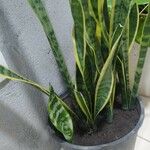
Sansevieria stuckyi
Snake plant · Mother-in-law Tongue · Sanso
Description
Source: leafsnapDracaena stuckyi, synonym Sansevieria stuckyi, is a common, easily cultured succulent member of the plant subfamily Nolinoideae native to equatorial Africa.
Care Guide
💧 Water Every 10-14 days
The Elephant Tusks plant is somewhat drought-tolerant, requiring moist soil primarily in the spring and summer. During these seasons, water the plant twice a week. In the winter, when the plant enters dormancy, reduce the watering frequency. To avoid soil compaction that can result from tap water, use rainwater or melted snow. Additionally, take care not to water directly on the roots to prevent rot.
☀️ Light Partial sun
The elephant tusks plant comes from habitats with dappled light, such as the forest understory or rocky spots that provide natural shade. It prefers partial sun but can also tolerate full sun.
🌡️ Temperature 20–37.8°C
The Elephant tusks plant does best in warm conditions and requires elevated temperatures during the growing season to encourage growth and metabolic activity. It favors plenty of sunlight, suitable moisture, and good air circulation. However, it can be harmed by very low temperatures and by excessive watering. It is important to maintain a balance and to avoid both extreme heat and overly dry conditions.
💨 Humidity dry (<40%)
This plant prefers dry conditions, so don't mist it. However, watering it less often can also thrive in higher humidity.
🪴 Soil 6-7
🌱 Fertilizer
For the Elephant tusks plant, small amounts of fertilizer applied once or twice a year during the growing season are adequate. Do not fertilize in winter or summer when the plant is dormant. Use less fertilizer for plants that have been repotted, and wait a couple of months after repotting before you begin fertilizing. Fertilizing promotes healthy growth and encourages blooms.
🪴 Pot & Repot Every 2 years
When repotting an Elephant tusks plant, choose a pot slightly larger than the current one that provides good drainage. Use a gritty, well-draining succulent or cactus mix. Gently remove the plant from its old pot, brush off excess soil, and replant it at the same depth. Wait a few days before watering to allow any root damage to heal. Repot in spring or fall and place it in a brightly lit area.
✂️ Pruning
The Elephant Tusks plant grows quickly. To maintain its attractive appearance and encourage new growth, promptly prune any yellow, dry, or old leaves.
🌿 Propagating
🐛 Diseases & pets
☠️ Toxicity
Dracaena are often safe for people to be around. Even unintentional intake of the plant's leaves is unlikely to result in any sickness. Nevertheless, many plants, including Dracaena, can have an adverse effect on persons with allergies or compromised sensitivities, regardless of the toxin content.
Characteristics
- Plant Type
- Succulent
- Life Cycle
- Perennial
- Genus
- Sansevieria
- Family
- Asparagaceae
- Hardiness Zone
- 9-11
- Mature Height
- 0.61 m to 1.52 m
- Mature Spread
- 30 cm to 61 cm
- Leaf Color
- Dark Green, Forest Green
- Leaf Type
- Evergreen
- Flower Size
- 1.02 cm to 2.03 cm
- Bloom Time
- Summer
- Planting Time
- Spring, Autumn
- Harvest Time
- Late summer, Early fall, Mid fall