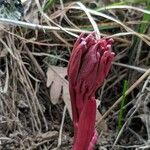
Sarcodes sanguinea
Snow Plant
Description
Source: leafsnapSarcodes sanguinea, commonly known as the snow plant or snow flower, is a unique and striking species belonging to the heath family (Ericaceae). Native to western North America, it inhabits coniferous forests at elevations ranging from 1,500 to 10,000 feet. The snow plant is a parasitic organism that lacks chlorophyll, deriving its nutrients from mycorrhizal fungi associated with coniferous trees. It emerges from the ground as a bright red stem with scales at its base. This stem can grow up to 12 inches tall and bears several small flowers arranged in an inflorescence at the top. The flowers of Sarcodes sanguinea are bell-shaped, with five petals fused together to form a tube. The petals are bright red or pinkish-red and have white hairs on their inner surfaces. They bloom between April and June, depending on the elevation. Native American tribes have used the snow plant for medicinal purposes, including treating respiratory ailments, fever, headaches, and stomachaches. However, it is not recommended for consumption due to its parasitic nature, which may result in the absorption of harmful substances from its host trees. Sarcodes sanguinea has become an iconic symbol of springtime in western North America. Its striking appearance against snowy landscapes makes it a popular sight for hikers during their forest treks in the spring months.
Care Guide
💧 Water Every 7 days
The snow plant thrives in moisture-rich environments and requires consistent hydration, ideally being watered once a week. It exhibits moderate drought tolerance and prefers well-draining soil to mimic its natural habitat. This makes it a popular choice as an indoor ornamental plant.
How should I water my Snow plant?
To properly water the Snow plant, it is important to follow a few guidelines. First, use filtered water instead of tap water to avoid any harmful particles. Additionally, the water should be at room temperature or slightly warmer since the Snow plant is used to warmer environments. Cold water can be a shock to its system. Do not water the plant from above as this can lead to foliage complications. Instead, pour the filtered room temperature water onto the soil until it is fully soaked. This method helps to moisten the roots and supports their growth in collecting necessary nutrients from the soil.
What should I do if I give my Snow plant too much water or too little water?
Both overwatering and underwatering can harm the health of your Snow plant, but overwatering is more common. Too much water can cause wilting and yellowing of the stems and leaves. It can also lead to diseases like root rot, mold, and mildew, which can be fatal to the plant. While underwatering is less likely for the Snow plant due to its drought tolerance, it is still possible. In such cases, the leaves become brittle and brown. It's important to identify signs of overwatering early to prevent irreversible damage. If you notice these signs, reduce your watering schedule and check the soil's drainage. Replace the soil if it drains poorly. If your Snow plant shows signs of inadequate watering, simply increase your watering frequency until the signs improve.
How frequently should I give water to my Snow plant?
If your Snow plant is in a pot, you can check if it needs water by inserting your finger into the soil. If the top two to three inches of soil are dry, it's time to water it. The same method can be used if you're growing the Snow plant outdoors in the ground. If the top few inches of soil have dried out, it's time to add water. In the spring and early fall, watering once a week is usually enough. However, during extremely hot weather, you may need to water the plant twice or more per week. It's worth noting that mature, well-established Snow plants can tolerate drought well.
How much water does my Snow plant require?
When watering your Snow plant, don't hold back on the amount of water you give. Make sure the top two to three inches of soil are dry, then give the plant a thorough, deep watering. You should add enough water to saturate the soil completely, causing excess water to drain out of the pot's drainage holes. If you don't see any excess water draining, you may have not watered enough. However, be careful not to let water accumulate inside the soil, as this can harm the plant. On the other hand, if water is not draining properly, it could mean that the soil doesn't drain well, which is not good for the plant's health. If the plant is located outside, one inch of rainfall per week should be enough.
How do I water my Snow plant as it grows?
The water needs of the Snow plant vary based on its growth stages. In the first few years and after transplanting, more water is required as the plant focuses on developing new roots for future growth. These roots benefit from extra moisture during this phase. As the Snow plant matures, less water will be needed. Additionally, during the bloom period, when the plant is producing flowers, it may require additional water due to the increased demand for moisture.
☀️ Light Full shade
Snow plant is native to habitats such as forest understories and rocky areas that provide natural shade. It prefers full shade but can tolerate partial sun.
What are the sunlight requirements for a Snow Plant?
The Snow Plant, or Sarcodes sanguinea, thrives in environments that mimic its natural habitat, such as forest understories or rocky areas which provide natural shade. It prefers full shade, defined as less than 3 hours of sunlight daily, but can also tolerate partial sun, meaning about 3-6 hours of sunlight. It's important to observe the sunlight movement through your garden to find a spot that strikes a balance between light and shade, ensuring the plant's well-being.
How should artificial lighting be used for indoor Snow Plants?
Indoor Snow Plants require adequate lighting, especially when natural sunlight is insufficient. Artificial lights, such as LED lights, are beneficial as they can provide the specific wavelengths needed for optimal growth. Full sun plants need 30-50W/sq ft, partial sun plants 20-30W/sq ft, and full shade plants 10-20W/sq ft of artificial light. The light source should be placed 12-36 inches above the plant, mirroring natural sunlight conditions and ensuring the plant receives 8-12 hours of light per day.
What are the symptoms of light deficiency in Snow Plants?
Snow Plants grown indoors with insufficient light may display various symptoms. These include smaller new leaves, leggy or sparse growth, faster leaf drop, delayed or stopped growth, and lighter-colored new leaves indicating a lack of chlorophyll. Chlorosis, or the yellowing of leaves, can occur, as well as sunscald, leaf curling, wilting, and leaf scorching, which are signs of excessive sunlight exposure rather than deficiency.
What solutions are there for light deficiency in Snow Plants?
To counteract light deficiency in Snow Plants, consider moving them closer to windows to receive filtered light, including direct morning sunlight, ideally positioning them 1-2 meters away from a window. For plants that are large or difficult to move, using artificial light, such as a desk lamp or professional grow lights for at least 8 hours daily, can help. Outdoors, gradually moving plants to sunnier spots and avoiding sudden changes in light intensity to prevent sunburn is advised. Removing obstructions or transplanting the plant to a sunnier location with good drainage might also be necessary for ground-planted Snow Plants.
🌡️ Temperature 0–32.2°C
Snow plant naturally occurs in habitats with temperatures ranging from 32 to 90 °F (0 to 32 ℃). It prefers moderate conditions. In winter, provide shelter if freezing temperatures are expected.
What is the native environment and temperature preference of the Snow plant?
The Snow plant, botanically known as Sarcodes sanguinea, thrives in environments where temperatures range from 32 to 90 °F (0 to 32 °C). It prefers moderate conditions and is highly cold-tolerant. During winter, it's important to shelter the plant if freezing temperatures are expected. However, it doesn't require additional frost protection. Before the first freeze of autumn, watering the plant generously helps ensure the soil remains moist and enters a frozen state, aiding the plant during winter and early spring.
How does the Snow plant react to low temperatures and what should be done in spring?
The Snow plant is extremely cold-tolerant and can withstand winter temperatures down to -35°C. If temperatures drop below this, there might not be noticeable changes during winter, but a decrease in sprouting or even no sprouting might occur in spring. To mitigate this, in spring, any parts of the plant that have failed to sprout should be removed to encourage healthy growth.
What is the impact of high temperatures on the Snow plant and how can it be cared for under such conditions?
Snow plants are not tolerant of high temperatures. When the mercury rises above 32°C, their growth halts, and they become more susceptible to rot. To care for Snow plants in high temperatures, trim away the sunburned and dried-up parts. Move the plant to a shaded location or use a shade cloth to protect it from the midday and afternoon sun. Keeping the soil moist by watering the plant in the morning and evening is also beneficial.
💨 Humidity
🪴 Soil 5-6
🌱 Fertilizer
Early spring, when the Snow plant is coming out of dormancy and starting active growth, is the best time to fertilize. Fertilization supplies essential nutrients for healthy development. Although the Snow plant has fairly low fertilizer requirements, annual feeding can improve its survival and encourage better, longer-lasting blooms.
🪴 Pot & Repot
✂️ Pruning
The snow plant is known for its vibrant red color and thrives on forest floors. To promote growth and improve air circulation, pruning should be done from early to late spring. Focus on removing dead or damaged stems, but be careful not to over-prune, as this can cause stress and reduce flowering.
🌿 Propagating
🐛 Diseases & pets
☠️ Toxicity
Characteristics
- Plant Type
- Herb
- Life Cycle
- Perennial
- Genus
- Sarcodes
- Family
- Ericaceae
- Hardiness Zone
- 3-7
- Mature Height
- 15 cm to 46 cm
- Mature Spread
- 4 cm to 5 cm
- Leaf Color
- Red
- Leaf Type
- Semi-evergreen
- Flower Color
- Red
- Flower Size
- 2.54 cm to 5.08 cm
- Bloom Time
- Early spring, Mid spring
- Planting Time
- Spring
- Harvest Time
- Late spring, Early summer
- Native Area
- Mexico