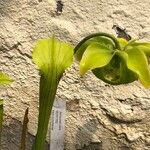
Sarracenia alata
Yellow-trumpets · Pitcher-plant Pale · Pitcher-plant Winged · Pitcher-plant Yellow · Pale pitcherplant
Description
Source: leafsnapSarracenia alata, also known as yellow trumpets, pale pitcher plant or pale trumpet, is a carnivorous plant in the genus Sarracenia. It is native to North America.
Care Guide
💧 Water
The yellow trumpet plant thrives in humid, damp environments and needs to be watered twice a week. It is commonly found in boggy areas where it benefits from regular rainfall and moist soil. Being carnivorous, the plant requires water not just for hydration but also to effectively trap prey.
☀️ Light Full sun
Yellow trumpets do best when exposed to plenty of light for most of the day, though they can tolerate periods of reduced light. Coming from habitats with strong sun exposure, their health and growth can be harmed if light is either too limited or too intense.
What are the sunlight requirements for Yellow Trumpets?
Yellow Trumpets, or Sarracenia alata, thrive under conditions that mimic their natural habitat of significant sun exposure. They require full sun, which means more than 6 hours of sunlight daily, though they can also handle partial sun, approximately 3-6 hours of sunlight. It’s important to observe the movement of sunlight through your garden to ensure plants receive the appropriate balance of light and shade, promoting their optimal growth and health.
How should artificial lighting be used for Yellow Trumpets indoors?
When natural sunlight is not sufficient, especially during winter or in spaces that don't get enough light, artificial lighting becomes essential for Yellow Trumpets' growth. LED lights are recommended because they can be adjusted to provide specific light wavelengths needed by plants. The intensity of light should match the plant's requirements: 30-50W/sq ft for full sun conditions, 20-30W/sq ft for partial sun, and 10-20W/sq ft for full shade. The light source should be placed 12-36 inches above the plant to mimic natural sunlight, ensuring the plant receives 8-12 hours of light per day.
What are the signs of insufficient lighting in Yellow Trumpets?
Yellow Trumpets show several signs when the lighting is inadequate, including small or immature leaves, leggy or sparse growth, accelerated leaf drop, halted or no growth, paler new leaves, and symptoms of chlorosis. Excessive sunlight can lead to sunscald, leaf curling, wilting, and leaf scorching. These symptoms indicate that the plant's environment needs to be adjusted to meet its lighting needs better.
What are the solutions for Yellow Trumpets experiencing light deficiency?
For indoor Yellow Trumpets, gradually moving the plant to a sunnier location each week until it receives at least 6 hours of direct sunlight daily is advised. Utilizing a south-facing window and keeping curtains open during the day maximizes sunlight exposure. If the plant is large or not easily movable, consider using artificial light, keeping a lamp on for at least 8 hours a day or investing in professional plant grow lights. For outdoor plants, it's essential to transition them gradually to sunnier spots to prevent sunburn. If sunlight is blocked by physical obstructions, consider pruning or rearranging to improve light access. Transplanting small plants during their dormant period to a brighter location can also enhance sunlight exposure.
🌡️ Temperature 15–32.2°C
Yellow trumpets is native to areas with temperatures between 59 and 90 °F (15 to 32 ℃). It favors these mild climates. If seasonal shifts push temperatures outside its preferred range, adjustments must be made to ensure its well-being.
What is the ideal temperature range for Yellow trumpets?
Yellow trumpets, botanically known as Sarracenia alata, thrives in environments where temperatures range from 59 to 90°F (15 to 32°C). It prefers moderate climates and requires adjustments if temperatures fall below or rise above this range to ensure the plant's well-being. During winter, it's beneficial to maintain temperatures above 15°C and ensure that the minimum temperature stays above the freezing point to prevent freezing damage. If outdoor temperatures approach -5°C (25°F) during winter, it is advisable to bring Yellow trumpets indoors or provide protection using a temporary greenhouse or materials such as plastic film or fabric.
How should you care for Yellow trumpets when temperatures fall below their preferred range?
When temperatures fall below Yellow trumpets' preferred range, the plant shows moderate tolerance to low temperatures but best thrives between 15°C and 32°C. During winter, it should be kept above -10°C to avoid damage. Should temperatures fall below -15°C, the plant's leaves may darken, and severe cold may lead to water-soaked necrosis, wilting, drooping, and the leaves turning brown. It is best to trim away frost-damaged parts and immediately move the plant indoors to a warm environment or set up a makeshift greenhouse for cold protection. Placing the plant near a south-facing window ensures it gets enough sunlight, and if needed, supplemental lighting can be used.
How to protect Yellow trumpets from high temperatures?
To protect Yellow trumpets from high temperatures, especially during the summer when temperatures should be kept below 32°C, special care is needed when the temperature exceeds 35°C. At this point, the plant's growth can slow down, the leaves may lighten in color, and it becomes more susceptible to sunburn. The best response is to trim away the sunburned and dried-up parts and move the plant to a location with shade from the afternoon sun. To keep the soil moist and help the plant cope with the heat, water it in the morning and evening.
💨 Humidity
🪴 Soil 5-6
🌱 Fertilizer
🪴 Pot & Repot 2-3 years
When repotting Yellow trumpets, choose a pot 1-2 inches (2.5–5.1 cm) larger with ample drainage. Use a well-draining potting mix. Repot in spring or fall, ensuring that the root ball is slightly lower than the rim of the flower pot. Water thoroughly after repotting and place in a warm spot with indirect sunlight.
✂️ Pruning
To enhance the growth and appearance of yellow trumpet plants, it is important to prune them strategically. Key methods include removing dead leaves and trimming old growth. The best time to do this is between early and late spring. Be sure to sterilize your tools to prevent disease, which will promote a healthier plant overall.
🌿 Propagating
🐛 Diseases & pets
☠️ Toxicity
Characteristics
- Plant Type
- Herb
- Life Cycle
- Perennial
- Genus
- Sarracenia
- Family
- Sarraceniaceae
- Hardiness Zone
- 7-8
- Mature Height
- 40 cm to 61 cm
- Mature Spread
- 15 cm
- Leaf Color
- Yellow, Green
- Leaf Type
- Deciduous
- Flower Color
- Yellow
- Flower Size
- 5.08 cm to 6.35 cm
- Bloom Time
- Mid spring, Late spring
- Planting Time
- Spring, Summer
- Harvest Time
- Early summer, Mid summer