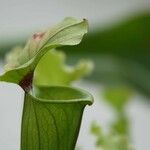
Sarracenia flava
Yellow pitcherplant · Trumpetleaf · Trumpets · Umbrella-trumpets · Yellow pitcher plant
Description
Source: leafsnapSarracenia flava, commonly known as the yellow pitcher plant, is a carnivorous plant native to the southeastern United States. This perennial herbaceous plant can grow up to 1 meter tall and features long, tubular leaves that form pitchers. These pitchers are yellow-green in color and have a distinctive hooded lid that prevents rainwater from diluting the digestive enzymes inside. The yellow pitcher plant utilizes its pitchers to trap insects and other small prey. The interior of the pitcher is lined with downward-pointing hairs, making it difficult for trapped prey to escape. The digestive enzymes within the pitcher break down the prey into nutrients, which are then absorbed by the plant. Sarracenia flava thrives in wetland habitats such as bogs, swamps, and wet pine savannas, where the soils are acidic and low in nutrients. It blooms from April to June, producing bright yellow flowers on tall stalks that rise above its leaves. Unfortunately, Sarracenia flava is listed as an endangered species due to habitat loss caused by human development, including the drainage of wetlands for agriculture or urbanization. Conservation efforts focus on protecting remaining habitats through land acquisition and restoration projects aimed at rehabilitating degraded ecosystems to support this unique species of carnivorous plants.
Care Guide
💧 Water Every 3 days
Native to North American wetlands, the yellow pitcher plant thrives in moist environments and needs a consistent water supply to support its carnivorous lifestyle. To mimic its natural habitat, water the plant twice a week, and ensure high humidity and adequate soil moisture. These conditions are crucial for optimal growth, particularly during its active growing season.
What's the best way to water your Yellow pitcherplant?
To ensure your Yellow pitcher plant stays well-hydrated, there are a few important steps to follow. First, choose a pot with drainage holes and place it in a plastic dish or tray. Fill the dish with about a third to half an inch of water, which will be drawn up to the plant's roots as the soil dries. Be sure not to let the dish dry out completely and adjust the amount of water based on how quickly the plant absorbs it. It's best not to use terra cotta pots unless you use a larger pot as a protective outer layer. The mineral content of the water you use is crucial, so collecting rainwater is ideal. If that's not possible, distilled water or water from a reverse osmosis system are good alternatives. Purified water can also be used, but it should have a mineral range that the Yellow pitcher plant can tolerate. If using tap water, make sure it has less than 50 parts per million of total dissolved solids. You can easily measure this with a meter. Additionally, allow the water to sit for 24 hours before using it to let the chlorine evaporate.
If I give Yellow pitcherplant too much or too little water, what should I do?
If a Yellow pitcherplant is overwatered, you may notice brown spots on the undersides of its leaves, white mold in the soil, and a wilted appearance. This happens because the plant is unable to absorb water into its stem. Overwatering can lead to root rot. If you detect rotting roots with a foul smell, take the plant out of its soil, rinse it with distilled water, remove the affected roots and leaves, rinse it again with distilled water, and replant it in new soil. On the other hand, if a Yellow pitcherplant is underwatered, its leaves will become brittle. Remove any affected leaves, ensure the soil is damp, and mist the leaves. While watering the plant again as soon as possible will help it recover gradually, be aware that yellow leaves may dry out in the short term due to root damage.
How often do I need to water my Yellow pitcherplant?
The tray method is the most common way to water insectivorous plants. Here's how you can do it for a Yellow pitcherplant: first, pot the plant in a container with several drainage holes. Place this container in a dish or tray that is filled about one-third with water. This setup allows the plant to draw water naturally as the soil dries. Make sure to add water promptly when the water level in the tray drops, and avoid letting the dish dry out completely. This approach will help you understand how often the plants should be watered. The Yellow pitcherplant is native to a humid environment, so it's essential to strike the right balance when watering. During the active seasons (spring to autumn), do not let the soil dry out completely. In spring and fall, water the Yellow pitcherplant 2-3 times per week, and during summer, increase the frequency of watering to keep the soil moist. However, during winter and early spring, the plant goes dormant. If you continue to care for it the same way as during the active season, you will likely harm it. In this dormant period, it's necessary to reduce the amount of watering. Try letting some of the soil dry out and allow the water level in the tray to dry out for a few days before adding more water. If you live in a naturally dry environment, you might need to go the extra mile to replicate the plant's natural humid growing conditions. Misting the plant, in addition to regular watering, may be necessary. Morning misting works best, especially in areas with dry air. Proper water spraying is crucial for locations with a dry environment.
How much water does my Yellow pitcherplant require?
The Yellow pitcherplant is a prized houseplant known for its carnivorous nature and preference for humid environments. To successfully care for this plant, it is important to recreate its native growing conditions, namely high humidity levels. If you live in a place with naturally high humidity, you can grow them outdoors in a bog garden, which is a great way to maintain the required humidity for multiple plants. However, most people choose to grow them as houseplants. To ensure optimal growth, use a pot that retains moisture, such as plastic or a self-watering pot. The tray method is the most effective way to water this insectivorous plant. Keep the water level in the tray pots above the small hole at the bottom, replenishing it as needed to prevent the trays from drying out and maintaining the plant's required water supply for healthy growth.
Do I need to water Yellow pitcherplant in a different way when I plant it inside compared to outside?
When growing yellow pitcherplants indoors, they need less water due to the reduced amount of sunlight they receive. The more light they get, the more water they will need for growth. To keep them healthy, it is important to provide adequate light and water. Additionally, it is recommended to maintain a humid environment for these indoor plants. One way to achieve this is by growing them in a terrarium or as part of a plant display in an aquarium, as the enclosed sides will help retain the necessary humidity. However, it is crucial to ensure proper air circulation.
☀️ Light Full sun
The yellow pitcherplant does best in full, unshaded sunlight, which maximizes photosynthesis and promotes optimal growth. It can also survive with scattered or filtered light, although this generally results in less vigorous growth. Both excessive light and too little light can harm the plant and undermine its health.
What are the sunlight requirements for the Yellow Pitcherplant?
The Yellow Pitcherplant thrives best under full sun conditions, requiring above 6 hours of sunlight per day for optimum growth and photosynthesis. However, it can also grow in partial sun, with about 3-6 hours of sunlight. The plant's health and growth can be impacted negatively by either too much or too little light. It's important to observe the movement of sunlight through your garden to find spots that offer the right balance of light and shade.
Can the Yellow Pitcherplant grow under artificial lighting?
Yes, the Yellow Pitcherplant can grow under artificial lighting, which becomes a vital solution when natural sunlight is insufficient, especially during winter or in less sunny spaces. For optimal growth indoors, it's essential to select the appropriate type of artificial light, with LED lights being a popular choice due to their ability to provide specific wavelengths needed by plants. Full sun plants require 30-50W/sq ft, partial sun plants need 20-30W/sq ft, and full shade plants should have 10-20W/sq ft of artificial light. Also, the light source should be placed 12-36 inches above the plant, mimicking natural sunlight as closely as possible, and kept on for 8-12 hours per day.
What symptoms indicate insufficient light for the Yellow Pitcherplant?
Symptoms of insufficient light in the Yellow Pitcherplant include smaller new leaves compared to previous ones, leggy or sparse growth due to longer spaces between stems or leaves, quicker leaf drop to conserve resources, slowed or halted new growth, paler new leaves lacking chlorophyll, chlorosis leading to yellowing leaves due to excessive sunlight, sunscald with damaged areas on leaves or stems from intense light, leaf curling as a defense against too much sunlight to minimize water loss, wilting from excessive water loss through transpiration, and leaf scorching with brown, dry edges on leaves from overexposure.
How can I address light-related issues for my Yellow Pitcherplant?
To address light-related issues for the Yellow Pitcherplant, gradually adjust the plant's exposure to sunlight. Indoor plants should be moved to a sunnier location weekly until they receive at least 6 hours of direct sunlight a day, using a south-facing window for maximum exposure. If needed, use artificial lights such as desk lamps or professional plant grow lights for at least 8 hours daily for large or immovable plants. Outdoors, plants should be moved gradually to avoid sunburn. Removing obstructions or transplanting to sunnier spots can help. Note that damaged parts may not recover, but new growth should be healthy with improved light.
🌡️ Temperature 20–37.8°C
Yellow pitcherplant originates from habitats where temperatures typically range from 68 to 100 °F (20 to 38 ℃). It grows best under those conditions, so they should be reproduced in its growing environment. You may need to make adjustments to protect it from extreme temperatures in winter or summer.
What is the native temperature range for the Yellow pitcherplant?
The Yellow pitcherplant thrives in environments where temperatures generally range from 68 to 100 °F (20 to 38 °C). To ensure the healthy growth of the plant, these conditions should be replicated in its growing environment. Adjustments might be necessary to protect the plant from extreme temperatures during winter or summer.
How should the Yellow pitcherplant be protected during winter?
During winter, it's beneficial to maintain temperatures above 20°C for the Yellow pitcherplant's growth, with the minimum temperature kept above the freezing point to prevent freezing damage. When outdoor temperatures approach -5°C (25°F), the plant should be brought indoors or protected by setting up a temporary greenhouse or using materials such as plastic film or fabric to wrap the plant. This helps in mitigating the risks associated with low temperatures.
What are the signs of low temperature stress in Yellow pitcherplants, and how can it be managed?
Yellow pitcherplants show moderate tolerance to low temperatures but thrive best between 20°C and 38°C. Signs of low temperature stress include darkening of leaves, and in severe cases, water-soaked necrosis, wilting, drooping, and the leaves turning brown as temperatures fall below -5°C. To manage this, frost-damaged parts should be trimmed away and the plant should immediately be moved to a warmer environment indoors or protected by a makeshift greenhouse. For sufficient light, placing the plant near a south-facing window or using supplemental lighting is advisable.
What effects do high temperatures have on Yellow pitcherplants, and what are the solutions?
Yellow pitcherplants should ideally be kept below 38°C during the summer. Temperatures exceeding 43°C slow down the plant's growth, cause the leaves to lighten in color, and increase susceptibility to sunburn. Solutions include trimming away sunburned and dried-up parts, moving the plant to a shaded location especially from the afternoon sun, and watering the plant in the morning and evening to keep the soil moist.
💨 Humidity dry (<40%)
This plant prefers dry conditions, so don't mist it. However, watering it less often can also thrive in higher humidity.
🪴 Soil 4-5
🌱 Fertilizer
The yellow pitcher plant thrives in soil that is nutrient-poor but retains moisture. It generally doesn't need fertilizer unless the soil is extremely deficient in minerals. During the summer, it should be placed outdoors so it can catch insects. Avoid feeding meat to the yellow pitcher plant; instead, you can provide additional nutrients with Venus flytrap supplements or dried crickets.
🪴 Pot & Repot 2-3 years
When repotting Yellow pitcherplant, select a pot 1–2 inches (2.5–5.1 cm) larger that has good drainage. Use a well-draining potting mix. Repot in spring or fall, making sure the root ball sits slightly below the rim of the flower pot. Water thoroughly after repotting and place in a warm spot with indirect sunlight.
✂️ Pruning
The yellow pitcher plant is known for its tall, tubular pitchers and vibrant colors. To keep this plant healthy, it's important to prune it regularly from early to late spring. Pruning promotes airflow and encourages new growth, which helps reduce the risk of disease. Doing this in a timely manner also improves the plant's ability to trap insects and keeps it looking tidy, as highlighted by horticultural guides.
🌿 Propagating
🐛 Diseases & pets
☠️ Toxicity
Characteristics
- Plant Type
- Herb
- Life Cycle
- Perennial, Annual
- Genus
- Sarracenia
- Family
- Sarraceniaceae
- Hardiness Zone
- 9-11
- Mature Height
- 46 cm to 91 cm
- Mature Spread
- 46 cm to 91 cm
- Leaf Color
- Green, Yellow
- Leaf Type
- Semi-evergreen
- Flower Color
- Yellow
- Flower Size
- 5.08 cm
- Bloom Time
- Mid spring, Late spring
- Planting Time
- Spring, Summer, Autumn
- Harvest Time
- Early summer, Mid summer