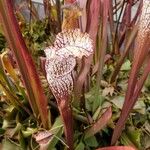
Sarracenia leucophylla
Purple trumpetleaf · White-trumpet · Crimson pitcherplant · White-top pitcherplant · Purple Trumpet-leaf
Description
Source: leafsnapSarracenia leucophylla, commonly known as the white-topped pitcher plant, is a carnivorous plant native to the southeastern United States. This perennial herbaceous plant can grow up to 1.5 meters tall and features long, tubular leaves that form pitcher-like structures at their tips. The pitchers of Sarracenia leucophylla are distinctive, displaying a white, hood-like structure that attracts insects. The interior of the pitcher is lined with downward-pointing hairs and digestive enzymes, which trap and digest the insects. This species favors wetland habitats such as bogs and swamps, where it thrives in acidic, nutrient-poor soils. It blooms from April to June, producing large pink or red flowers elevated on tall stalks. Sarracenia leucophylla has gained popularity in cultivation due to its unique appearance and carnivorous characteristics, making it a sought-after addition to gardens and collections of carnivorous plants. However, habitat loss caused by development, agricultural practices, drainage ditching, and peat mining has led to a rapid decline in its natural populations. As a result, Sarracenia leucophylla is now considered an endangered species.
🌳 The crimson pitcherplant is notable for being carnivorous, a trait that is relatively rare among plants. It supplements its needs in nutrient-poor soils by trapping prey, mainly insects, in its pitcher-shaped leaves that contain a digestive fluid. Digestion releases useful nitrogen and other nutrients, which the plant then absorbs. Aside from its ecological role, it has no widespread commercial use, though its distinctive feeding method and attractive appearance draw interest from botanical gardens and plant enthusiasts.
Care Guide
💧 Water Every 3 days
Native to North American bogs, the crimson pitcherplant thrives in humid and moist conditions. It needs to be watered twice a week to keep the soil moist, but not waterlogged. This plant benefits from rainwater and prefers acidic environments similar to its natural habitat.
How should you water your Crimson pitcherplant in the best way?
To properly keep your Crimson pitcherplant moisturized, here's what you need to do. Firstly, make sure to plant it in a pot with drainage holes, and place a plastic dish or tray underneath it. Fill the dish or tray with about a third to half an inch of water, allowing it to naturally draw water from the pot to the roots as the soil dries. Keep an eye on the dish or tray, making sure it doesn't dry out completely, and adjust the amount of water you add based on how quickly the plant absorbs it. If you're using pots made of terra cotta, which allow water to filter through and remove dissolved solids, it's not suitable for growing the Crimson pitcherplant unless you place the pot inside a bigger, second pot. In this case, only add water to the outer pot. Pay close attention to the mineral content of the water you use, as it is essential for proper watering. Collecting rainwater is the safest option, but if not available, distilled water or water from a reverse osmosis system are good alternatives. Purified water is also acceptable, but it may contain some minerals within a range that the Crimson pitcherplant can tolerate. If using tap water, ensure that the total dissolved solids are lower than 50 parts per million by using a meter to measure it. Additionally, it's recommended to fill your watering device 24 hours before use to allow chlorine to evaporate from the water.
What should I do if I give the Crimson pitcherplant too much or too little water?
Symptoms of an overwatered Crimson pitcherplant include brown spots on the undersides of leaves, white mold in the soil, and a wilted appearance. The wilted look happens because the plant can't absorb water into the stem properly. Overwatering can lead to root rot. If the roots are rotting and have a bad smell, follow these steps: remove the plant from its soil, rinse it with distilled water, cut off the rotted roots and affected leaves, rinse again with distilled water, and replant in fresh soil. On the other hand, an underwatered plant will have brittle leaves. To address this issue, cut off the affected leaves, ensure the soil is slightly damp, and mist the leaves. For an underwatered Crimson pitcherplant, promptly resume regular watering to help it recover. Keep in mind that due to root damage, the yellow leaves may dry out in the short term.
How often should I give water to my Crimson pitcherplant?
The tray method is commonly used to water insectivorous plants. To implement this method for the Crimson pitcherplant, place it in a container with several drainage holes and position that container in a tray or dish filled about one-third with water. This allows the plant to draw up water naturally as the soil becomes dry. It is important to refill the water promptly after the level drops, and avoid letting the tray dry out completely. By doing this, you can better gauge how frequently the plants should be watered. Since the Crimson pitcherplant is native to a humid environment, finding the right balance is crucial. Avoid overwatering, which can lead to root rot, but also prevent the soil from drying out completely. During the active seasons (spring to autumn), water your Crimson pitcherplant 2-3 times per week. In summer, when moisture is needed more often, increase the frequency of watering. Note that the Crimson pitcherplant enters dormancy during winter and early spring. It is vital to adjust the watering routine accordingly, reducing the amount of water and allowing some soil and tray water to dry out before replenishing. Living in a naturally dry air environment may require additional measures to replicate the plant's natural humid growing conditions. Misting the plant can be beneficial, especially in the morning. This is particularly important in areas with dry climates, so ensure proper water spraying to provide adequate humidity.
How much water does my Crimson pitcherplant require?
Crimson pitcherplants are prized as houseplants because they are one of the few carnivorous plants. To successfully care for one, you need to recreate its natural environment. The key is to maintain high humidity levels. These plants thrive in places with high humidity and low nutrients, such as bog gardens. However, most people grow them as houseplants. To retain moisture, use a pot that is made of plastic or a self-watering pot. The tray method is the most effective way to water these insectivorous plants. Make sure the water level in the tray reaches the small hole at the bottom and replenish it before it dries out. By adding the right amount of water, you can keep your Crimson pitcherplant thriving.
Do I need to water Crimson pitcherplant differently when I plant it inside instead of outside?
Growing crimson pitcherplants indoors requires less water due to the decreased sunlight they receive. The more light they are exposed to, the more water they will need for growth. Keeping them healthy requires providing adequate light and water. Additionally, it is important to create a humid environment for indoor plants. One effective way to maintain humidity is by growing them in a terrarium or as part of a plant display in an aquarium. The enclosed sides will help to retain the crucial humid air. However, it is essential to ensure proper circulation is maintained.
☀️ Light Full sun
The Crimson pitcherplant does best when it receives prolonged sunlight throughout the day. It comes from habitats where intense daylight is common. During its growth stages, generous sun exposure is essential. A shortage of sunlight can hinder its healthy growth, while excessive sunlight does not harm it.
What are the sunlight requirements for the Crimson pitcherplant?
The Crimson pitcherplant, or Sarracenia leucophylla, is a plant that thrives in environments with extensive exposure to sunlight throughout the day. It requires full sun, which means it needs above 6 hours of direct sunlight daily to grow healthily. Partial sun, or about 3-6 hours of sunlight, can also be tolerated. This plant originates from environments where intense daylight is typical, and during its growth stages, ample sun exposure is crucial. Insufficient sunlight would potentially impede its healthy growth, but excessive sunlight does not harm it. It's advised to watch how sunlight moves through your garden and choose spots that offer the perfect balance of light and shade for your plants.
How can artificial lighting be used for Crimson pitcherplants indoors?
For Crimson pitcherplants growing indoors, where natural sunlight is insufficient, especially during winter or in less sunny spaces, artificial lighting serves as an essential solution for optimal growth. LED lights are a popular choice because they can be customized to provide the specific wavelengths of light the plants need. Full sun plants require 30-50W/sq ft of artificial light, while partial sun plants need 20-30W/sq ft. It's necessary to place the light source 12-36 inches above the plant to mimic natural sunlight and determine the duration to mimic natural daylight hours, generally 8-12 hours of light per day.
What are the symptoms of insufficient sunlight for Crimson pitcherplants?
Crimson pitcherplants show several symptoms when exposed to insufficient sunlight, including smaller new leaves compared to older ones, leggy or sparse growth, faster leaf drop, slower or no new growth, and lighter-colored or irregularly patterned new leaves. Additionally, they can exhibit chlorosis, where leaves lose their green color and turn yellow; sunscald, with pale or necrotic areas on leaves or stems; leaf curling as a defense mechanism; wilting from excessive water loss; and leaf scorching, characterized by dry and crispy leaf edges.
What solutions are available for sunlight deficiency in Crimson pitcherplants?
To address sunlight deficiency in Crimson pitcherplants, here are some solutions: Indoors, gradually move the plant to a sunnier location each week until it receives at least 6 hours of sunlight daily, using a south-facing window. Consider using artificial light for large plants or those not easily moved. Keep a lamp on for at least 8 hours daily or invest in grow lights. Outdoors, move plants gradually to optimal sunlight spots to prevent sunburn. For plants in the ground, reduce obstructions like tree branches to let sunlight through and consider transplanting smaller plants during their dormant period to a location with more sunlight and good drainage. While parts of the plant affected by low light might not recover, new growth should be healthy after increasing light exposure.
🌡️ Temperature 15–37.8°C
The crimson pitcherplant is native to temperate regions and thrives in temperatures from 68 to 100 °F (20 to 38 °C). Because it favors warmth, its temperature must be carefully adjusted to replicate its natural habitat, especially during periods of extreme cold or heat.
What is the native climate of the Crimson pitcherplant?
The Crimson pitcherplant, scientifically known as Sarracenia leucophylla, is native to temperate climates. It thrives best in temperatures ranging from 68 to 100°F (20 to 38°C), indicating a preference for relatively warm conditions. To ensure optimal growth, it's important to adjust the ambient temperature to mimic the plant's natural habitat, especially during the extreme cold or heat of different seasons. During winter, it's beneficial to maintain temperatures above 20°C and take measures to protect the plant from freezing by keeping the minimum temperature above the freezing point and providing insulation or warmth if outdoor temperatures approach -5°C (25°F).
How does low temperature affect the Crimson pitcherplant, and what measures should be taken?
The Crimson pitcherplant has a moderate tolerance to low temperatures but thrives best between 20°C and 38°C. During winter, it's crucial to keep the temperature above 0°C to avoid damage. Exposure to temperatures below -10°C can lead to the darkening of the leaves, followed by water-soaked necrosis, wilting, and drooping, with the foliage eventually turning brown in severe cases. To mitigate frost damage, affected parts should be trimmed away, and the plant should be moved to a warm environment indoors or protected by setting up a makeshift greenhouse. Ensuring that the plant is placed near a south-facing window can guarantee ample sunlight, and supplemental lighting may be used if natural light is insufficient.
What is the impact of high temperature on the Crimson pitcherplant, and how can it be managed?
During the summer, it is essential to ensure that the Crimson pitcherplant is kept below 38°C to avoid adverse effects. Exposure to temperatures above 43°C can slow down the plant's growth, cause the leaves to lighten in color, and increase susceptibility to sunburn. To manage heat stress, sunburned and dried parts of the plant should be trimmed away. The plant should also be relocated to an area that offers shade during the intense afternoon sun. Furthermore, watering the plant in the morning and evening will help keep the soil moist and aid in cooling.
💨 Humidity normal (40-60%)
This plant will thrive in moderate humidity, which is probably the level in your home. However, misting it a few times a week can be very beneficial. Make sure the room has good ventilation.
🪴 Soil 4-7
🌱 Fertilizer
The crimson pitcher plant flourishes in nutrient-poor soil that retains moisture, and it should only be fertilized if it lacks a specific mineral. During the summer, place it outdoors so it can catch its own food. Avoid feeding the crimson pitcher plant meat; use specialized supplements like dried crickets to provide additional nutrients instead.
🪴 Pot & Repot 2-3 years
When repotting Crimson pitcherplant, choose a pot 1–2 inches (2.5–5.1 cm) larger with ample drainage. Use a well-draining potting mix. Repot in spring or fall, ensuring that the root ball is slightly lower than the rim of the flower pot. Water thoroughly after repotting and place in a warm spot with indirect sunlight.
✂️ Pruning
Pruning the crimson pitcherplant from early to late spring is beneficial for several reasons. It helps remove damaged leaves and encourages new growth, which in turn prevents mold and pests, enhances the development of pitchers, and maintains the plant's overall health. To ensure the plant thrives in its environment, it's important to clean your tools before and after pruning to prevent the spread of disease.
🌿 Propagating
🐛 Diseases & pets
☠️ Toxicity
Sarracenia leucophylla plants are safe for both humans and pets and can be planted either in the house or outdoor as they are harmless
Characteristics
- Plant Type
- Herb
- Life Cycle
- Perennial, Annual
- Genus
- Sarracenia
- Family
- Sarraceniaceae
- Hardiness Zone
- 8-11
- Mature Height
- 30 cm to 91 cm
- Mature Spread
- 34 cm
- Leaf Color
- Green, White, Purple, Red, Lavender
- Leaf Type
- Semi-evergreen
- Flower Color
- White
- Flower Size
- 5.08 cm to 7.62 cm
- Bloom Time
- Mid spring, Late spring, Early summer
- Planting Time
- Spring, Summer, Autumn
- Harvest Time
- Mid summer