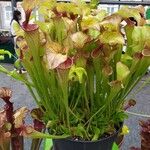
Sarracenia oreophila
Green pitcherplant · Green pitcher-plant
Description
Source: leafsnapSarracenia oreophila, also known as the green pitcherplant, is a carnivorous plant in the genus Sarracenia. It has highly modified leaves in the form of pitchers that act as pitfall traps for prey. The narrow pitcher leaves are tapered tubes that rise up to 75 centimetres from the ground, with a mouth 6 to 10 centimetres in circumference Like all the Sarracenia, it is native to North America. Sarracenia oreophila is the most endangered of all Sarracenia species, its range limited to a handful of sites in northern Alabama, North Carolina, Georgia, and—historically--Tennessee.
Care Guide
💧 Water
The green pitcher plant flourishes in humid, wetland-like environments and requires consistent moisture, typically needing to be watered once a week. As an outdoor carnivorous plant, it enters a dormant phase during the winter, at which point it needs less water in order to conserve energy for the coming growing season.
☀️ Light Full sun
The green pitcher plant is native to habitats with abundant sunlight, such as open bogs and sunny wetlands. It prefers full sun but can also tolerate partial sun.
What are the sunlight requirements for a Green pitcher plant (Sarracenia oreophila)?
The Green pitcher plant (Sarracenia oreophila) thrives in different sunlight conditions depending on the specific needs. For those plants requiring 'Full sun', they need above 6 hours of sunlight daily to flourish. On the other hand, if the requirement is 'Partial sun', about 3-6 hours of sunlight per day is sufficient for the plant's growth. It's important to observe the movement of sunlight through your garden to find spots that offer an ideal balance of light and shade, ensuring your Green pitcher plant remains happy and healthy.
🌡️ Temperature 10–35°C
For the Green pitcher plant, moderate temperatures are best, similar to what most people find comfortable. It does well in conditions that are neither too hot nor too cold. The primary problem with high temperatures is sunburn, so providing some shade in summer is advisable to prevent excessive heat. When temperatures fall, the Green pitcher plant goes into a dormant state. If continuous growth is desired, higher temperatures must be maintained during winter. Frost can harm the plant and should be avoided.
What is the Green pitcher plant?
The Green pitcher plant, known scientifically as Sarracenia oreophila, is a carnivorous plant. It is known for its unique pitcher-shaped leaves that are specialized to trap and digest insects.
💨 Humidity
🪴 Soil 5-6
🌱 Fertilizer
🪴 Pot & Repot 2-3 years
When repotting a Green pitcher plant, select a pot 1–2 inches (2.5–5.1 cm) larger with good drainage. Use a well-draining potting mix. Repot in spring or fall, making sure the root ball sits slightly below the rim of the flower pot. Water thoroughly after repotting and place it in a warm spot with indirect sunlight.
✂️ Pruning
The green pitcher plant has tubular, green leaves and thrives in boggy environments. For optimal growth, prune the plant in early spring by cutting back dead foliage and old pitchers, taking care not to damage new shoots. This practice promotes healthy growth and enhances disease resistance. Always use sterilized tools during pruning to prevent contamination.
🌿 Propagating
🐛 Diseases & pets
☠️ Toxicity
Characteristics
- Plant Type
- Herb
- Life Cycle
- Perennial
- Genus
- Sarracenia
- Family
- Sarraceniaceae
- Hardiness Zone
- 6-9
- Mature Height
- 30 cm to 61 cm
- Mature Spread
- 46 cm
- Leaf Color
- Red, Green
- Leaf Type
- Deciduous
- Flower Color
- Yellow
- Flower Size
- 5.08 cm to 7.62 cm
- Bloom Time
- Mid spring, Late spring
- Planting Time
- Spring, Summer, Autumn
- Harvest Time
- Mid summer, Late summer