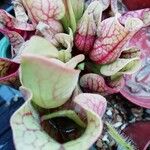
Sarracenia purpurea
Common pitcherplant · Huntsman's-cup · Pitcherplant · Sweet pitcherplant · Purple pitcherplant
Description
Source: leafsnapSarracenia purpurea, the purple pitcher plant, northern pitcher plant, turtle socks, or side-saddle flower, is a carnivorous plant in the family Sarraceniaceae.
Care Guide
💧 Water Twice per week
The purple pitcher plant flourishes in humid environments, where it uses specialized leaves to collect water. It thrives when consistently hydrated and benefits from being watered twice a week. Found outdoors in areas with high rainfall, this moisture-loving species adapts to boggy regions by capturing rainwater in its pitcher-like leaves.
How should you water your Purple pitcher plant?
To keep your Purple pitcher plant properly hydrated, follow these steps: 1. Use a pot with good drainage holes and place it in a plastic dish or tray. 2. Fill the dish or tray with about a third to half an inch of water. 3. As the soil dries, this will naturally draw water from the pot to the roots. 4. Avoid letting the dish dry out completely and adjust the amount of water based on how quickly the plant absorbs it. 5. Do not use terra cotta pots unless you place the pot inside a larger one. The terra cotta allows water to seep through and filter out dissolved solids. 6. Only add water to the outer pot when using terra cotta. 7. The mineral content of the water is crucial for watering your Purple pitcher plant properly. 8. If possible, collect rainwater as it is the safest option. Distilled water and water from a reverse osmosis system are also good alternatives. 9. If using purified water, it should contain minerals within a range that the Purple pitcher plant can tolerate. 10. Tap water with less than 50 parts per million of total dissolved solids is safe. You can use a meter to measure this. 11. It's recommended to fill your watering device 24 hours in advance to allow the chlorine to dissipate from the water.
What should I do if I give the Purple pitcher plant too much or too little water?
When a Purple pitcher plant is overwatered, you may notice brown spots forming on the undersides of its leaves, white mold developing in the soil, and a general wilted appearance. The wilting occurs because the plant cannot draw water into its stem properly. Overwatering can also lead to root rot, which can be identified by a bad smell. If you notice root rot, it is important to take the plant out of its soil, rinse it with distilled water, remove the rotted roots and affected leaves, rinse it again with distilled water, and then replant it in fresh soil. On the other hand, if the Purple pitcher plant is underwatered, its leaves will become brittle. In this case, affected leaves should be cut away, and you should ensure that the soil is damp while also misting the leaves. With underwatered plants, it is crucial to resume regular watering as soon as possible to help the plant recover. However, due to root damage, yellow leaves may dry out in the short term.
How frequently do I need to water my Purple pitcher plant?
One common way to water insectivorous plants is using the tray method. To do this, you will need to pot the Purple pitcher plant in a container with multiple drainage holes. Place this container in a tray filled about one-third with water. As the soil dries, the plant will naturally draw up water. Make sure to add water promptly after the water level drops and avoid letting the tray dry out completely. This will help you develop a better understanding of how often the plants should be watered. The Purple pitcher plant is native to a humid environment, so finding the right balance between watering and allowing the soil to dry out is crucial. During the active seasons of spring to autumn, do not let the soil dry out completely. In these seasons, water your Purple pitcher plant 2-3 times per week. During summer, more frequent watering is necessary to keep the soil moist. However, during the winter and early spring, the plant goes dormant. To care for it properly during this time, you will need to reduce the amount of water you provide. Let some of the soil dry out and allow the water level in the tray to dry out for a few days before adding more. If you live in a naturally dry area, misting the plant may be necessary to replicate its natural humid growing conditions. It is best to mist the plant in the morning. Proper water spraying is especially important in dry environments.
How much water does my Purple pitcher plant require?
The Purple pitcher plant is a prized houseplant because it is one of the few carnivorous plants. To successfully care for one, you need to recreate its native environment, which is humid and low in nutrients. Maintaining high humidity levels is crucial for their growth. If you live in a naturally humid area, you can grow them outside in a bog garden, which is a great way to group together plants that require lots of humidity. Most people grow them as houseplants, and it is best to use a moisture-retaining pot, preferably made of plastic or self-watering. The tray method is the most effective way to water them, ensuring the water level covers the small hole at the bottom of the tray pots. Add water before it evaporates completely to keep the pots from drying out and to provide the necessary amount of water for your Purple pitcher plant's growth.
Do I need to water the Purple pitcher plant differently when I plant it inside versus outside?
Purple pitcher plants grown indoors require less water compared to when they are exposed to more sunlight. The key to keeping them healthy is providing both adequate light and water. Additionally, it is important to maintain a humid environment for indoor plants. One option to achieve this is to grow them in a terrarium or as part of a plant display in an aquarium. These enclosed spaces will help retain essential humidity, but be sure to maintain proper air circulation.
☀️ Light Full sun
The purple pitcher plant grows best when it receives ample sunlight throughout the day. However, it can also adapt to settings with less light. While abundant sun encourages its optimal growth, prolonged lower light can weaken its vigor and negatively affect its overall health.
What are the sunlight requirements for the Purple Pitcher Plant?
The Purple Pitcher Plant (Sarracenia purpurea) thrives best under conditions of full sunlight throughout the day, requiring more than 6 hours of direct sun exposure. However, it can also tolerate partial sun, with about 3-6 hours of sunlight. Adequate exposure to sunlight is crucial for the plant's optimal growth, while lower light conditions can compromise its vitality over time. It's important to watch how sunlight moves through your garden and choose spots that offer a balance of light and shade to ensure the well-being of your plants.
How can artificial lighting benefit indoor Purple Pitcher Plants?
Indoor Purple Pitcher Plants benefit significantly from artificial lighting, especially when natural sunlight is insufficient, such as during winter or in less sunny indoor spaces. Artificial lights, like LED lights, can be customized to provide the specific wavelengths of light needed by plants, promoting faster and healthier growth. Ideal artificial light for full sun plants is 30-50W/sq ft, for partial sun plants is 20-30W/sq ft, and for full shade plants is 10-20W/sq ft. The light source should be placed 12-36 inches above the plant, mimicking natural sunlight as closely as possible, with most plants requiring 8-12 hours of light per day to thrive.
What are the symptoms of light deficiency in Purple Pitcher Plants?
Purple Pitcher Plants exhibit several symptoms when suffering from light deficiency, including smaller new leaves, leggy or sparse growth, faster leaf drop, slower or halted new growth, lighter-colored or pale new leaves, chlorosis (yellowing leaves), sunscald, leaf curling, wilting, and leaf scorching. These symptoms indicate that the plant is not receiving adequate sunlight, which is crucial for its growth and overall health.
What solutions can improve light access for Purple Pitcher Plants?
To optimize light access for Purple Pitcher Plants, gradually move them to sunnier locations to receive at least 6 hours of direct sunlight daily. For indoor plants, use a south-facing window and keep curtains open during the day, or use artificial light sources such as desk or ceiling lamps for at least 8 hours daily. Outdoor plants should be moved to the best sunlight exposure spot gradually to avoid sunburn. Removing obstructions and considering transplanting during the plant's dormant period can also improve sunlight access. Note that parts of the plant previously affected by low light may not recover, but new growth should be healthier with improved light conditions.
🌡️ Temperature 15–35°C
Purple pitcher plant is native to areas with temperatures ranging from 59 to 95 °F (15 to 35 ℃). It favors moderate to warm conditions, and care must be taken to adjust its environment as the seasons change.
What is the ideal temperature range for the Purple Pitcher Plant?
The Purple Pitcher Plant, or Sarracenia purpurea, thrives in temperatures ranging between 59°F to 95°F (15°C to 35°C). It is well-suited for moderate to warm conditions. To ensure the plant's health, it is crucial to adjust its environment during seasonal changes to maintain temperatures above 15°C, especially in winter. Steps should be taken to prevent the temperature from dropping below the freezing point to avoid freezing damage. If outdoor temperatures approach 25°F (-5°C) in winter, consider moving the plant indoors or providing protection with temporary greenhouses or wrapping materials.
How does low temperature affect the Purple Pitcher Plant and how can it be protected?
The Purple Pitcher Plant has a moderate tolerance to low temperatures, optimally growing between 15°C and 35°C. During winter, it is crucial to keep the plant above -10°C. Exposure to temperatures below -15°C can lead to darkening of the leaves, water-soaked necrosis, wilting, and drooping, with the leaves gradually turning brown. To protect the plant from frost damage, trim away the frost-damaged parts and move the plant to a warmer indoor environment or set up a makeshift greenhouse. If indoor lighting is insufficient, supplement with artificial light, preferably near a south-facing window.
What are the effects of high temperature on the Purple Pitcher Plant and what measures should be taken?
During the summer, it's important to ensure that the temperature around the Purple Pitcher Plant does not exceed 35°C. High temperatures above 41°C can slow down its growth, lighten the leaf colors, and increase susceptibility to sunburn. To mitigate these effects, remove the sunburned and dried-up parts. Relocate the plant to a shaded area, ideally away from the harsh afternoon sun. Watering the plant in the morning and evening will help keep the soil moist and support the plant’s health in higher temperatures.
💨 Humidity high (>60%)
This plant needs special care because it loves high humidity levels of 60-80% or more. The best way to achieve this is by placing a humidifier near the plant. Daily misting is also essential! Make sure the room has good ventilation.
🪴 Soil 4-5
🌱 Fertilizer
Purple pitcher plants will benefit from slow-release fertilizer applied once a year. Take care not to overfeed and harm your plant. Use a commercial fertilizer formulated for bromeliads or orchids.
🪴 Pot & Repot 2-3 years
When repotting Purple pitcher plant, select a pot 1-2 inches (2.5–5.1 cm) larger that offers ample drainage. Use a well-draining potting mix. Repot in spring or fall, making sure the root ball sits slightly below the rim of the flower pot. Water thoroughly after repotting and place in a warm location with indirect sunlight.
✂️ Pruning
The purple pitcher plant flourishes when properly pruned, as this is crucial for removing dead foliage and promoting new growth. The best time for pruning is between late winter and early spring. To prevent infection, use clean tools and carefully cut away brown leaves close to the base. Be sure to protect any new growth, as it improves the plant's ability to trap insects.
🌿 Propagating
🐛 Diseases & pets
☠️ Toxicity
Purple pitcher plants are not toxic to people or pets. Likewise, contact with any part of the plant will not cause any irritation, making it a safe plant to grow indoors or outdoors.
Characteristics
- Plant Type
- Herb
- Life Cycle
- Perennial
- Genus
- Sarracenia
- Family
- Sarraceniaceae
- Hardiness Zone
- 7-10
- Mature Height
- 1.22 m
- Mature Spread
- 46 cm
- Leaf Color
- Green, Red, Purple, Variegated
- Leaf Type
- Evergreen
- Flower Color
- Red, Purple, Green, Yellow
- Flower Size
- 6.35 cm
- Bloom Time
- Late spring, Early summer
- Planting Time
- Spring
- Harvest Time
- Mid summer
- Native Area
- Eastern and north-central North America