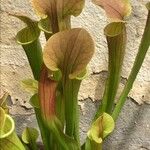
Sarracenia rubra
Sweet pitcherplant · Sweet pitcher plant · Red pitcherplant
Description
Source: leafsnapSarracenia rubra, commonly known as the red pitcher plant, is a carnivorous species native to the southeastern United States. This perennial herbaceous plant can grow up to 60 cm tall and features long, tubular leaves that form pitchers. The pitchers are bright red and have a hood-like structure at the top, which prevents rainwater from diluting their digestive fluids. The plant uses these pitchers to trap insects and other small prey. The inside of the pitcher is lined with downward-pointing hairs, making it difficult for the prey to escape once they have fallen in. The digestive fluids inside the pitcher then break down the prey into nutrients, which the plant absorbs. Sarracenia rubra thrives in wetland habitats such as bogs, swamps, and wet pine savannas with acidic soils low in nutrients. It requires full sun exposure for optimal growth but can tolerate partial shade. Native American tribes have used the red pitcher plant medicinally for its anti-inflammatory properties and as an aid for digestion. However, it is important to note that consuming any part of this carnivorous plant can be harmful or even fatal to humans due to its toxic compounds. Overall, Sarracenia rubra is an intriguing carnivorous species with unique adaptations that enable it to survive in nutrient-poor environments where other plants struggle to thrive.
Care Guide
💧 Water Every 3 days
The sweet pitcher plant flourishes in the humid bogs of North America. For optimal growth, it needs to be watered twice a week to maintain consistent moisture. This plant can tolerate both high water levels and moderate drought conditions, making it well-suited for outdoor cultivation. As a carnivorous plant, it supplements its nutrient intake by capturing prey, which helps it thrive in its watery surroundings.
What is the best way to water your Sweet pitcher plant?
One way to adequately keep your Sweet pitcherplant moist is by using a pot with good drainage holes. Place the pot in a plastic dish or tray and fill it with about a third to half an inch of water. This will allow the water to naturally be drawn from the pot to the roots as the soil dries. Make sure the dish doesn't dry out completely and adjust the amount of water you add based on how quickly the plant absorbs it. Avoid using terra cotta pots, unless you place the pot inside a larger pot. Terra cotta pots allow water to seep through and filter out dissolved solids. Only put water in the outer pot. The mineral content of the water you use is crucial for watering your Sweet pitcherplant properly. If possible, collect rainwater for your plant as it is the safest option. Alternatively, you can use distilled water, water from a reverse osmosis system, or purified water with a range of minerals that the plant can tolerate. Tap water with less than 50 parts per million of total dissolved solids is safe, which you can measure with a meter. Remember to fill your watering device 24 hours before using it to allow the chlorine to dissipate from the water.
What should I do if I give the Sweet pitcherplant too much or too little water?
When a Sweet pitcherplant is overwatered, you may observe brown spots on the undersides of leaves, white mold in the soil, and overall wilting. This wilting occurs because the plant cannot take in water effectively through the stem. Overwatering can lead to root rot, which can be identified by a foul smell. To address this, remove the plant from its soil, rinse it with distilled water, cut away any rotting roots and affected leaves, rinse again with distilled water, and replant in fresh soil. On the other hand, if a Sweet pitcherplant is underwatered, its leaves will become brittle. To address this, cut away any affected leaves, ensure the soil is damp, and mist the leaves. The plant will gradually recover if you resume watering promptly. However, due to root damage, yellow leaves may dry out in the short term.
How many times should I water my Sweet pitcherplant?
The tray method is the most common way to water insectivorous plants. To do this, pot the Sweet pitcherplant in something with several drainage holes and place it in a dish or tray filled about one-third with water. This will allow the plant to naturally draw water up as the soil dries. Make sure to add water promptly after the water level drops, and avoid letting the dish dry out completely. By doing this, you'll have a better understanding of how often the plant needs to be watered. The Sweet pitcherplant is native to a humid environment, so finding the right balance between watering and letting the soil dry out is essential. During the active seasons (spring to autumn), make sure not to let the soil dry out completely. Water your Sweet pitcherplant 2-3 times per week in spring and fall, and more frequently in summer to keep the soil moist. However, during the winter and early spring, when the plant goes dormant, you'll need to adjust your watering routine accordingly. Cutting back on the amount of water and letting some of the soil and tray water dry out for a few days before adding more is recommended. If you live in a naturally dry area, misting the plant in addition to regular watering may be necessary to replicate its natural humid growing conditions. It is best to mist the plant in the morning. Proper water spraying is particularly important in dry environments.
How much water does my pitcherplant need?
Sweet pitcherplants are highly valued houseplants because they are one of the few carnivorous plants. To keep them healthy, you'll need to recreate their natural growing conditions, which involve maintaining high humidity levels. These plants thrive in humid environments with low nutrient levels. If you live in a naturally humid area, you can grow them outdoors in a bog garden, which is a great way to showcase plants that require high humidity. However, most people prefer to grow them as indoor plants. To reduce the frequency of watering, use a pot that retains moisture, such as plastic or a self-watering pot. The tray method is the most effective way to replenish water for these insectivorous plants. Ensure that the water level in the tray covers the small hole at the bottom, and add water before it dries out. Remember to add enough water to keep the pots from drying out, providing the necessary moisture for your Sweet pitcherplant to thrive.
Do I need to water Sweet pitcherplant differently when I plant it inside instead of outside?
Sweet pitcherplants that are grown indoors generally require less water because they receive less sunlight. However, the amount of water they need to grow increases with the amount of light they receive. To keep them healthy, it is important to provide adequate light and water. Additionally, maintaining a humid environment is beneficial for indoor plants. One effective way to do this is by growing them in a terrarium or as part of a plant display in an aquarium. The enclosed sides of these containers help to retain the necessary humid air. However, it is essential to ensure good circulation for the plants.
☀️ Light Full sun
Sweet pitcherplant grows best when given plenty of light. In its native habitat, sunlight is unobstructed, which promotes healthy growth. Both too much and too little light can harm the plant. However, the sweet pitcherplant can sometimes survive in conditions that do not provide full light.
What are the sunlight requirements for the Sweet Pitcherplant?
The Sweet Pitcherplant requires full sun exposure, which is above 6 hours of sunlight daily, but can also tolerate partial sun, about 3-6 hours of sunlight. It's important to observe how sunlight moves through your garden to find spots that offer the right balance of light and shade, ensuring the plant's wellbeing. This plant thrives in its native habitat where the sun's rays are unobstructed, promoting healthy growth. However, it can still grow in conditions with less than full light availability, but too much or too little light can negatively impact the plant.
How can artificial lighting be used for the Sweet Pitcherplant?
Indoor Sweet Pitcherplants require adequate lighting for optimal growth, especially when natural sunlight is insufficient. Artificial lights can be a vital solution, offering faster, healthier growth. LED lights are recommended because they provide specific wavelengths needed by the plants. Full sun plants need 30-50W/sq ft, partial sun plants need 20-30W/sq ft, and full shade plants need 10-20W/sq ft of artificial light. The light source should be placed 12-36 inches above the plant to mimic natural sunlight, ensuring 8-12 hours of light per day depending on the plant species.
What are the signs of insufficient lighting for the Sweet Pitcherplant?
When the Sweet Pitcherplant receives insufficient lighting, it may exhibit several symptoms including smaller new leaves compared to previous mature ones, leggy or sparse growth with longer spaces between leaves or stems, faster leaf drop as the plant conserves resources, delayed or halted growth due to survival mode, lighter-colored new leaves indicating a lack of chlorophyll, chlorosis or yellowing of the leaves, sunscald with pale or necrotic areas on the plant, leaf curling as a defense mechanism against sunlight, wilting due to excessive water loss, and leaf scorching characterized by brown, dry edges on leaves.
How can I address light deficiency symptoms in the Sweet Pitcherplant?
To address light deficiencies in the Sweet Pitcherplant, it's advisable to gradually move the plants to a sunnier location, ensuring at least 6 hours of direct sunlight daily for those indoors, and using a south-facing window for maximum exposure. Artificial light can also supplement natural light, with lamps or professional grow lights being used for at least 8 hours daily. For outdoor plants, shifting them to sunnier spots gradually helps prevent sunburn. Pruning obstructive branches for ground plants and considering transplanting smaller plants during their dormant period to locations with ample sunlight and good drainage are effective strategies. Notably, parts of the plant that have suffered from insufficient sunlight may not recover, but new growth will be healthy once light exposure is increased.
🌡️ Temperature 5–25°C
Sweet pitcherplant is native to temperate areas and prefers a temperature range of 41 to 77°F (5 to 25°C). In extreme conditions, seasonal adjustments may be necessary to mimic this environment.
What is the native climate of the Sweet pitcherplant?
The Sweet pitcherplant, botanically known as Sarracenia rubra, is native to temperate regions. It thrives in environments where the temperature ranges between 41 to 77°F (5 to 25°C). To ensure the plant's health and growth, seasonal adjustments might be necessary to mimic its native climate, especially in areas experiencing extreme weather conditions. During winter, it's crucial to maintain temperatures above 5°C to foster growth, avoiding exposure to temperatures below freezing to prevent damage. Once outdoor temperatures drop to -5°C (25°F) or lower, it's advisable to bring the Sweet pitcherplant indoors or provide additional protection, such as a temporary greenhouse or wrapping with plastic film or fabric, to shield it from the cold.
How should I care for my Sweet pitcherplant during low temperatures?
The Sweet pitcherplant has a moderate tolerance to low temperatures and thrives when the mercury stays between 5°C and 25°C. In winter, ensure the plant is not exposed to temperatures below -20°C, and absolutely not below -25°C, as this can cause the leaves to darken, lead to water-soaked necrosis, wilting, drooping, and eventually, the leaves may turn brown. If frost damage occurs, remove the affected parts of the plant. Immediately move the plant to a warm indoor location or set up a temporary greenhouse to protect it from the cold. Ensure the plant receives ample sunlight by placing it near a south-facing window or provide supplemental lighting if natural light is insufficient.
What should I do if my Sweet pitcherplant is exposed to high temperatures?
During summer, it is essential to keep the Sweet pitcherplant's temperature below 25°C. Exposure to temperatures exceeding 30°C can slow the plant's growth, cause the leaves to lighten in color, and increase vulnerability to sunburn. To mitigate heat stress, prune away sunburned or dried parts of the plant. Relocate the Sweet pitcherplant to a shaded area, particularly to avoid the afternoon sun. Ensure the soil remains moist by watering the plant during cooler times of the day, such as in the morning and evening.
💨 Humidity
🪴 Soil 4-5
🌱 Fertilizer
The sweet pitcher plant thrives in nutrient-poor, moisture-retaining soil and generally does not require fertilization unless there is a mineral deficiency. During the summer, placing the plant outdoors enables it to naturally capture nutrients. It's important not to feed the sweet pitcher plant meat; instead, you can provide additional nutrition using specialized supplements or dried crickets.
🪴 Pot & Repot 2-3 years
When repotting Sweet pitcherplant, select a pot 1-2 inches (2.5–5.1 cm) larger that provides good drainage. Use a well-draining potting mix. Repot in spring or fall, making sure the root ball sits slightly lower than the rim of the flower pot. Water thoroughly after repotting and place it in a warm spot with indirect sunlight.
✂️ Pruning
To maintain optimal health for sweet pitcherplants, prune them between early and late spring. Remove any dead foliage to encourage new growth. Use sterilized, sharp tools to make precise cuts, which will help improve air circulation and nutrient distribution. Pruning not only enhances the plant's appearance but also promotes its overall vitality.
🌿 Propagating
🐛 Diseases & pets
☠️ Toxicity
Characteristics
- Plant Type
- Herb
- Life Cycle
- Perennial
- Genus
- Sarracenia
- Family
- Sarraceniaceae
- Hardiness Zone
- 5-6
- Mature Height
- 30 cm to 46 cm
- Mature Spread
- 30 cm to 46 cm
- Leaf Color
- Green, Yellow, Gold, Brown
- Leaf Type
- Semi-evergreen
- Flower Color
- Yellow, Green, Red, Brown, Orange, Gold
- Flower Size
- 2.03 cm to 3.30 cm
- Bloom Time
- Mid spring, Late spring
- Planting Time
- Spring, Summer
- Harvest Time
- Mid summer, Late summer