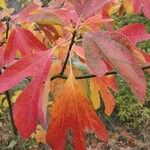
Sassafras albidum
Sassafras · Silky sassifras · White sassafras · Mitten tree · Common sassafras
Description
Source: leafsnapSassafras albidum, commonly known as sassafras, is a deciduous tree native to eastern North America. It can grow up to 60 feet tall and has distinctive three-lobed leaves that turn a beautiful orange-red in the fall. In the spring, the tree produces small yellow flowers, followed by blue-black berries in the fall that are a favorite food source for birds. For centuries, Native Americans have used sassafras for medicinal purposes, such as treating fevers and rheumatism. The root bark of the tree contains safrole, which is used to make sassafras tea and was once a flavoring agent in root beer. The wood of sassafras is lightweight yet durable, making it useful for furniture-making and boat-building. It also has an attractive grain pattern that is popular among woodworkers. Sassafras trees play a crucial role in many forest ecosystems, providing food and habitat for wildlife such as birds, squirrels, deer, rabbits, and raccoons. However, they can also become invasive if not properly managed, due to their ability to spread through underground runners called rhizomes. Overall, Sassafras albidum is an important and historically significant plant with ecological importance today.
🌳 Common sassafras acts like a genuine Swiss Army knife in ecological settings. Beyond its more familiar roles, it serves as a host plant for butterflies such as the Spicebush Swallowtail, aiding biodiversity. It can also function as a bioindicator, with its growth patterns and condition subtly signaling the presence of certain metals in the soil. Historically, various parts of common sassafras were used to soften leather and produce natural dyes, demonstrating a surprisingly wide range of uses that go beyond common knowledge.
🎭 Well-being, Wealth, Fortune, Security
Care Guide
💧 Water Every 7 days
Common sassafras, which is well-suited to temperate regions, thrives in moderate moisture conditions and can tolerate slight drought. To keep the plant healthy, water it every 1-2 weeks, ensuring the soil stays hydrated but not overly saturated. Typically an outdoor plant, common sassafras efficiently manages water during its active growth phase and conserves it while dormant.
When Should I Water My Common Sassafras?
For a healthy common sassafras (Sassafras albidum), watering should be based on the soil's dryness, the plant's appearance, and the time of day. The ideal time to water is when the soil feels dry to the touch at a depth reached by pushing your finger into the soil up to the second knuckle. Additionally, look for signs such as drooping or wilted leaves and a change in leaf color, indicating the plant needs water. Overwatering can be detrimental, causing root rot, while underwatering can dehydrate the plant, making it susceptible to diseases and pests. It’s important to observe your plant’s individual needs as watering requirements can vary.
How Should I Water My Common Sassafras?
Watering common sassafras effectively involves keeping the soil consistently moist but not waterlogged. The deep watering method is preferred, focusing on the root zone to encourage deep root growth, using tools like a watering can with a narrow spout or a drip irrigation system to direct water to the base of the plant. To prevent fungal diseases, avoid wetting the foliage, and water at ground level. Consider environmental factors and the size of your planting area, as these may influence how much and how often you need to water.
How Much Water Does Common Sassafras Really Need?
The watering needs of common sassafras are influenced by various factors, including pot size, root depth, and environmental conditions. Generally, the plant requires water when the top inch of soil is dry, with a rough guide of 1 cup (240 ml) of water for smaller pots and 2-3 cups (480-720 ml) for larger ones. Proper hydration is evident by healthy, green leaves and stems, while signs of over or under-watering include yellowing leaves, wilting, or browning edges. Regular, adequate watering promotes deep root growth and overall health.
What Kind of Water is Best for Common Sassafras?
Common sassafras thrives with water that is free from harmful contaminants and minerals, making distilled water ideal. Rainwater is also excellent due to its natural qualities and balanced pH. Filtered water is acceptable, especially if it removes contaminants. If using tap water, let it sit for 24 hours to evaporate chlorine, which the plant is moderately sensitive to. Always aim to use water at room temperature to avoid shocking the plant.
How Do Common Sassafras's Watering Needs Change with the Seasons?
Seasonal changes affect the watering needs of common sassafras. During the active growth phase in spring, maintain consistent soil moisture. In summer, especially during periods of dormancy, reduce watering frequency. As autumn approaches and the plant prepares for winter dormancy, gradually decrease watering but keep the soil lightly moist. In winter, water sparingly, allowing the topsoil to dry out between waterings to match the plant’s reduced moisture requirement.
☀️ Light Full sun
Common sassafras does best with plenty of sunlight but is also capable of growing in shadier spots. In its natural range it does well under these circumstances, encouraging strong growth. Different growth phases need different light levels. Yet too much sun can cause overexposure and harm, while too little sunlight can affect its healthy development.
What are the sunlight requirements for common sassafras?
Common sassafras requires full sun, which is defined as above 6 hours of sunlight, but it can also thrive in partial sun, around 3-6 hours of sunlight. It's crucial to observe the movement of sunlight through your garden to select spots that offer an ideal balance of light and shade, ensuring your plants remain healthy and happy. In its natural habitat, common sassafras flourishes under various light conditions, promoting robust growth. However, too much sunlight could result in overexposure and damage, while insufficient sunlight may affect its healthy growth.
How can artificial lighting support the growth of common sassafras indoors?
When natural sunlight is insufficient, especially during winter or in less sunny spaces, artificial lights can be a vital solution for common sassafras, supporting optimal growth. LED lights are recommended due to their ability to provide specific wavelengths of light needed by plants. Full sun plants require 30-50W/sq ft, partial sun plants need 20-30W/sq ft, and full shade plants need 10-20W/sq ft of artificial light. The ideal distance for placing lights is 12-36 inches above the plant, and most plants benefit from 8-12 hours of light per day.
What are the symptoms of insufficient or excessive sunlight in common sassafras?
Common sassafras may show various symptoms under suboptimal lighting conditions. Insufficient sunlight can lead to smaller new leaves, leggy or sparse growth, faster leaf drop, slower or ceased growth, and lighter-colored or pale new leaves indicating a lack of chlorophyll. Excessive sunlight may cause chlorosis, where leaves turn yellow and lose their green color; sunscald, resulting in pale or necrotic patches on the plant tissue; leaf curling as a defense against water loss; wilting due to increased transpiration; and leaf scorching, characterized by brown, dry, and crispy leaf edges.
What solutions are recommended for common sassafras facing poor sunlight conditions?
To combat poor sunlight conditions for common sassafras, gradual adjustment to sunnier locations is advised. Indoors, move the plant weekly towards a south-facing window for at least 6 hours of daily sunlight, or use artificial lighting options like desk or ceiling lamps for at least 8 hours a day. Outdoors, slowly transition plants to brighter areas while avoiding drastic changes to prevent sunburn. Reduce sunlight obstructions by pruning trees or transplanting smaller plants to sunnier spots with good drainage during their dormant period. While parts of the plant affected by insufficient sunlight may not recover, new growth should be healthy with improved light exposure.
🌡️ Temperature 5–35°C
Common sassafras grows best in temperatures from 41℉ (5℃) to 95℉ (35℃) and is native to temperate regions. In winter, the plant should be protected from frost and water stress. In summer, occasional misting can help prevent the leaves from drying out.
What temperature conditions are suitable for Common Sassafras?
Common Sassafras, or Sassafras albidum, thrives in temperatures ranging from 41℉ (5℃) to 95℉ (35℃), making it well-suited to temperate regions. It has a strong cold resistance which typically negates the need for special frost protection measures. However, during particularly cold winters where temperatures might drop significantly, it's crucial to take additional steps to protect the plant. This includes wrapping the trunk and branches with materials like non-woven fabric or cloth. Before the onset of winter, it's recommended to water the plant thoroughly, ensuring the soil is moist as it enters a frozen state, aiding in drought prevention during the colder months. Additionally, in the summer, occasional misting may help keep the leaves from drying out.
How should I care for Common Sassafras during extreme temperatures?
Common Sassafras is cold-tolerant and prefers temperatures to remain above certain minimum levels to thrive. During winter, it's important to ensure the temperature does not fall below a critical threshold to prevent damage. If the temperature gets too low, branches may become brittle and dry, with the risk of not producing new shoots in spring. The solution is to prune away any dead branches in the spring. In the case of high temperatures during summer, ensure the plant stays below the maximum preferred temperature. Excessive heat can result in lighter leaf coloration, dry and withered leaf tips, and an increased risk of sunburn. Counteract these effects by trimming sunburned parts, relocating the plant to a shaded area, and maintaining soil moisture with morning and evening watering.
💨 Humidity
🪴 Soil 6-6
🌱 Fertilizer
Fertilize your Common sassafras in early spring to encourage healthy growth. Regular feeding improves overall health, producing vigorous growth, better tolerance of harsh conditions, and increased resistance to pests and diseases. Keep a consistent fertilization schedule for your Common sassafras to ensure foliage that is vivid in color and has a lush appearance.
Why should I put fertilizer on my Common sassafras?
To maintain the good health and attractive appearance of your Common sassafras, regardless of its type, regular fertilization is essential. By providing the proper nutrients, your plant will grow vigorously and become more resilient to challenging growing conditions. It will also be better equipped to ward off diseases and pests. Since the foliage of your Common sassafras is one of its most appealing features, it is crucial to establish and stick to a fertilization schedule that is tailored to your specific plant. This will promote the development of leaves with rich colors and an overall lush appearance.
When should I fertilize my Common sassafras tree?
To ensure healthy growth, it is recommended to fertilize your Common sassafras for the first time in late winter or early spring. This will provide the necessary nutrients for growth as the weather warms up. If you live in a warm climate region, it can be beneficial to give an additional fertilizer feeding in early fall. This not only adds nutrients for the following growing season but also helps the plant be more resilient to winter cold without damage. Fertilizing earlier also allows the new branches to grow and withstand the cold winter.
When is the best time to not fertilize my Common sassafras?
To ensure the best care for your Common sassafras, there are specific times when you should avoid fertilizing it. Firstly, it's crucial not to fertilize during the winter months, when the plant is dormant and does not require any nourishment. Additionally, it's unwise to fertilize in late spring and throughout the summer. This period often experiences hotter and drier weather conditions that can have a detrimental effect on the plant if fertilized. To prevent any negative outcomes, it's recommended to stick to a fertilization schedule that involves feeding only in early spring and early fall.
What kind of fertilizer does my Common sassafras tree need?
The most important nutrient for a Common sassafras is typically nitrogen, but phosphorus and potassium are still important. A balanced fertilizer like 10-10-10 can be effective because Common sassafras need all three nutrients. However, a more specific nutrient ratio, such as 10-6-4, often leads to optimal growth. Fertilizers with a higher nitrogen content tend to work better. You can choose between granular or liquid-based fertilizers when fertilizing.
How can I fertilize my Common sassafras?
To fertilize your Common sassafras, you have two options: granular fertilizer or liquid fertilizer. If you choose granular fertilizer, simply sprinkle it on the soil at the right time. The slow-release properties of granular fertilizer will gradually provide nutrients to the soil. Before applying the fertilizer, it's a good idea to water your Common sassafras first, even if just lightly. On the other hand, liquid fertilizer is less commonly used. To use it, mix the fertilizer with water and pour it around the base of your Common sassafras. In some cases, it might be helpful to perform a soil test before fertilizing to determine if you need to adjust the pH level.
🪴 Pot & Repot Every 12 months
✂️ Pruning
Common sassafras needs regular maintenance, which includes pruning in early spring to stimulate growth. The main techniques involve removing dead branches and shaping the plant. The benefits of this process are improved air circulation and a stronger structure. It's important to clean your tools to prevent the spread of disease, and make sure to prune just above buds or junctions for the best results.
🌿 Propagating
🐛 Diseases & pets
☠️ Toxicity
Characteristics
- Plant Type
- Tree
- Life Cycle
- Perennial
- Genus
- Sassafras
- Family
- Lauraceae
- Hardiness Zone
- 5-10
- Mature Height
- 10.06 m to 20.12 m
- Mature Spread
- 7.62 m to 11.89 m
- Leaf Color
- Green, Yellow, Red, Orange
- Leaf Type
- Deciduous
- Flower Color
- Yellow
- Flower Size
- 2.54 cm
- Bloom Time
- Mid spring, Late spring
- Planting Time
- Spring, Summer, Autumn, Winter
- Harvest Time
- Mid summer
- Native Area
- Eastern North America