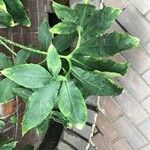
Sauromatum venosum
Voodoo Lily · Monarch-of-the-East · Red-calla · Voodo-lily · Monarch of the east
Description
Source: leafsnapSauromatum venosum, commonly known as the voodoo lily or snake lily, is a unique and fascinating plant species belonging to the Araceae family. Native to Southeast Asia, it can be found in countries such as India, Sri Lanka, Thailand, and Malaysia. This perennial plant grows from an underground corm and produces a single large leaf that can reach up to 1 meter in length. The leaf is notable for its unusual shape, featuring deep lobes and prominent veins. One of the most distinctive features of the voodoo lily is its inflorescence, or flower structure. The flower emerges from the ground on a thick stem called a spadix, which can grow up to 1 meter tall. The spadix hosts small flowers arranged in rows and is surrounded by a large spathe, or bract, that resembles an open umbrella. The flowers of Sauromatum venosum emit an unpleasant odor similar to rotting meat, which attracts flies for pollination. Despite the scent, this plant has been used for medicinal purposes by traditional healers in Southeast Asia for centuries. Besides its medicinal properties, Sauromatum venosum is also valued for its ornamental appeal, making it a popular choice among collectors of exotic plants worldwide. Overall, Sauromatum venosum stands out for its unique features and captivating characteristics, truly making it one-of-a-kind among plant species worldwide!
Care Guide
💧 Water Every 7 days
The Voodoo lily thrives with weekly watering and consistent moisture but can tolerate short dry spells. It does particularly well indoors, where higher humidity is beneficial. Providing sufficient moisture during its growing season promotes abundant flowering, showcasing its adaptation to tropical environments.
How should I water my Voodoo lily plant?
Here are some easier-to-follow watering tips for your Voodoo lily: 1. If you have your Voodoo lily in a small indoor pot, you can take it to your kitchen sink to water it. Simply use the faucet to add water to the pot. Hold the pot with your hands and stop watering when you see water coming out of the drainage holes. Just be careful not to do this during winter or in cold climates, as the cold temperature can harm the plant's roots. 2. In most cases, using your faucet to water the Voodoo lily is fine. But if your local tap water has high levels of fluorine, chlorine, or salts, it's better to use rainwater or lake water instead. 3. Another option is to water the Voodoo lily from above (overhead watering) or directly into the soil. You can use a watering can, a hose, or any other tool that you prefer to water your plant.
What do I do if I give too much or too little water to my Voodoo lily?
If you realize that your Voodoo lily is underwatered, the first thing to do is to water it. Make sure to water deeply until water runs out of the drainage hole in the container. If you grow the plant outside, water it until the soil is completely moist. If you notice that your Voodoo lily is getting too much water, start by watering it less frequently. It's also important to consider the soil and container. If either of them hinders proper drainage, your plant will likely be overwatered again. To fix this, transfer your plant to looser soil and/or a container with larger drainage holes or a more porous material. Additionally, check the location of your plant. If it's in a corner, it's advisable to move it near a window or a door to improve ventilation. Ensuring that your plants are placed in well-ventilated areas can help reduce the risk of overwatering to some extent.
How much should I water my Voodoo lily?
The Voodoo lily does not need consistently moist soil. Instead, it is best to let the soil dry out between waterings. If you grow the Voodoo lily in a container, you can determine when to water by checking how dry the soil is. If about half of the soil in the container is dry, it's time to water. You can check by inserting your fingers, sticks, or using a soil moisture meter. If you grow the Voodoo lily outdoors, plan to water it about once every other week, unless it has recently rained.
How much water does my Voodoo lily require?
To water your Voodoo lily, wait for the top half of the soil to dry. Then, add enough water to make the soil moist again. The amount of water needed depends on the size of the plant and container. For a small Voodoo lily in a small to medium-sized container, one to two cups of water may be enough. Increase the amount for larger plants. To check if the soil is moist enough, stick your finger or a trowel into the soil. You can also water until you see excess water draining from the bottom of the container.
How do I know if I'm watering my Voodoo lily enough?
Both overwatering and underwatering can harm your Voodoo lily. However, they have different effects on the plant. If your Voodoo lily doesn't receive enough water, its leaves may turn yellow. Additionally, the leaf margins may become brown and brittle due to underwatering. On the other hand, overwatering can cause yellow and brown marks to appear on the leaves simultaneously. It can also lead to diseases such as root rot, which may be visible on the plant. Fortunately, if you can recognize the signs of overwatering and underwatering, you have a good chance of fixing these issues.
☀️ Light Partial sun
Voodoo lily grows best with moderate light but can tolerate substantially lower light levels. In its native environment it develops beneath the canopy of taller plants, therefore receiving reduced illumination. Too much light can inhibit its growth, while too little light can also impair its development.
What are the sunlight requirements for Voodoo Lily?
Voodoo Lily requires partial sun, about 3-6 hours of sunlight daily, but it can also tolerate full shade conditions, receiving less than 3 hours of sunlight. It's essential to observe how sunlight moves through your garden to find spots that offer the right balance of light and shade, ensuring the plants thrive. The plant is versatile and adapts well to different light conditions, thriving best under moderate light but capable of growing in areas with considerably less light, similar to its natural habitat beneath larger flora. However, both excessive and insufficient light can negatively affect the plant's growth.
How does artificial lighting support Voodoo Lily growth?
When natural sunlight is inadequate, artificial lighting provides a significant boost for Voodoo Lily's growth, especially indoors or during less sunny periods like winter. You can select artificial lights like LEDs that simulate natural sunlight wavelengths. For full sun plants, it's recommended to provide 30-50W/sq ft of light, for partial sun plants 20-30W/sq ft, and for full shade plants 10-20W/sq ft. Placement should be 12-36 inches above the plant, and the duration should mimic natural daylight hours, generally 8-12 hours per day. This approach promotes healthier, faster growth.
What are the common symptoms of inappropriate light exposure on Voodoo Lily?
Voodoo Lily shows various symptoms when the light conditions are not optimal. Insufficient light can lead to smaller new leaves, leggy or sparse growth, faster leaf drop, slowed or halted growth, and lighter-colored or pale new leaves, indicating a lack of chlorophyll. Excessive sunlight exposure can cause chlorosis, sunscald, leaf curling, wilting, and leaf scorching. These symptoms affect the plant's ability to photosynthesize and overall health, displaying the plant's struggle with the current light conditions.
What solutions can help Voodoo Lily adapt to light conditions?
For outdoor and indoor Voodoo Lilies, gradually increasing their exposure to sunlight by moving them to sunnier spots each week can help them adapt to changing light conditions. Indoors, using artificial lights like desk lamps or professional plant grow lights for at least 8 hours daily can supplement light. Outdoors, gradual relocation to sunnier locations is key to avoiding sunburn. Additionally, reducing obstructions such as pruning trees to allow more sunlight and, for smaller plants, transplanting during the dormant period to a sunnier, well-drained location can improve growth. Note that parts of the plant damaged by insufficient light might not recover, but new growth should be healthy with better light exposure.
🌡️ Temperature 10–37.8°C
Voodoo lily is native to habitats where temperatures range from 50 to 100.4°F (10 to 38°C). The ideal ambient temperatures fall within that span. Appropriate adjustments in different seasons are recommended to ensure healthy growth.
What is the native temperature range for Voodoo lily, and how should it be cared for across different seasons?
Voodoo lily, botanically known as Sauromatum venosum, thrives in environments with a temperature range of 50 to 100.4°F (10 to 38°C), which is considered its ideal ambient temperature range. To ensure healthy growth throughout the year, it's recommended to make proper adjustments based on the season. This plant possesses strong cold resistance, so special frost protection measures are not usually necessary. However, in areas where winter temperatures might drop below -25°C, providing cold protection by covering the plant with soil or straw is crucial. Before the first freeze in autumn, watering the plant abundantly to maintain moist soil can help prevent drought and water scarcity during the colder months.
How does low temperature affect Voodoo lily and what are the solutions?
Voodoo lily can tolerate cold well and prefers temperatures to remain above 10°C. In winter, the temperature should ideally stay above -15°C. When temperatures fall below -25°C, the plant may not show noticeable changes during winter but might experience a decrease in sprouting or fail to sprout at all in spring. To mitigate this, any parts that have failed to sprout by spring should be removed to encourage new growth.
What should be done if Voodoo lily experiences high temperatures?
During the summer, it's important to keep Voodoo lily's temperature below 38°C to avoid heat stress. When temperatures soar above 43°C, the plant may show signs of distress such as lighter-colored leaves, curling, susceptibility to sunburn, and in severe cases, the plant might wilt and dry out completely. To care for a Voodoo lily exposed to high temperatures, trim away sunburned and dried parts, move the plant to a shaded location, particularly from the midday and afternoon sun, or use a shade cloth. Additionally, watering the plant in the morning and evening can help keep the soil moist and cool.
💨 Humidity
🪴 Soil 6-7
🌱 Fertilizer
For Voodoo lily, the primary time to fertilize is in early spring when the flowers are beginning to form. The proper fertilizer promotes better blooms and helps the Voodoo lily produce attractive flowers. Applying fertilizer in early spring ensures strong flowers during the season and provides energy for periods of dormancy.
Why do I have to add fertilizer to my Voodoo lily plant?
The Voodoo lily's leaves are important for its overall structure and appearance, and fertilization plays a key role in ensuring that the leaves look healthy and vibrant. By properly fertilizing your Voodoo lily, you can help maintain consistent leaf color and a sturdy texture. Fertilization doesn't just benefit the leaves, but also supports the growth of new roots and maintains the existing root system below the soil surface. This not only keeps the plant healthy in the present, but also improves its ability to absorb important nutrients from the soil in the future.
When should I fertilize my Voodoo lily?
If you grow your Voodoo lily outdoors, it will start growing new leaves in early spring. This is a signal that it's time to fertilize the plant. Generally, applying fertilizer once in spring is enough for the Voodoo lily to thrive. However, if you want to promote maximum growth, you can fertilize it multiple times during the spring and early summer. In this case, you can feed the Voodoo lily approximately once every month to a month and a half.
When is it not a good idea to apply fertilizer to my Voodoo lily?
During late fall and winter, your Voodoo lily will go into a dormant phase and stop growing. So, avoid fertilizing it during this time. In spring and summer, if you choose to fertilize, gradually reduce the amount as summer approaches because the growth rate of your Voodoo lily will slow down. It's not a good idea to fertilize your Voodoo lily when the weather is unusually hot or the soil is very dry as it can stress the plant and cause it to die prematurely.
What kind of fertilizer should I use for my Voodoo lily?
Choosing the best fertilizer for a Voodoo lily is easy. These plants thrive on general-purpose garden fertilizers with equal amounts of nitrogen, phosphorus, and potassium (10-10-10 or something similar). Avoid fertilizers high in nitrogen if unsure. The best fertilizers for Voodoo lilies are granular and slow-release, making them easy to apply. Additionally, feeding them with organic soil amendments like compost can be helpful.
How can I give my Voodoo lily the nutrients it needs?
To ensure successful growth of your Voodoo lily, wait until you see the first leaves poking through the soil in early spring. At this point, apply a granular slow-release fertilizer with a balanced formula to the soil around the base of the plant. If desired, you can repeat this process later in the season. Remember to apply the fertilizer to the soil, not the plant itself. Sometimes you may need to move leaves aside to reach the soil above the roots. Additionally, it is advisable to water your Voodoo lily before and after fertilizing.
🪴 Pot & Repot Once a year
Repot the voodoo lily every spring, using a pot that is 1-2 inches larger in diameter than the current one, and fill it with well-draining soil. After repotting, place the plant in a spot with indirect light and be careful not to overwater. This will help promote healthy growth and prevent rot.
✂️ Pruning
The Voodoo lily is known for its foul-smelling inflorescence and needs light pruning of dead foliage from early to late spring to promote healthy growth. Be sure to wear gloves while handling the plant due to its irritating sap. Regular pruning improves airflow and helps reduce disease, which enhances the plant's vibrancy. For more care details, consult horticultural guides.
🌿 Propagating
🐛 Diseases & pets
☠️ Toxicity
Characteristics
- Plant Type
- Herb
- Life Cycle
- Perennial
- Genus
- Sauromatum
- Family
- Araceae
- Hardiness Zone
- 6-11
- Mature Height
- 61 cm to 76 cm
- Mature Spread
- 40 cm
- Leaf Color
- Green
- Leaf Type
- Deciduous
- Flower Color
- Purple, Green
- Flower Size
- 1.52 cm
- Bloom Time
- Mid spring, Late spring
- Planting Time
- Spring
- Harvest Time
- Early summer, Mid summer
- Native Area
- Nepal, Saudi Arabia, Malawi, India, Angola, Zambia, Sudan, Bangladesh, Pakistan, Yemen, Kenya, Uganda, Tanzania, Zimbabwe, China, Cameroon, Myanmar, Ethiopia, Congo (DRC), Central African Republic