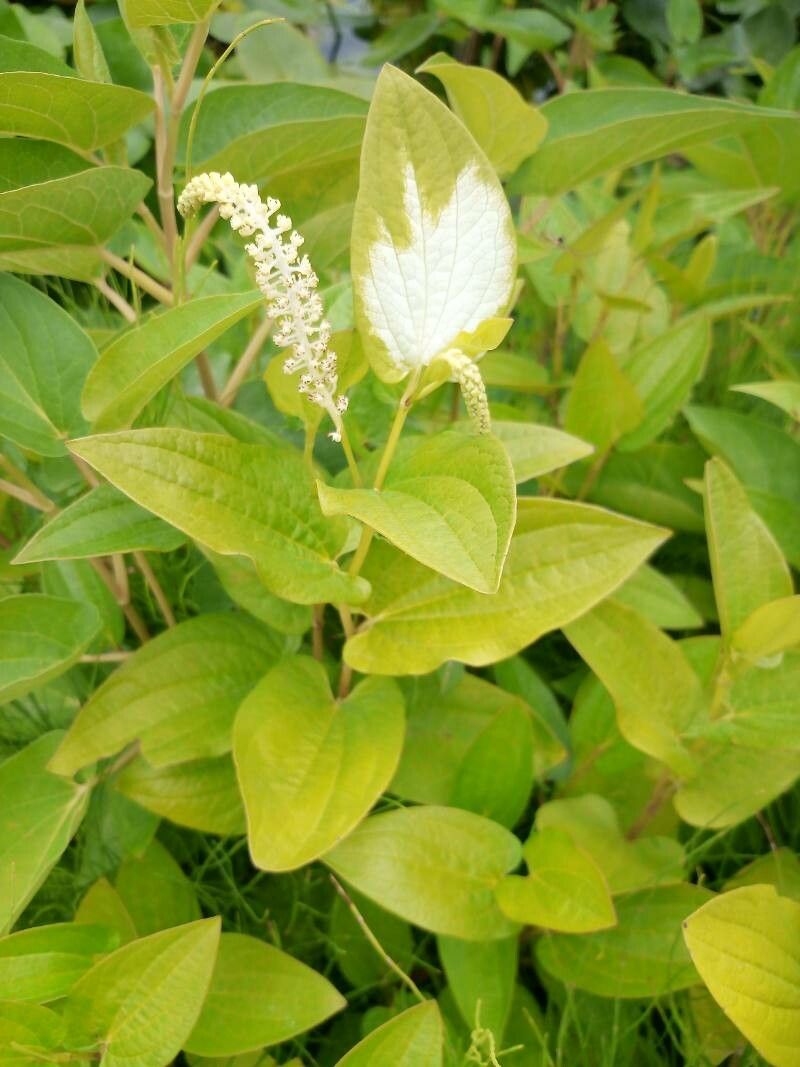
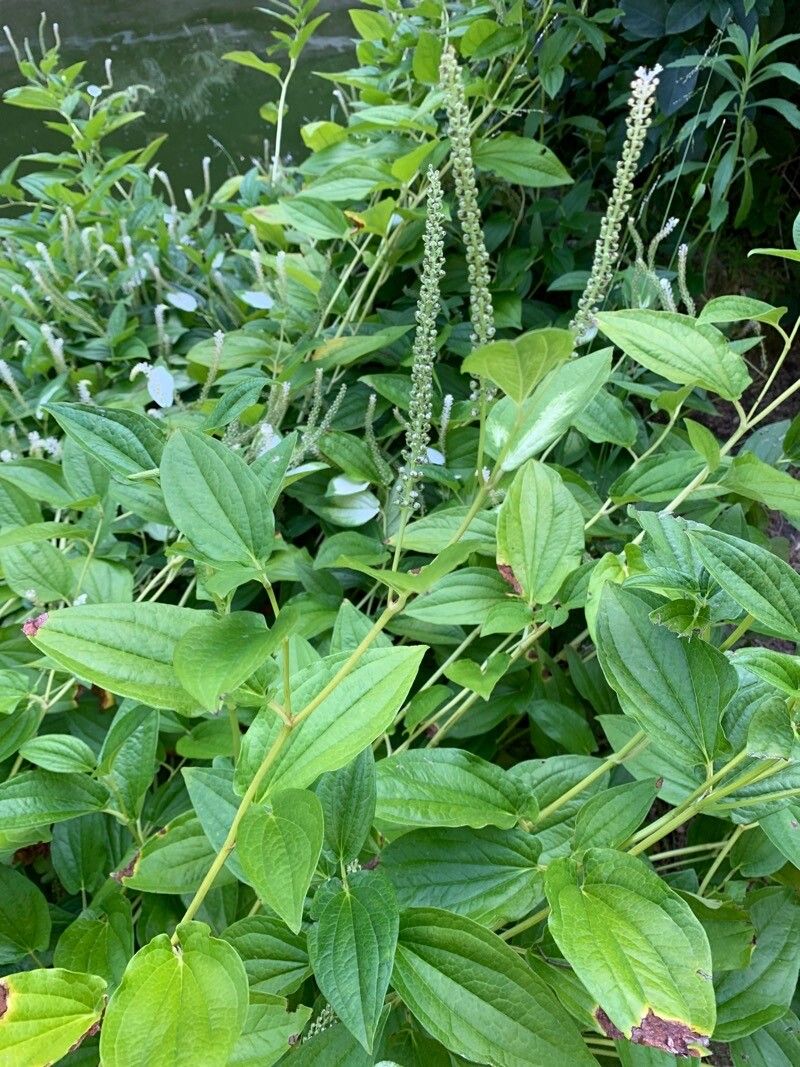
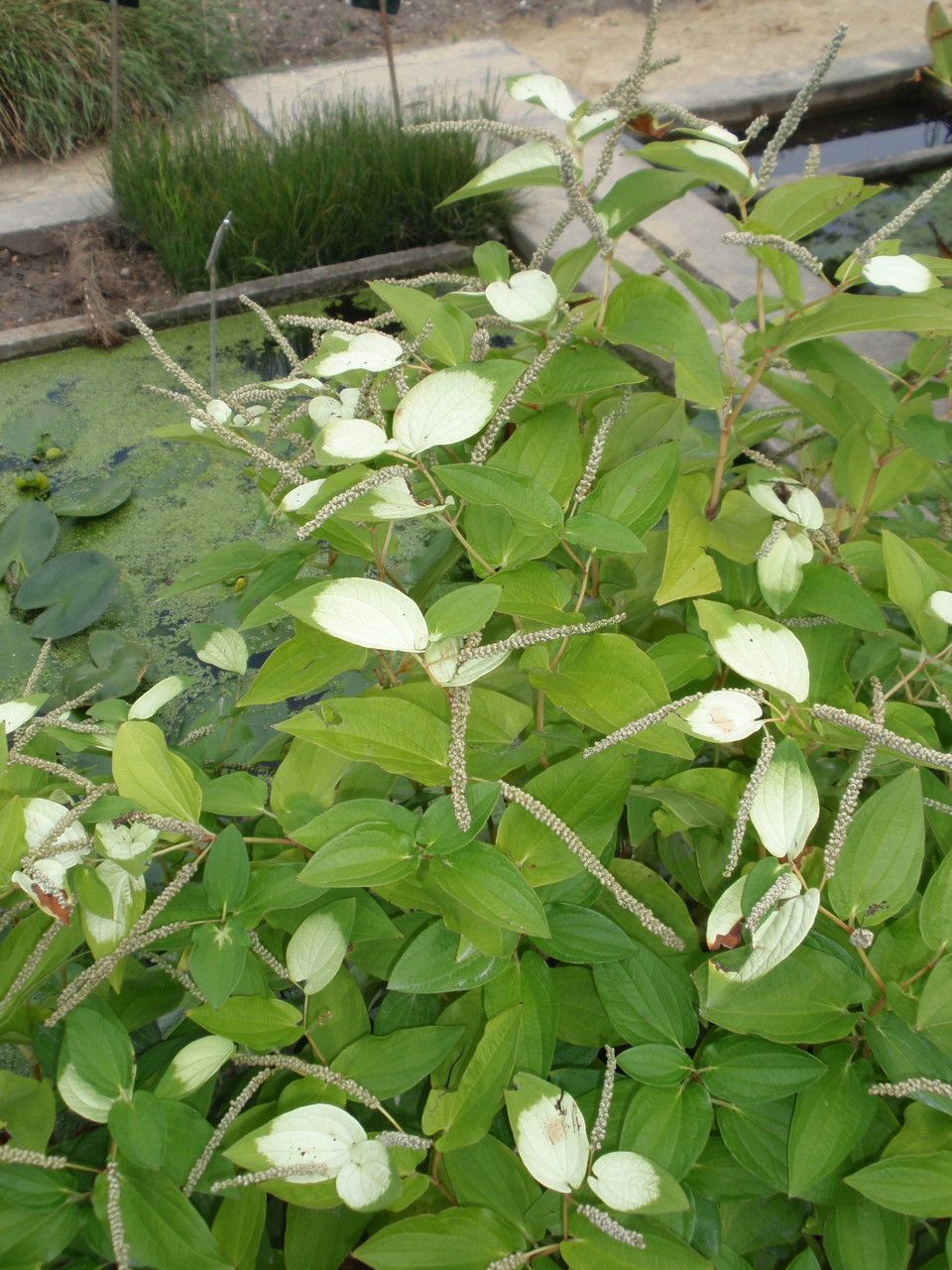
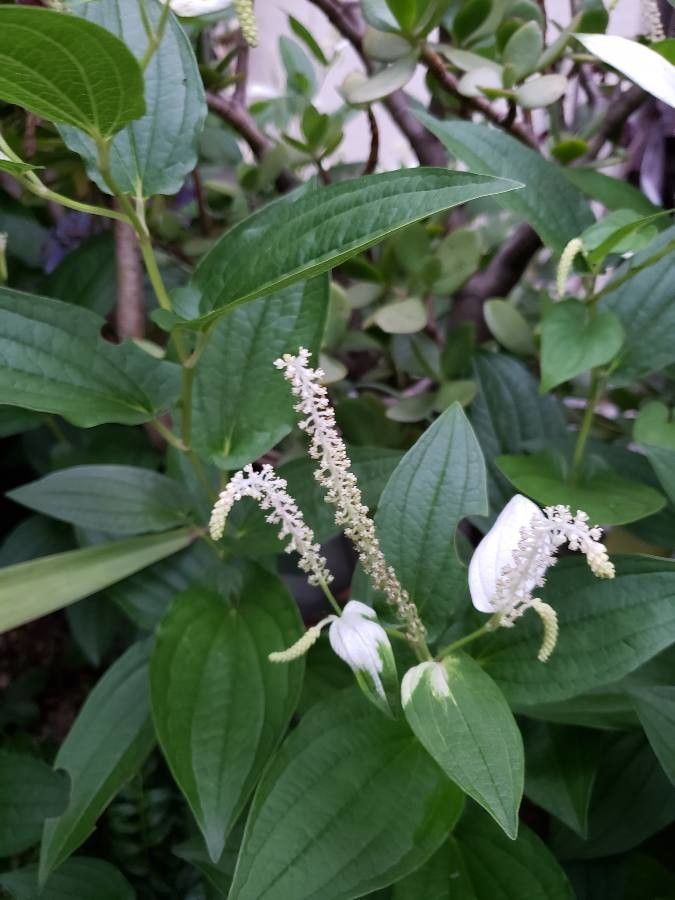
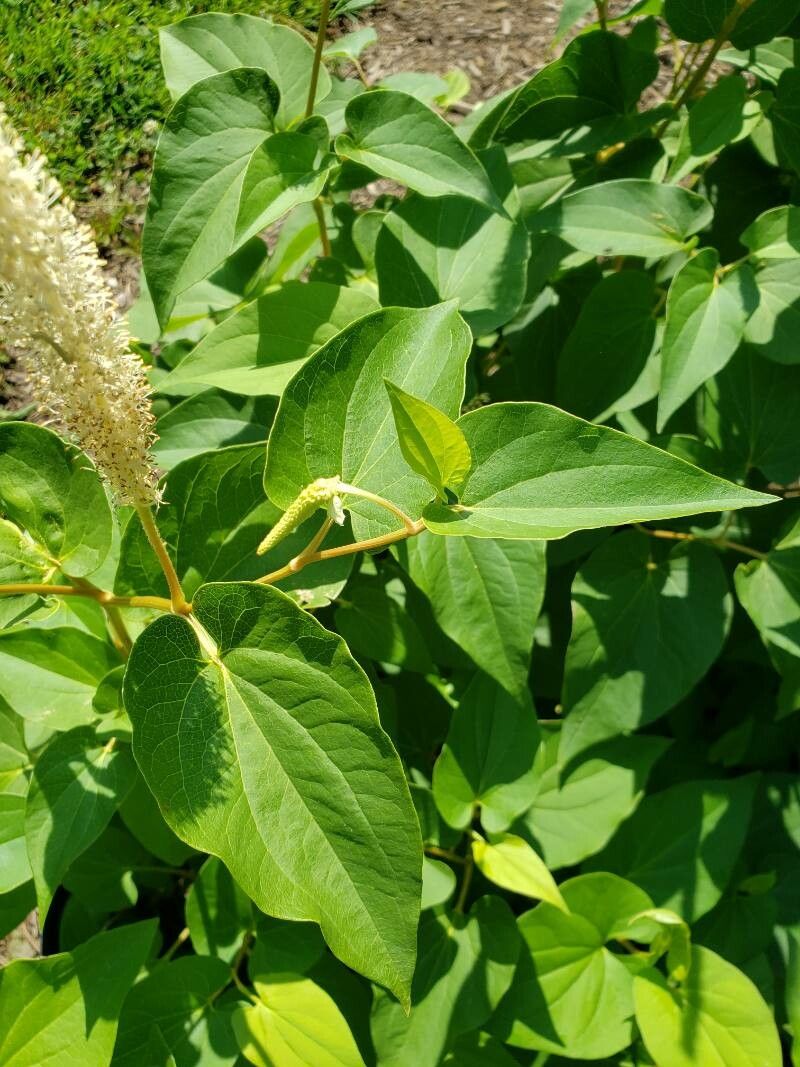
Saururus chinensis, commonly known as Asian lizard's tail, is an herb that grows in low, damp places to more than 1 meter high, endemic to China, India, Japan (including the Ryukyu Islands), Korea, Philippines, and Vietnam. Its leaves are green, papery, ribbed, densely glandular, and ovate to ovate-lanceolate, and (4-)10-20 × (2-)5-10 cm in size. Each flower spike resembles a lizard's tail.
Asian lizard's tail has good resistance to disease and is generally not prone to getting sick. However, it can be vulnerable to pests and diseases present in its environment, although these problems are typically not serious. For care, this plant needs a moderate amount of attention. It should be pruned regularly to maintain an attractive appearance and healthy growth. Fertilizing can also help encourage flowering. Asian lizard's tail is suitable for anyone with outdoor space, such as a garden or patio, and does not demand extensive care experience. It may need more attention when grown indoors.
How to keep Saururus Chinensis.
Light
Asian lizard's tail does best with plenty of sun exposure, which is essential for its healthy growth. However, it can also survive in places where the sunlight is filtered or less intense. Native to open fields, it is used to abundant light. An imbalance in lighting can result in poor plant health.
Water
The Asian lizard's tail is a plant native to East Asia that thrives in consistently moist, water-loving environments. To mimic its tropical habitat, it's important to water the plant twice a week. Although it is typically grown outdoors, the Asian lizard's tail requires plenty of water during its active growing season to maintain its lush foliage.
Temperature
The Asian lizard's tail comes from climates where temperatures generally fall between 41 and 95 °F (5 and 35 °C). It does best when maintained within that temperature range. Seasonal temperature adjustments may be needed to reproduce this natural environment for optimal health.
Fertilizer
Early spring, as the Asian lizard's tail comes out of dormancy and begins active growth, is the best time to fertilize. Fertilization provides essential nutrients for healthy growth. Although the Asian lizard's tail has relatively low fertilizer requirements, annual fertilization can improve its survival and promote better, longer-lasting flowers.
Pruning
The distinctive Asian lizard's tail plant has unique spikes of white flowers and heart-shaped leaves. Prune it in early spring to remove damaged stems, improve air circulation, and shape the plant. Regular pruning not only reduces the risk of disease but also encourages abundant flowering. Use clean, sharp tools to minimize stress on the plant.
Botanical profile.
- Plant Type
- Herb
- Life Cycle
- Perennial
- Genus
- Saururus
- Family
- Saururaceae
- Hardiness Zone
- 5-9
- Mature Height
- 30 cm to 91 cm
- Mature Spread
- 30 cm to 91 cm
- Leaf Color
- Green, Dark Green
- Leaf Type
- Deciduous
- Flower Color
- White
- Flower Size
- 5.08 cm to 22.86 cm
- Bloom Time
- Summer
- Planting Time
- Autumn, Winter
- Harvest Time
- Late summer, Early fall, Mid fall
- Native Area
- India, Vietnam, Japan, Philippines, South Korea, China
Other names.
Reader questions.
What are the sunlight requirements for Asian lizard's tail?
Asian lizard's tail requires an ample amount of sun exposure for healthy growth and thrives under conditions of full sun, defined as above 6 hours of sunlight per day, or partial sun, with about 3-6 hours of sunlight. It is important to watch how sunlight moves through your garden to find spots that offer a perfect balance of light and shade, ensuring the plant's happiness and health. Originating from open fields, this plant is accustomed to abundant light, but it can also adapt to areas with filtered or less intense sunlight. An imbalance in lighting, however, can detrimentally affect the plant's wellbeing.
What is the optimal temperature range for Asian lizard's tail?
The optimal temperature range for Asian lizard's tail (Saururus chinensis) is between 41 to 95 °F (5 to 35 °C). It is crucial to adjust the seasonal temperatures accordingly to mimic its natural environment for the plant's optimal health. Asian lizard's tail originates from climates within this temperature range and prefers these conditions for thriving.
How can artificial lighting be used for Asian lizard's tail indoors?
When natural sunlight is inadequate, especially during winter or in less sunlit spaces, artificial lighting becomes crucial for the optimal growth of indoor plants like the Asian lizard's tail. For efficient growth, the right type of artificial light, such as LED lights, should be chosen because they can be customized to provide specific wavelengths needed by plants. Full sun plants require 30-50W/sq ft of artificial light, partial sun plants need 20-30W/sq ft, and full shade plants need 10-20W/sq ft. The artificial light source should be placed 12-36 inches above the plant to mimic natural sunlight and turned on for 8-12 hours per day to match natural daylight hours for the species.
How does Asian lizard's tail handle cold temperatures?
Asian lizard's tail exhibits strong cold resistance and special frost protection measures are usually not required. However, if winter temperatures are expected to drop below -25°C, it is important to provide cold protection by covering the plant with soil or straw. Additionally, watering the plant abundantly before the first freeze in autumn is recommended to ensure the soil remains moist and enters winter in a frozen state. This approach helps prevent drought and water scarcity during winter and early spring.
What are the symptoms of light deficiency in Asian lizard's tail?
Symptoms of light deficiency in Asian lizard's tail may include smaller new leaves compared to mature ones, leggy or sparse growth with increased distance between leaves or stems, faster leaf drop to conserve resources, slower or halted growth as the plant enters survival mode, lighter-colored new leaves indicating a lack of chlorophyll, and conditions like chlorosis, sunscald, leaf curling, wilting, and leaf scorching. These symptoms highlight the importance of adequate light exposure for the plant's health.
What should be done if the Asian lizard's tail experiences temperatures below -25°C?
If the temperature falls below -25°C, the Asian lizard's tail may not show immediate changes, but there could be a decrease in sprouting or even absence of sprouting during spring. In these cases, the solution is to remove any parts of the plant that have failed to sprout in the spring.
What are some solutions to light deficiency problems for Asian lizard's tail?
To address light deficiency in Asian lizard's tail, gradually move the plant to sunnier locations each week until it receives at least 6 hours of direct sunlight daily. For indoors, consider using a south-facing window for maximum sunlight or provide additional light with a desk or ceiling lamp for at least 8 hours a day, or invest in professional plant grow lights. For outdoor plants, it is crucial to adapt them gradually to avoid sunburn. Additionally, you can reduce obstructions like branches from trees to allow more sunlight to reach the plants and consider transplanting smaller plants during their dormant period to a location with ample sunlight and good drainage. It's important to note that while affected parts may not recover, new growth after adjusting light exposure will be healthy.
How does high temperature affect Asian lizard's tail?
During the summer, it's important to keep the Asian lizard's tail below 35°C. High temperatures exceeding 38°C can cause the leaves to lighten in color and become prone to curling, susceptible to sunburn, and in severe cases, can lead to the entire plant wilting and drying out. To mitigate these effects, trim away the sunburned and dried parts of the plant. Relocating the plant to a location that provides shade during the midday and afternoon sun or using a shade cloth can help. Also, watering the plant in the morning and evening will keep the soil moist and help the plant cope with high temperatures.