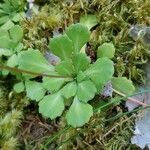
Saxifraga cuneifolia
Lesser Londonpride · Lesser London Pride · Shield-leaved saxifrage · Spoon-leaved saxifrage
Description
Source: leafsnapSaxifraga cuneifolia, commonly known as Wedgeleaf Saxifrage, is a small perennial plant belonging to the Saxifragaceae family. It is native to the rocky slopes and alpine meadows of western North America, including regions in Alaska and Canada. The plant typically reaches a height of up to 10 cm and features a rosette of basal leaves that are wedge-shaped with toothed margins. These green leaves have a waxy texture, which helps them retain moisture in dry conditions. Saxifraga cuneifolia produces small white or pink flowers on thin stems that rise above the foliage during late spring or early summer. Each flower has five petals and forms clusters at the top of the stems. This plant prefers well-drained soil with moderate moisture levels and thrives in full sun or partial shade. It is often used as an ornamental plant in rock gardens, alpine gardens, or as ground cover on slopes. Traditionally, indigenous people have used Saxifraga cuneifolia for medicinal purposes, such as treating coughs, colds, and sore throats, owing to its antibacterial properties.
Care Guide
💧 Water Every 7 days
The lesser londonpride plant thrives in outdoor rock gardens and prefers moderate moisture with consistent humidity. It typically requires watering every three weeks. Its growth is influenced by rainfall patterns, which enhances its natural resilience to dry spells and improves its efficiency in water uptake.
What should I do if I give my Lesser londonpride plant too much or too little water?
Lesser londonpride and other succulents are capable of surviving without water for long periods of time, so it is uncommon to find them suffering from underwatering. However, if you unintentionally neglect to water your Lesser londonpride for a month or longer, you will likely notice signs of thirst such as a lacklustre and wrinkled appearance, dried up or brown and crispy leaves, and completely dried out soil. To remedy this, give your plant plenty of water by submerging the pot in water for 5-10 minutes until you feel moisture on the soil's surface. On the other hand, overwatering is dangerous for Lesser londonpride and can cause root rot, hindering the absorption of nutrients and water. Symptoms of overwatering include yellow, swollen, and translucent organs, and if left untreated, the plant may turn brown or black, and the leaves may fall off easily. To treat an overwatered plant, change the growing conditions by improving air ventilation and adjusting the frequency of watering. Early detection of overwatering is key to saving the plant by removing it from the pot, checking the roots and soil, and disposing of any unhealthy roots. If a majority of the roots are affected, it may be impossible to save the plant, but if only a portion of the roots are affected, there is a chance of saving it. Dip the healthy roots in a fungicide before repotting them in fresh, well-draining soil. Although it is not always successful, in most cases the plant will recover and show new growth in the next growing season.
How frequently do I need to water my Lesser londonpride plant?
Determining how often to water Lesser londonpride can be a bit tricky as there are no exact guidelines. However, a helpful approach is to check the soil and only water when it's completely dry. To do this, you can either use your finger or a moisture meter to examine the soil below the surface. If you have planted it in a deep pot, a stick or chopstick can be used for this purpose. If the soil feels even slightly moist, it's best to wait a few days and check again. Generally, watering Lesser londonpride every two weeks in summer and once a month in winter is sufficient for most people, but certain factors can influence the frequency. The following section highlights some considerations that can assist you in determining how often to water.
What do I need to think about when watering my Lesser londonpride?
To ensure your Lesser londonpride plant is watered properly, consider a few key factors. The container size and soil type are important in determining the frequency and amount of water needed. Choose a container with good drainage to prevent water build-up. Smaller containers hold less moisture and require more frequent watering, while larger pots hold water for longer periods. Avoid using oversized pots, as they can result in overwatering. When repotting, opt for a slightly larger container. Shallow containers work best for Lesser londonpride due to their shallow root systems. In terms of seasonal watering, Lesser londonpride needs less water during winter when growth is slow. The cooler air reduces evaporation, making the soil retain moisture for longer. On the other hand, the active growing seasons of spring and autumn require more frequent watering. Consider the overall climate of your location as well. Humid areas with ample rainfall may require less watering compared to dry, arid climates. Keep in mind that geographic locations can have variations within seasons and due to indoor heating and air conditioning. If you have planted your Lesser londonpride in the ground, it generally won't require additional watering once the root system is established. It can rely on natural precipitation and dew. However, during prolonged dry spells, occasional watering may be necessary. In areas where Lesser londonpride can only be grown in containers, it can be moved outside during spring and summer, provided the temperature is suitable. Keep in mind that potted plants exposed to more sunlight, even on a shaded porch, tend to require more water.
How should Lesser londonpride be watered?
To properly water Lesser londonpride, it is best to thoroughly soak the plant and then wait for it to dry out before watering again. This plant can tolerate drought, so you can allow it to get quite dry before watering. It is always better to give it too little water than too much. When watering, make sure to evenly soak the soil throughout the entire pot. Avoid pouring water in just one spot and instead pour around the whole rim of the planter to ensure all sides of the plant get wet. The amount of water needed will depend on the size of the container and how much water the soil absorbs. Water the plant until it drains out from the drainage holes, then leave the drained water in the saucer for about 20-30 minutes to allow it to absorb into any dry pockets of soil. After that, discard any excess water in the saucer to prevent waterlogging the soil. Bottom-watering is also a great method for Lesser londonpride, as it ensures the soil gets thoroughly moistened. This involves placing the pot in a saucer of water and allowing the soil to absorb moisture through the drainage holes. You will know the soil has absorbed enough water when the top layer is moist. Although bottom-watering takes more time than top-watering, it is a reliable way to evenly distribute water throughout the pot. In the plant's natural habitat, there is little rain, but when it does rain, the soil becomes thoroughly moistened. To mimic this, bottom-water your plant when the soil is completely dry. It is better to deeply soak the soil at once than to frequently water lightly for Lesser londonpride.
☀️ Light Partial sun
Lesser londonpride grows best in gentle sunlight, can tolerate stronger sun, and its growth is enhanced by that exposure. Its habitat is bathed in mild sun, which supports its vigor. Too much sun can harm it, while too little light prevents it from achieving optimal growth.
What are the sunlight requirements for Lesser Londonpride?
Lesser Londonpride thrives best in partial to full sunlight, requiring about 3-6 hours of sunlight daily for optimal growth. It tolerates and even thrives under more intense sun exposure, thriving in habitats filled with gentle sunlight. However, overexposure can cause harm, and insufficient light exposure may hamper its growth. It's important to monitor the plant's exposure to sunlight to ensure it receives the right amount for its health.
How does artificial lighting benefit indoor Lesser Londonpride plants?
Artificial lighting is crucial for indoor Lesser Londonpride plants, especially when natural sunlight is insufficient, such as in winter or less sunny indoor spaces. Artificial lights, particularly LED lights, can be customized to provide the specific wavelengths of light that plants need, promoting faster and healthier growth. Full sun plants require 30-50W/sq ft of artificial light, partial sun plants need 20-30W/sq ft, and shade plants need 10-20W/sq ft. The light source should be placed 12-36 inches above the plant to mimic natural sunlight, and most plants benefit from 8-12 hours of light per day.
What are the symptoms of insufficient or excessive light exposure in Lesser Londonpride?
Lesser Londonpride shows several symptoms when exposed to inadequate or excessive light. Insufficient light may lead to smaller new leaves, leggy or sparse growth, faster leaf drop, slower or no new growth, and lighter-colored new leaves. Excessive sunlight can cause chlorosis, sunscald, leaf curling, wilting, and leaf scorching. These symptoms indicate the plant's struggle with its light environment and necessitate adjustments to its exposure.
What solutions can address light-related issues in Lesser Londonpride?
To optimize Lesser Londonpride's growth with respect to light, gradually acclimate the plant to direct sunlight by moving it to sunnier spots each week until it receives the desired 3-6 hours of sunlight. For plants that are large or not easily movable, consider using artificial lighting, keeping a lamp on for at least 8 hours a day or investing in professional plant grow lights. Gradually expose outdoor plants to more sunlight to prevent sunburn. If sunlight is obstructed, pruning or relocating the plant may be necessary. Note that parts of the plant damaged by insufficient sunlight may not recover, but new growth should be healthy with proper light exposure.
🌡️ Temperature 0–35°C
Lesser londonpride comes from cool mountainous areas of Europe and Asia where temperatures range from 32 to 95 °F (0 to 35 ℃). This plant does well in those temperate conditions and may need temperature adjustments during extreme seasonal shifts.
What is the native habitat and preferred temperature range of Lesser londonpride?
Lesser londonpride, botanically known as Saxifraga cuneifolia, is native to the cool mountainous regions of Europe and Asia. It thrives in temperate conditions where the temperatures range from 32 to 95 °F (0 to 35 °C). The plant is adapted to these climates but may require adjustments during extreme seasonal temperature changes. It is a heat-loving plant that enters a dormant state and stops growing during winter. When temperatures drop severely, indoor cultivation near a south-facing window is recommended to ensure it receives sufficient sunlight, or supplemental lighting can be used if natural light is inadequate.
How should Lesser londonpride be cared for in low temperatures?
In cooler conditions, when the temperature falls below 0°C, the growth of Lesser londonpride slows, and watering should be reduced or completely stopped to prevent root rot. Outdoor plants require watering to be halted during low temperatures. Additionally, during winter, if the outdoor temperature plunges below -30°C, it's crucial to move the plant indoors. To protect the plant from cold temperatures below -35°C, which can weaken it and lead to wilting and root rot, one can trim off frostbitten areas. If root rot occurs, affected roots should be removed, and the plant could be propagated through cuttings. To facilitate recovery, it should be kept in a warm environment near a south-facing window or provided with supplemental lighting if necessary.
What care measures should be taken for Lesser londonpride during high temperatures?
Lesser londonpride should ideally be kept below 35°C during the summer months. Exposure to temperatures above 38°C halts its growth, causes water loss, wilting, and increases susceptibility to sunburn. In such cases, the damaged parts should be removed, and the plant should be shielded from the harsh afternoon sunlight until it recovers and resumes growth. Additionally, if root rot is observed due to overwatering or poor drainage, watering should be stopped until new growth indicates the emergence of healthier roots.
💨 Humidity
🪴 Soil 0-0
🌱 Fertilizer
For Lesser londonpride, light doses of fertilizer once or twice a year during the growing season are adequate. Do not fertilize in winter and summer when the plant is dormant. Cut back on fertilizer for plants that have been repotted and wait a couple of months after repotting before applying any. Fertilizing helps maintain healthy growth and encourages flowering.
Why should I put fertilizer on my Lesser londonpride plant?
When you fertilize Lesser londonpride, it adds nutrients to the soil it's growing in. While it does already store water and nutrients, applying plant food during the growing season helps promote healthy growth. Fertilizing can also help mature plants produce blooms during this time.
When should I fertilize my Lesser londonpride plant?
Lesser londonpride plants should receive a light dose of fertilizer during the growing season. This means fertilizing them 1-2 times a year. It's best to fertilize in spring and autumn, avoiding winter and summer when the plant is dormant. Take caution with repotted plants and reduce the amount of fertilizer used. It's recommended to wait a few months after repotting before applying fertilizer.
When is it not a good idea to fertilize my Lesser londonpride plant?
Lesser londonpride, like most plants, has a dormancy period where it stops growing. During the summer and winter, you should avoid applying fertilizer to the plant. It's also recommended to withhold fertilizer for a few months after repotting in the spring.
What kind of fertilizer does my Lesser londonpride plant need?
To properly fertilize Lesser londonpride, use a liquid plant food intended for succulents and cacti. Dilute the fertilizer with water to a half-strength solution to avoid buildup in the soil. Apply the diluted fertilizer to the base of the plant, making sure to water it thoroughly. Allow any excess moisture to drain from the container or seep into the ground.
How can I make my Lesser londonpride plant grow better?
When fertilizing Lesser londonpride, it is easier to use liquid plant food, but granules are also an option. Follow the directions on the packaging and remember to dilute liquid fertilizers to half-strength. Regardless of whether you choose granules or liquid plant food, always apply it to the soil. Add a thin layer of soil to cover the granules and water the plants.
🪴 Pot & Repot Every 2 years
Repot lesser Londonpride every two years in the spring, using a wider pot to accommodate its spreading growth. Ensure the soil is well-draining and provide adequate moisture after repotting. Protect its delicate foliage from harsh sunlight to encourage healthy flourishing. Lesser Londonpride is ideal for rock gardens or as groundcover.
✂️ Pruning
Your lesser Londonpride doesn’t require pruning, but it’s a good idea to remove dead or faded blooms to keep your garden looking neat.
🌿 Propagating
🐛 Diseases & pets
☠️ Toxicity
Characteristics
- Plant Type
- Herb
- Life Cycle
- Perennial
- Genus
- Saxifraga
- Family
- Saxifragaceae
- Hardiness Zone
- 3-9
- Mature Height
- 10 cm to 25 cm
- Mature Spread
- 30 cm
- Leaf Color
- Green
- Leaf Type
- Evergreen
- Flower Color
- White
- Flower Size
- 0.25 cm to 0.51 cm
- Bloom Time
- Mid spring, Late spring
- Planting Time
- Autumn, Winter
- Harvest Time
- Early summer, Mid summer