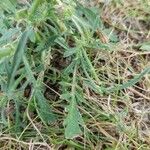
Scabiosa columbaria
Pincushion flower · Small Scabious · Pigeon's scabious · Yellow scabious · Cape scabious
Description
Source: leafsnapScabiosa columbaria, commonly known as the Pincushion Flower, is a perennial plant that belongs to the honeysuckle family. Native to Europe, it thrives in meadows, grasslands, and rocky areas. The plant can grow up to 60 cm tall and forms clumps with basal rosettes of deeply lobed leaves. The most striking feature of Scabiosa columbaria is its flowers. These blooms appear on long stems that rise above the foliage in the summer and autumn. The flowers have a distinctive pincushion-like appearance with rounded heads composed of many small florets, surrounded by larger petals in shades of blue, pink, or white. Scabiosa columbaria is an easy-to-grow plant that prefers well-drained soil and can thrive in full sun or partial shade. It can be propagated by seed or division and requires minimal maintenance once established. The Pincushion Flower is versatile, serving as an ornamental plant for borders or rock gardens. Its long-lasting blooms make it an excellent choice for cut flowers. Moreover, it attracts pollinators such as bees and butterflies, making it an ideal addition to wildlife gardens. Overall, Scabiosa columbaria is a beautiful perennial with attractive blooms that add color to any garden. Additionally, it offers important ecological benefits by attracting pollinators, making it an excellent choice for any gardener seeking both beauty and functionality in their plants.
🌳 Pincushion flower is not only visually appealing but also offers uses beyond mere ornamentation. In the past it was employed in dressmaking as a traditional fabric dye. Its tendency to attract pollinators such as butterflies and bees provides ecological advantages, making it a valuable component of biodiverse gardens. The plant’s largely untapped potential in other fields — for example, the possible use of its extract in cosmetics — makes it a prospect for future applications. However, pincushion flower is not a common source for industries like furniture or energy.
🎭 Affection, innocence and tranquility
Care Guide
💧 Water Every 7 days
Small scabious thrives in consistently moist soil and needs watering each week. It grows best outdoors, where it can experience natural light and rainfall, both of which are essential for its blooming cycle. To keep the plant healthy, avoid exposing it to drought or waterlogging.
How should I water my Small scabious plant?
To optimize the health of the Small scabious plant, it is advisable to water it with filtered water at room temperature. Tap water may contain harmful particles, so filtered water is a better choice. The plant prefers the water to be at room temperature or slightly warmer since it originates from a warm environment and cold water might shock the plant. Avoid watering from above as it can cause problems with the foliage. Instead, apply the filtered room temperature water directly to the soil until it is completely soaked. This method promotes healthy root growth and nutrient absorption as the water moistens the roots and allows them to spread through the soil.
What should I do if I give too much or too little water to my Small scabious?
Overwatering is a more common problem for Small scabious plants compared to underwatering. When Small scabious plants receive too much water, their stems and leaves may wilt and turn yellow. Overwatering for a prolonged period can also lead to diseases like root rot, mold, and mildew, which can be fatal for the plant. On the other hand, underwatering is less common for Small scabious plants because they can tolerate drought fairly well. However, there is still a possibility of underwatering, which can cause the leaves to become brittle and brown. It is important to be vigilant and notice the signs of overwatering in your Small scabious plant as soon as possible. Some diseases caused by overwatering, such as root rot, may not be reversible if you wait too long. If you observe early signs of overwatering, you should immediately reduce the frequency of watering. Additionally, check the quality of the soil in which your Small scabious plant grows. If the soil drains poorly, replace it with a loose and well-draining potting mix. Conversely, if you notice signs of underwatering, simply increase the frequency of watering until those signs disappear.
How often should I give water to my Small scabious?
If your Small scabious plant is in a pot, the most accurate way to determine if it needs water is to stick your finger into the soil. If you find that the top two to three inches of soil are dry, it's time to water it. If you're growing your Small scabious outdoors in the ground, you can use a similar method to test the soil. Again, if the first few inches of soil have dried out, it's time to water. Usually, during spring and early fall, watering once a week will be sufficient. However, during extremely hot weather, you may need to water twice or more per week. Nonetheless, mature and well-established Small scabious plants have an impressive ability to tolerate drought.
How much water does my Small scabious plant need?
To properly water your Small scabious, don't be afraid to give it a generous amount of water. Check if the top two to three inches of soil are dry, and if so, water the plant thoroughly until the soil is completely soaked. Make sure to provide enough water that it flows out of the drainage holes in the pot. If no excess water is coming out, it means you haven't watered enough. However, be careful not to let water accumulate in the soil, as this can harm the plant. If there is no water draining from the pot, it could mean the soil doesn't drain well, which is bad for the plant's health. If the plant is outdoors, an inch of rain per week should be enough.
How do I water my Small scabious plant as it grows?
Small scabious has different water needs throughout its growth stages. When it's young or recently transplanted, it requires more water due to its focus on developing new roots. These roots need extra moisture to support future growth. As the plant matures, it will require less water. However, during the bloom period, when it's producing flowers, it will need additional water to meet the demands of flower development.
☀️ Light Full sun
Pincushion flower performs best when exposed to a full spectrum of light throughout the day, though it can adapt to periods of reduced illumination. Native to sunny habitats, it is healthiest with generous light exposure. Nevertheless, insufficient light or excessive exposure can undermine its vitality.
What are the sunlight requirements for small scabious?
Small scabious requires specific sunlight conditions to thrive. It performs best in full sun, which means it should receive above 6 hours of sunlight daily. It can also grow in partial sun, with about 3-6 hours of sunlight. When planning your garden, observe the movement of sunlight throughout the day to find spots that provide the ideal balance of light and shade for your plants, ensuring they grow healthy and strong.
How important is sunlight for small scabious' health?
Sunlight is crucial for the health of small scabious. Originating from environments with plentiful sunlight, this plant thrives under a generous exposure to light. While it shows some adaptability to lower light conditions, insufficient sunlight or too much direct exposure can adversely affect its growth and vitality. For indoor plants, when natural light is not enough, especially in winter or less sunny spaces, artificial lighting can be a significant aid. Adequate lighting supports optimal growth, with LED lights being a popular choice because they can provide specific wavelengths needed by plants. The amount of artificial light required varies depending on the plants' needs, with full sun plants needing 30-50W/sq ft, partial sun plants 20-30W/sq ft, and full shade plants 10-20W/sq ft.
What are the symptoms of light deficiency or excess in small scabious?
Small scabious shows various symptoms when it experiences light deficiency or excess. Inadequate light can lead to smaller new leaves, leggy or sparse growth, early leaf drop, slower or no new growth, and lighter-colored new leaves. Excessive sunlight can cause chlorosis (yellowing of leaves), sunscald, leaf curling, wilting, and leaf scorching. These symptoms indicate the plant's struggle with either absorbing enough light for photosynthesis or dealing with too much light exposure, which can damage its leaves and overall health.
What solutions can help small scabious with light issues?
To address light-related issues in small scabious, gradual acclimation to sunlight is essential. For indoor plants, moving them each week to progressively sunnier spots until they receive at least 6 hours of direct sunlight daily can be helpful. Using artificial lights, like desk lamps or grow lights, for at least 8 hours a day can also ensure your plant gets enough light. For outdoor plants, gradual relocation to sunnier areas prevents sunburn. Pruning nearby trees can reduce shade if they're blocking sunlight. When needed, transplanting during the dormant period, usually in late winter or early spring, to a location with ample sunlight and good drainage can improve the plant's health. Unfortunately, areas of the plant already harmed by insufficient sunlight might not recover, but new growth should be healthy with improved light conditions.
🌡️ Temperature 5–35°C
Pincushion flower originates from temperate regions and thrives at temperatures of 68 to 95 °F (20 to 35 °C). To mimic those conditions, the ambient temperature should be kept within this range, particularly during the growing season.
What is the optimal temperature range for growing Small scabious?
Small scabious, also known by its botanical name, Scabiosa columbaria, thrives in regions with temperate climates, flourishing best within a temperature range of 68 to 95 °F (20 to 35 °C). To ensure the plant grows optimally, it's important to maintain ambient temperatures within this range, especially during the growing season.
Is Small scabious cold resistant?
Yes, Small scabious exhibits strong cold resistance, making special frost protection measures generally unnecessary during winter. However, in extremely cold conditions where winter temperatures are expected to drop below -30°C, it is crucial to provide cold protection. This can be achieved by covering the plant with insulating materials such as soil or straw. Moreover, before the first freeze in autumn, watering the plant abundantly to keep the soil moist is recommended to prevent drought and water scarcity during the winter and early spring.
How does low temperature affect Small scabious and how can I protect it?
Small scabious is cold-tolerant and performs best when the temperature stays above 20°C. Throughout the winter, it's important to keep it above 0°C to prevent damage. If temperatures fall below -30°C, there may not be any noticeable changes during winter; however, there might be a decrease in sprouting or no sprouting at all come springtime. To mitigate this, any parts of the plant that have failed to sprout in spring should be removed.
How should Small scabious be cared for in high temperatures?
During the summer, it's crucial to ensure that Small scabious is not exposed to temperatures above 35°C. When the mercury climbs beyond 38°C, the plant's leaves might become lighter in color, prone to curling, susceptible to sunburn, and in severe cases, may wilt and become dry. To address this, trim away sunburned and dried-up parts of the plant. Relocating the plant to a shaded area or employing a shade cloth during the midday and afternoon sun is advisable. Additionally, watering the plant in the morning and evening will help to keep the soil moist and the plant healthy.
💨 Humidity high (>60%)
This plant needs special care because it loves high humidity levels of 60-80% or more. The best way to achieve this is by placing a humidifier near the plant. Daily misting is also essential! Make sure the room has good ventilation.
🪴 Soil 6-7
🌱 Fertilizer
The best time to fertilize a Pincushion flower is in early spring, as it is coming out of dormancy and beginning active growth. Fertilizing supplies essential nutrients for healthy growth. Although the Pincushion flower has relatively low fertilizer needs, applying fertilizer annually can improve its survival and encourage better, longer-lasting blooms.
Why should I add fertilizer to my Small scabious plant?
Fertilization is important for the Small scabious because it provides essential nutrients for the plant's growth above and below ground. While the overall fertilization needs of the Small scabious are relatively low and it can survive without fertilization, annual fertilization can greatly benefit the plant. It helps keep the plant alive and may result in better, longer-lasting flowers. Therefore, if you want your Small scabious to look its best, it is recommended to fertilize it annually.
When should I fertilize my Small scabious plant?
The best time to fertilize a Small scabious is in late winter to early spring when it is transitioning from dormancy to active growth. Fertilizing during this time promotes healthy growth and sets the plant up for a successful season. While early spring is the most recommended time, it is also acceptable to fertilize in the fall. However, it is not advisable to fertilize in the summer or winter.
When should I not use fertilizer on my Small scabious?
To properly care for your Small scabious, it is best to fertilize only during late winter and early spring. This plant does not require frequent feeding, so a single annual feeding is sufficient. Overfertilizing during spring, summer, and fall can cause complications, except if you missed fertilizing in spring, then it is okay to feed it in the fall. Avoid fertilizing during most of the winter as the Small scabious is in a dormant growth phase and does not produce new growth.
What kind of fertilizer does my Small scabious plant need?
For a Small scabious, any balanced general-purpose fertilizer containing the three main plant nutrients will be effective. However, there are specific nutrient blends that can provide additional benefits. Many gardeners believe that higher levels of phosphorus promote stronger roots and better flowers. Consequently, using a phosphorus-rich fertilizer is recommended for Small scabious, given its status as a flowering plant. Whether in granular or liquid form, it is important to ensure that the fertilizer contains an ample supply of nutrients. Aside from commercial fertilizers, organic methods such as compost and manure can also be used to enhance the soil for Small scabious, contributing greatly to a healthy growing environment.
How should I add fertilizer to my Small scabious plant?
To fertilize a Small scabious, the most common approach is to use a granular or pellet fertilizer. It should be applied to the soil around the plant. It is important to fertilize when the plant is transitioning from winter dormancy to active growth. In early spring, wait for the plant to begin sending shoots through the soil, then apply the fertilizer. Alternatively, some may choose to use liquid fertilizer. In this case, dilute the fertilizer with water before applying. Whether you use granular or liquid fertilizer, it's always advisable to moisten the soil before, during, and after application.
🪴 Pot & Repot 2-3 years
When repotting Pincushion flower, choose a pot 1-2 inches (2.5–5.1 cm) larger with ample drainage. Use a well-draining, potting mix. Repot in spring or fall, ensuring that the root ball is slightly lower than the rim of the flower pot. Water thoroughly after repotting and place in a warm spot with indirect sunlight.
✂️ Pruning
Small scabious showcases delicate pincushion flowers and thrives when pruned regularly from early to late spring. By deadheading and trimming back one-third of the plant, you encourage vigorous growth and continuous blooming. This also improves the plant's overall health and appearance, preventing it from becoming leggy.
🌿 Propagating
🐛 Diseases & pets
☠️ Toxicity
The pincushion flower plant is non-poisonous, making it safe to have either indoors or outdoors, and around children or pets.
Characteristics
- Plant Type
- Herb
- Life Cycle
- Perennial, Biennial, Annual
- Genus
- Scabiosa
- Family
- Caprifoliaceae
- Hardiness Zone
- 4-9
- Mature Height
- 30 cm
- Mature Spread
- 30 cm
- Leaf Color
- Green, Gray, Silver
- Leaf Type
- Deciduous
- Flower Color
- Lavender, Pink
- Flower Size
- 3.81 cm
- Bloom Time
- Late spring, Summer
- Planting Time
- Spring
- Harvest Time
- Mid summer, Late summer, Early fall