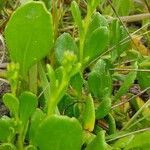
Scaevola calendulacea
Description
Source: wikipedia (CC BY-SA)Scaevola calendulacea commonly known as dune fan-flower, is a flowering plant in the family Goodeniaceae. It is a small, mat-forming shrub with blue fan-shaped flowers with a yellow centre and grows on sand dunes in eastern and southern Australia.
Care Guide
💧 Water
☀️ Light Full sun
Dune fan-flower comes from open habitats, such as sunny meadows and forest margins, that provide abundant light. It performs best in Full Sun but can also tolerate Partial Sun, adapting well to a range of sunlight conditions.
🌡️ Temperature 20–37.8°C
Dune fan-flower shows good temperature adaptability, tolerating higher heat and larger temperature fluctuations. During hot weather, attention should be paid to watering and providing appropriate shade to avoid sunburn. In contrast, dune fan-flower is relatively sensitive to low temperatures. Although it can endure some cold, very low temperatures may cause frost damage.
💨 Humidity
🪴 Soil 6-8
🌱 Fertilizer
Timing is important when fertilizing dune fan-flower. Apply fertilizer in early spring and repeat monthly until early summer. Fertilizer encourages attractive blooms and provides energy during both dormant and active growth phases.
🪴 Pot & Repot
✂️ Pruning
The Dune fan-flower boasts vibrant blossoms and a spreading growth habit. To encourage new blooms and improve its shape, prune the plant in early spring by removing dead stems and thinning out dense areas. This practice not only enhances the plant's vitality and pest resistance but also maximizes its ornamental value.
🌿 Propagating
🐛 Diseases & pets
☠️ Toxicity
Characteristics
- Plant Type
- Shrub
- Life Cycle
- Perennial
- Genus
- Scaevola
- Family
- Goodeniaceae
- Hardiness Zone
- 9-11
- Mature Height
- 40 cm
- Mature Spread
- 76 cm
- Leaf Color
- Green, Dark Green
- Leaf Type
- Evergreen
- Flower Size
- 2.03 cm to 3.05 cm
- Bloom Time
- All year round
- Planting Time
- Spring, Summer, Autumn
- Harvest Time
- All year round