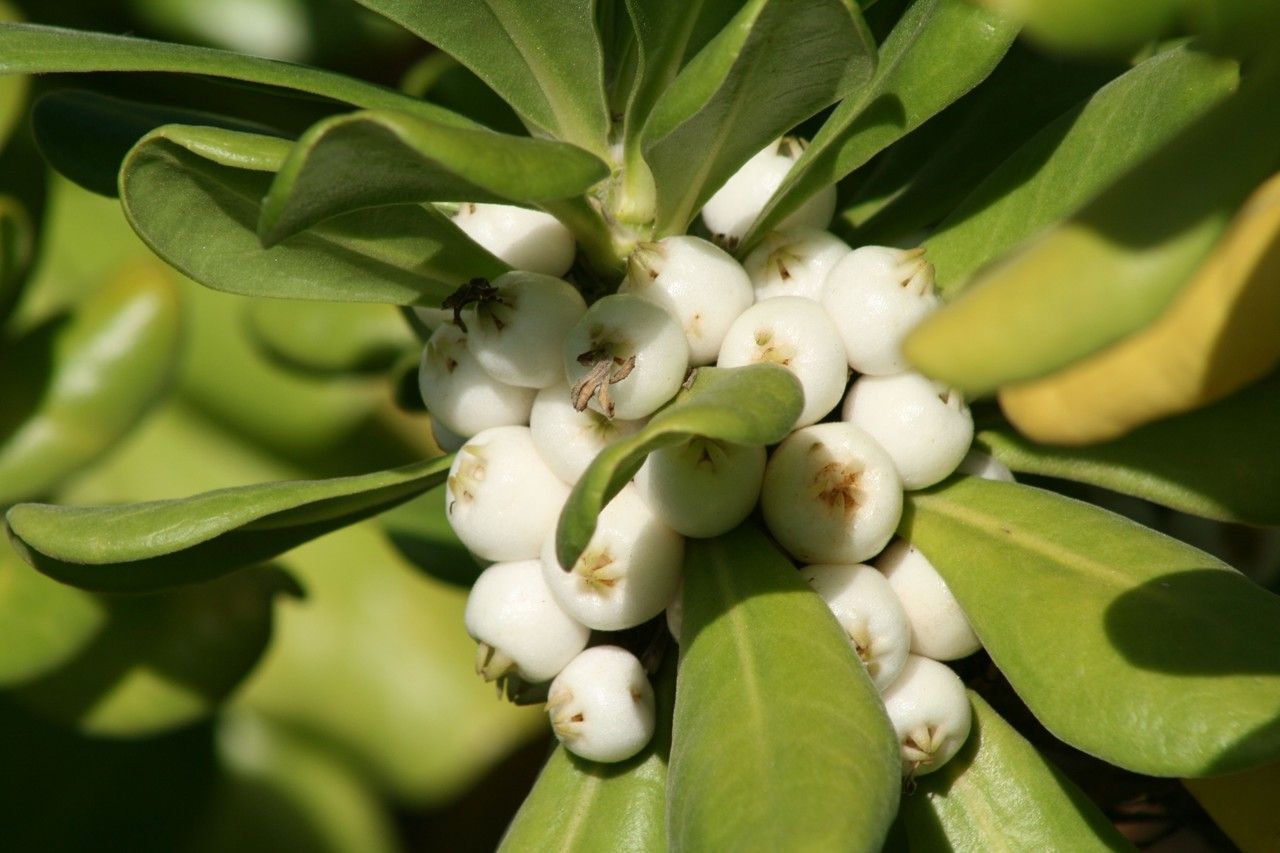
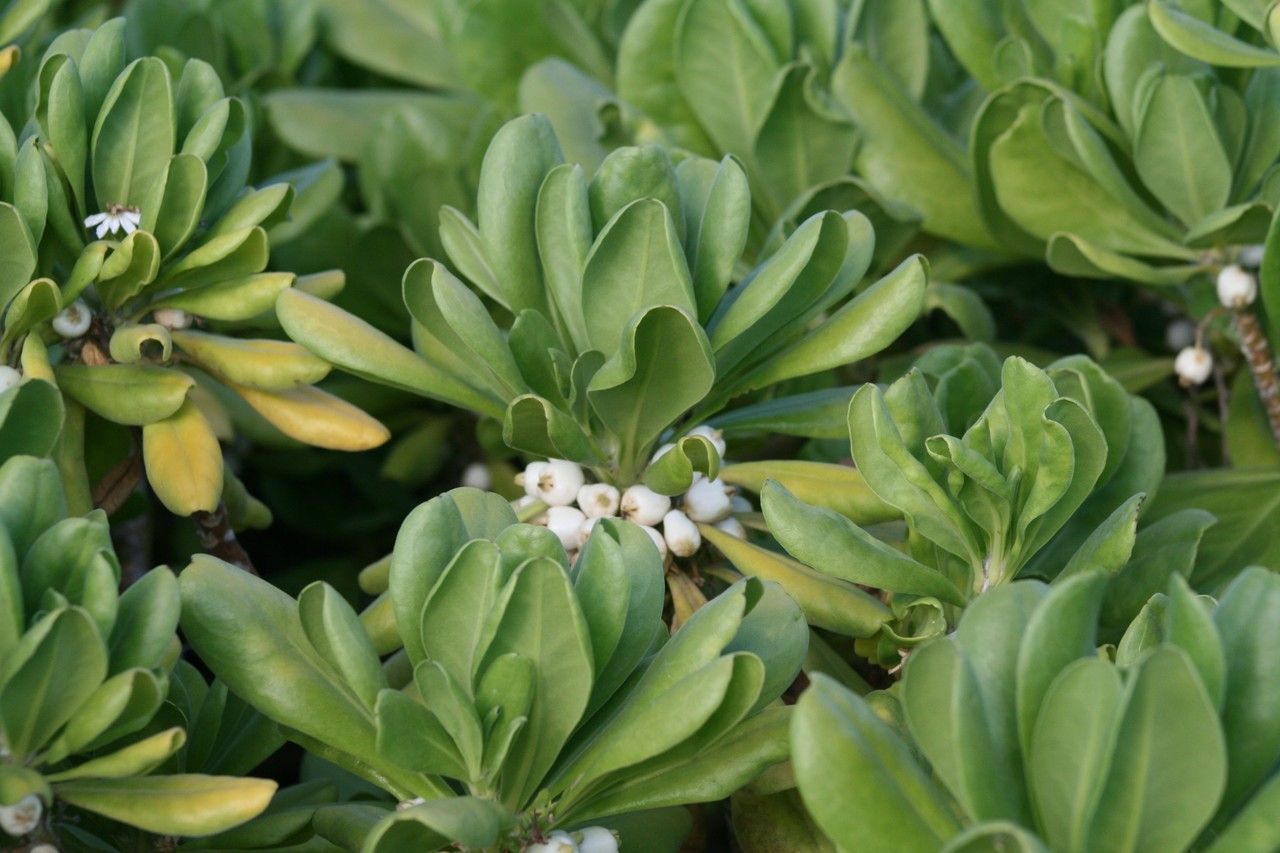
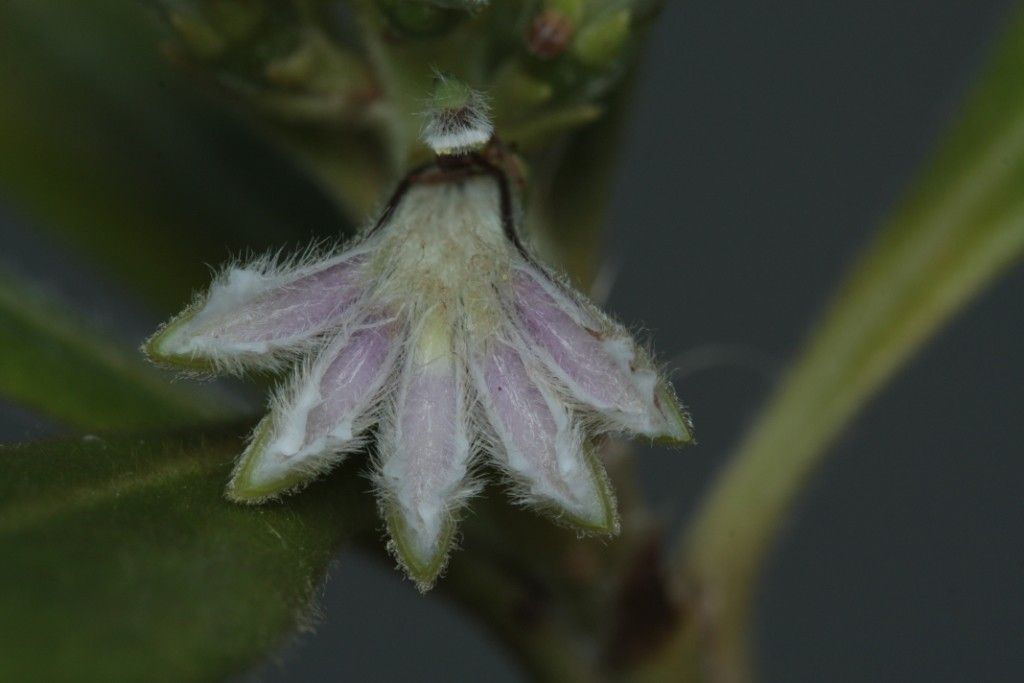
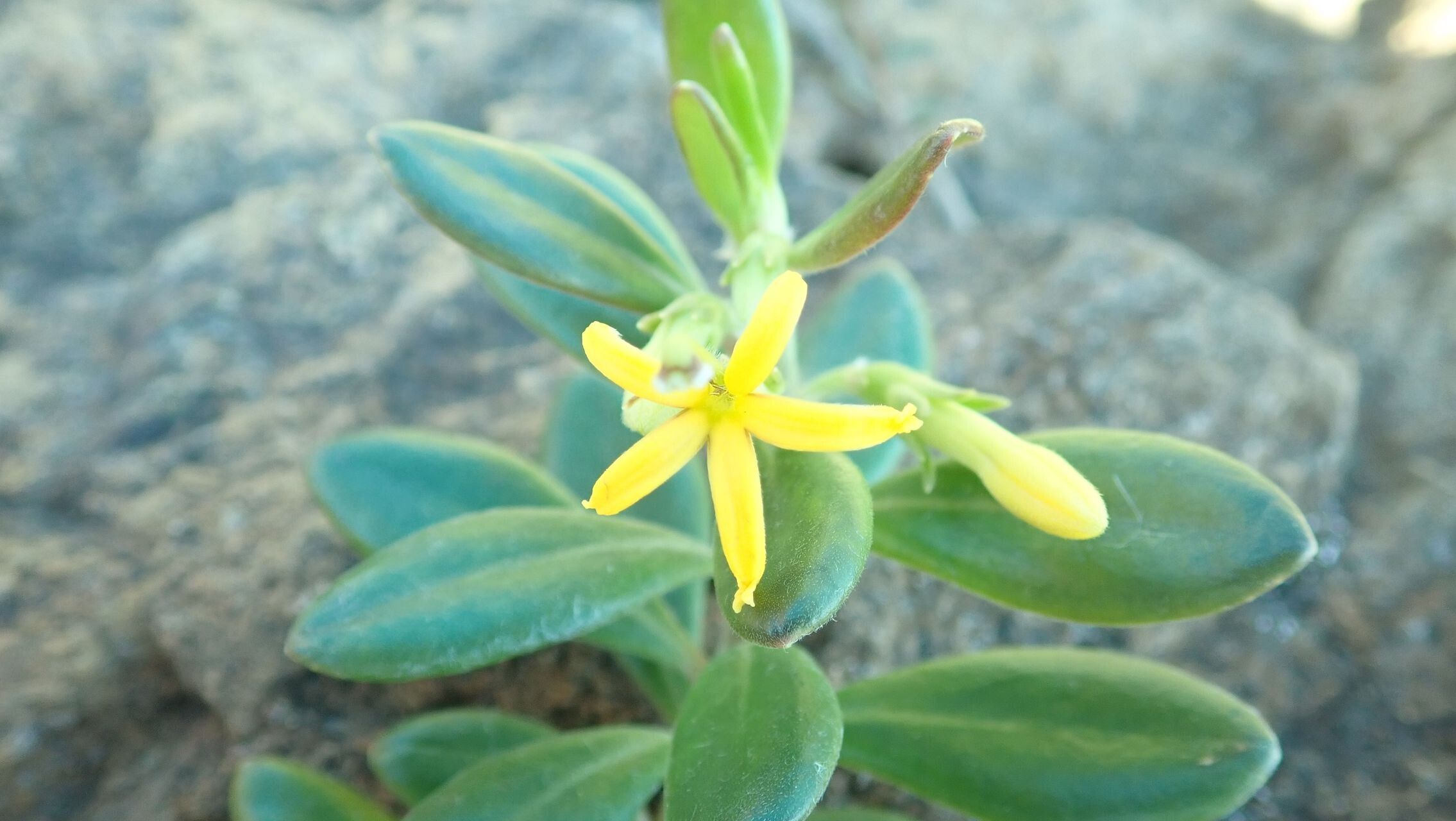
Scaevola taccada, also known as beach cabbage, sea lettuce, beach naupaka, naupaka kahakai (Hawaiian), magoo (Divehi), merambong (Malay), bapaceda or papatjeda (Moluccan Islands), ngahu (Tongan) is a flowering plant in the family Goodeniaceae found in coastal locations in the tropical areas of the Indo-Pacific. It is a common beach shrub throughout the Arabian Sea, the tropical Indian Ocean and the tropical islands of the Pacific Ocean. There has long been confusion over the correct scientific name for this species. It is also known by the synonym Scaevola sericea.
Beach naupaka is resistant to disease and is generally not prone to illnesses. Regarding care, this plant is relatively low-maintenance. When grown outdoors it needs little watering, and larger plants usually do not require pruning. Smaller plants, however, should be pruned after they finish blooming. Beach naupakat is appropriate for anyone with an outdoor area, such as a garden or deck, and does not demand extensive care experience.
How to keep Scaevola Sericea.
Light
The beach naupaka plant prefers sunlight for the majority of the day but can also manage with reduced lighting. Having its roots in a beach setting, beach naupaka is capable of thriving under intense sun exposure and can grow well. Frequent exposure to sunlight promotes a healthy leaf and flowering cycle, though too much can result in leaf burn.
Water
The beach naupaka is well-suited to coastal environments, where it adapts easily to both sandy soils and salt exposure. It should be watered moderately every 1-2 weeks to maintain proper hydration while avoiding overwatering. When grown outdoors, beach naupaka thrives in full sun and aligns its growth with coastal rain patterns.
Temperature
The naupaka plant, which thrives in tropical and subtropical coastal areas, prefers temperatures between 68 and 100 ℉ (20 to 38 ℃). In the summertime, it has a higher tolerance towards elevated temperatures, yet in the winter, it may require safeguarding from frost or sub-zero temperatures. To guarantee the best growth, it's advised to maintain moderate temperatures and shield the plant from severe temperature variations.
Fertilizer
The care of Beach naupaka greatly depends on fertilization. Consistent feeding throughout the growth period is essential for maintaining vibrant leaves and encouraging robust growth. The lack of adequate fertilization can lead to the development of unhealthy leaves, reduced aesthetic charm, and inhibited or frail growth that is susceptible to breaking.
Pruning
Beach naupaka thrives in coastal environments, displaying lush foliage and unique fan-shaped flowers. To properly care for this plant, prune it between early and late winter. This helps shape the plant, remove any damaged branches, and promote blooming. Regular maintenance is crucial for the plant's health, and making clean cuts when pruning is important to maintain its vigor and minimize the risk of disease.
Pot & Repot
When transplanting Beach naupaka, opt for a container that's 1-2 inches (2.5-5 cm) bigger with sufficient draining capacity. Implement a well-percolating potting mixture. The best periods to repot are spring or fall, making certain the plant's root mass settles a bit beneath the top of the pot. Drench thoroughly post-repotting and position in a toasty location with softened sunlight.
Botanical profile.
- Plant Type
- Shrub
- Life Cycle
- Perennial
- Genus
- Scaevola
- Family
- Goodeniaceae
- Hardiness Zone
- 10-11
- Mature Height
- 3.96 m
- Mature Spread
- 3.05 m
- Leaf Color
- Green, Yellow
- Leaf Type
- Evergreen
- Flower Color
- White
- Flower Size
- 2.03 cm
- Bloom Time
- All year round
- Planting Time
- Spring, Summer, Autumn
- Harvest Time
- All year round
- Native Area
- Sri Lanka, Malaysia, Indonesia, Vietnam, Myanmar, Japan, Vanuatu, South Africa, Philippines, Madagascar, Singapore, Pakistan, Thailand, Kenya, Australia, Fiji, Tanzania
Other names.
Reader questions.
What are the sunlight requirements for Beach Naupaka?
Beach Naupaka thrives best in locations that receive full sun, which is above 6 hours of sunlight daily. It can also tolerate partial sun, receiving about 3-6 hours of sunlight. It's essential to observe how sunlight moves through your garden to ensure spots chosen provide the optimal balance of light and shade needed for the plant's health. The natural habitat of Beach Naupaka, being a coastal environment, enables it to endure strong solar radiation and flourish with an extensive amount of sunlight, which stimulates healthy foliage and flowering. However, too much exposure may cause leaf scorch.
What is the native environment of the Beach Naupaka?
The Beach Naupaka plant, scientifically known as Scaevola sericea, is native to tropical and subtropical coastal environments. It thrives in moderate temperatures and prefers being in a temperature range of 68 to 100°F (20 to 38°C). However, it is crucial to protect the plant from frost or freezing temperatures during winter months since it is extremely heat-loving. During the summer, Beach Naupaka can handle higher temperatures well.
How does artificial lighting support indoor Beach Naupaka plants?
For indoor Beach Naupaka plants or when natural sunlight is inadequate, artificial lighting is crucial for optimal growth. LED lights are beneficial as they can be adjusted to provide specific wavelengths needed by the plants. Full sun plants should receive 30-50W/sq ft of artificial light, partial sun plants need 20-30W/sq ft, and full shade plants require 10-20W/sq ft. The light source should be placed 12-36 inches above the plant to mimic natural sunlight as much as possible. Moreover, to imitate natural daylight hours, most plants will thrive with 8-12 hours of light per day.
How should Beach Naupaka be cared for in winter?
In winter, it is essential to keep the Beach Naupaka in an environment where temperatures remain above 20°C to ensure its survival and growth. If you've been growing Beach Naupaka outdoors, it is recommended to bring the plant indoors and place it near a bright window to get ample sunlight. However, make sure to keep it at a distance from heaters to avoid any harm. Maintaining temperature levels above 20°C during the cold months and avoiding temperatures that approach 5°C or below are crucial steps in protecting the plant from cold damage.
What are common symptoms of light deficiency in Beach Naupaka?
When Beach Naupaka doesn't receive enough light, particularly during winter indoors, it may display symptoms such as smaller new leaves, leggy or sparse growth, faster leaf drop, slower or halted new growth, and lighter-colored new leaves. Insufficient sunlight leads to the plant entering a survival mode, affecting its growth and overall health. Conditions such as chlorosis (leaves turning yellow), sunscald (damage from intense sunlight), leaf curling (to minimize water loss), wilting (from excessive water loss), and leaf scorching (brown, dry patches on leaves) may also be observed.
What are the symptoms of low temperature on Beach Naupaka, and how can they be treated?
Beach Naupaka is not tolerant of low temperatures and shows its discontent by lightening the color of its leaves when the temperature falls below 1°C. These visible distress signs may progress to parts of the plant turning brown or black after experiencing frost, along with symptoms like wilting and drooping. To mitigate these issues, it's advisable to trim off the frost-damaged parts and immediately transition the plant to a warmer indoor setting. A south-facing window is ideal to ensure the plant receives sufficient sunlight, and it's important to avoid placing the plant near heaters or air conditioning vents to prevent air dryness.
What are the solutions for Beach Naupaka experiencing light deficiency?
To address light deficiency, gradually acclimatize your Beach Naupaka to brighter conditions by moving it to a sunnier spot each week until it gets at least 6 hours of direct sunlight daily. If indoors and shifting isn't practical, consider using artificial lighting such as desk lamps or plant grow lights for at least 8 hours a day. For outdoor plants, it's crucial to avoid abrupt changes in light intensity to prevent sunburn. Additionally, minimize obstructions by pruning trees blocking sunlight or transplant small plants to sunnier locations during their dormant periods for improved growth and health.
How does Beach Naupaka react to high temperatures, and what solutions are recommended?
During the hotter months, it is advised to keep Beach Naupaka below 38°C to prevent heat stress. Temperatures exceeding 43°C can cause the plant's leaves to lighten in color and increase its susceptibility to sunburn. To address this, trim away the sunburned or dried-up parts of the plant. Relocating the plant to a spot where it can receive shade during the intense midday and afternoon sun will help. It's also beneficial to water the plant in the morning and evening to maintain soil moisture and assist in cooling the plant.