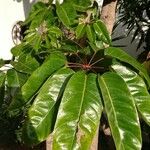
Schefflera actinophylla
شفليرا · Umbrella tree · Australian cabbagetree · Australian umbrella-tree · Queensland umbrella-tree
Description
Source: leafsnapSchefflera actinophylla, commonly known as the umbrella tree or octopus tree, is a tropical evergreen plant native to Australia and Southeast Asia. It is a popular houseplant due to its attractive foliage and easy care requirements. The plant features large, glossy leaves arranged in an umbrella-like shape on long stems that can grow up to 3 meters in height. The leaves are dark green with a glossy finish and have between 7 to 16 leaflets per stem. During the summer months, Schefflera actinophylla produces small red flowers that grow in clusters, which are followed by small red berries that attract birds. The umbrella tree prefers bright, indirect light but can also tolerate lower light conditions. It requires well-draining soil and should be watered when the top inch of soil feels dry to the touch. Overwatering can lead to root rot, so it is important not to let the plant sit in standing water. Schefflera actinophylla is also known for its air-purifying properties, as it helps remove toxins from indoor air such as formaldehyde and benzene. Overall, Schefflera actinophylla is an attractive houseplant with easy care requirements, making it an excellent choice for beginners or those looking for low-maintenance greenery indoors or outdoors (if grown in tropical climates).
💡 The octopus tree is a hemiepiphyte, meaning it partially grows on other trees in its natural rainforest habitat. It attracts nectar-eating birds and provides fruit enjoyed by many mammals, such as spectacled flying foxes and musky rat-kangaroos.
🌳 The Australian umbrella tree is frequently used for purposes beyond mere ornamentation. Because of its large, sturdy leaves, the Australian umbrella tree is employed in floral arrangements and bouquets, particularly within the tropical flower industry. Its capacity to grow indoors with minimal care also makes it a favorite among houseplant enthusiasts. Its visual appeal supports its use in the horticulture trade as a symbol of tropical luxury.
🎭 Systematized material energy, methodical exertion
Care Guide
💧 Water Every 7 days
The Octopus Tree thrives in high humidity and prefers consistent moisture, needing to be watered every 1-2 weeks. To mimic its native rainforest habitat, regular misting is beneficial, especially during the growing season. While it is typically grown indoors for its ornamental appeal, it can tolerate brief periods of dryness.
When Should I Water My Octopus Tree?
Watering your octopus tree is crucial for its health and development, including vibrant foliage and disease resistance. To determine when to water, check for a dry top layer of soil by feeling it 1 to 2 inches deep. Droopy, wilted, or discolored leaves indicate the need for water. Additionally, if the soil dries out quickly or the plant is in its pre-flowering stage, it requires more frequent watering. Higher water needs also align with warm temperatures and high sunlight exposure. Be cautious of over-watering, as it can cause root rot, and under-watering, which may lead to wilting and potentially stunt growth.
How Should I Water My Octopus Tree?
Watering your octopus tree effectively involves multiple methods. Using a watering can with a long-stem spout ensures water reaches the soil, not the foliage. Bottom watering, by placing the plant in a tray of water, encourages root hydration without wetting the leaves. Utilizing a moisture meter helps maintain the right soil moisture level. The 'shower' technique can increase humidity, mimicking the octopus tree's natural environment, but ensure root hydration is not neglected. Avoid over-saturating the soil to prevent root rot, and refrain from watering the crown directly to avoid rot.
How Much Water Does Octopus Tree Really Need?
The octopus tree thrives on consistent, moderate watering, keeping the soil evenly moist but not waterlogged. The exact amount varies with pot size, root depth, and plant size, but generally, 1 to 2 liters per session for a medium plant is advisable. Proper hydration is indicated by healthy green leaves and steady growth. Beware of overwatering signs, such as yellowing leaves, wilting, or a foul odor, and signs of underwatering like dry and brittle leaves. Optimal watering practices include using well-draining soil and pots with drainage holes while avoiding waterlogged conditions.
What Kind of Water is Best for Octopus Tree?
The octopus tree prefers neutral pH water, thriving on distilled, rainwater, or tap water that has sat to allow chlorine evaporation. Filtered water is optimal, reducing harmful additives and minerals. The plant has a high tolerance for common contaminants but can be negatively affected by chlorine and fluoride in high concentrations. Let tap water sit for about 24 hours or use a water filter to mitigate this. Room temperature water is ideal to prevent shock, enhancing the plant's growth and health.
How Do Octopus Tree's Watering Needs Change with the Seasons?
Seasonal changes affect how you should water your octopus tree. In spring, provide ample hydration to support new growth, ensuring the soil is evenly moist. Summer's heat requires frequent watering to counteract rapid soil drying. In autumn, reduce watering frequency as growth slows, allowing the soil to dry more between sessions. Winter sees the most reduced need for water; wait for the soil's top layer to dry completely before watering again. Adjust your routine based on temperature, light exposure, and environmental conditions.
☀️ Light Partial sun
The Australian umbrella tree grows best with moderate sunlight, though it can also adapt to extremely bright conditions and to complete shade. It achieves this by modifying its photosynthetic activity. However, too little light can cause leaf discoloration, while too much light can result in slowed growth.
What are the sunlight requirements for an Octopus tree?
The Octopus tree, or Schefflera actinophylla, thrives best under moderate sunlight conditions, tolerating both heavy sunlight and full shade by adjusting its photosynthesis accordingly. It typically requires about 3-6 hours of sunlight a day (partial sun), but can also adapt to environments with more than 6 hours of sunlight (full sun) or full shade. It's important to observe the movement of sunlight in your garden to ensure your Octopus tree receives the ideal balance of light and shade. Insufficient or excessive sunlight may lead to leaf discoloration or slowed growth.
How can artificial lighting benefit indoor Octopus trees?
Artificial lighting is crucial for indoor plants, including the Octopus tree, especially when natural sunlight is insufficient, like during winter or in less sunny spaces. LED lights, which can mimic the specific wavelengths needed by plants, are a recommended choice. The required intensity of artificial light differs based on the plant's sunlight needs: full sun plants require 30-50W/sq ft, partial sun plants 20-30W/sq ft, and full shade plants 10-20W/sq ft. The artificial light source should be placed 12-36 inches above the plant and turned on for 8-12 hours per day to simulate natural daylight hours, promoting faster and healthier growth.
What are common symptoms of inappropriate light exposure in Octopus trees?
Symptoms of inadequate light exposure in Octopus trees include faster leaf drop, leggy or sparse growth, smaller new leaves, lighter-colored new leaves indicating a lack of chlorophyll, slowed or halted growth, chlorosis where leaves turn yellow, sunscald marked by pale or necrotic areas on the plant, leaf curling as a defense mechanism against excessive sunlight, wilting due to increased water loss, and leaf scorching seen as brown, dry edges on leaves. These symptoms highlight the plant's need for an adjustment in light exposure to maintain health.
What solutions can mitigate light exposure issues for Octopus trees?
To address light exposure issues in Octopus trees, indoor plants should be gradually moved to sunnier locations each week until achieving 3-6 hours of sunlight daily. Artificial light, such as desk or ceiling lamps on for at least 8 hours or professional grow lights, can supplement sunlight for large or immobile plants. Outdoors, introduce plants to sunnier spots gradually to avoid sunburn. Reduction of obstructions, like pruning tree branches, and transplanting smaller plants during dormant periods to well-lit and well-drained locations can also help. Note that parts of the plant affected by previous light conditions may not recover, but new growth should be healthy with improved light exposure.
🌡️ Temperature 20–37.8°C
The australian umbrella tree is native to tropical regions with temperatures ranging from 20 to 38 ℃ (68 to 100 ℉). It does best in warm climates and prefers temperatures above 20 ℃ (68 ℉). During winter, it's important to maintain temperatures above 10 ℃ (50 ℉) to prevent cold damage.
What are the essential care tips for an Octopus tree?
The Octopus tree, or Schefflera actinophylla, is native to tropical environments and thrives in temperatures ranging from 20 to 38°C (68 to 100°F), favoring climates that are consistently warm. It's crucial to maintain temperatures above 20°C (68°F) for optimal growth, and during winter, ensure the environment does not drop below 10°C (50°F) to prevent cold damage. This plant loves heat and should be brought indoors in autumn if grown outside, placed near a bright window yet kept away from direct heat sources to maintain the right temperature conditions.
How do low temperatures affect the Octopus tree and how can you mitigate these effects?
Low temperatures are detrimental to the Octopus tree, which prefers warmer climates. If temperatures fall below the recommended range, the plant's leaves may lighten in color, and after frost damage, they can turn brown or black with potential wilting and drooping. To mitigate these effects, trim off the frost-damaged parts and move the plant indoors to a warmer spot, preferably near a south-facing window for ample sunlight. Additionally, it's important to keep the plant away from heaters or air conditioning vents to avoid air dryness.
What should you do if your Octopus tree is exposed to high temperatures?
If an Octopus tree is exposed to temperatures above its optimal range during summer, its leaves might lighten in color and become susceptible to sunburn. In such cases, trim away the sunburned and dried parts of the plant. Then, relocate it to an area with ample shade during the midday and afternoon sun to protect it. Ensure the plant is watered in the morning and evening to maintain soil moisture, which can help the plant cope with high temperatures.
💨 Humidity
🪴 Soil 5-7
🌱 Fertilizer
Fertilizing is essential for the care of the Australian umbrella tree. Regular feeding throughout the growing season maintains the energy needed for its showy leaves and promotes overall growth. Skipping fertilization can lead to unhealthy foliage, reduced ornamental value, and stunted or weak growth that is prone to breaking.
Why do I have to add fertilizer to my Octopus tree?
The Octopus tree requires regular fertilization primarily because it has showy leaves that need a lot of energy to grow and stay healthy. However, it also needs energy for the rest of its vital structures like stems, branches, and roots. If you don't fertilize it, there are two likely outcomes. First, the leaves will lose their natural color and texture, making the tree look unhealthy and less attractive. Second, the tree may grow slower or produce weak growth that could break easily.
When should I put fertilizer on my Octopus tree?
To ensure the well-being of your Octopus tree, occasional feedings are beneficial. Thus, there is no need to establish a strict feeding schedule when planting these plants. A simple way to fertilize your Octopus tree is by applying fertilizer when watering the plant on select occasions. Additionally, during the growing season, it is important to provide the tree with an adequate amount of water. To meet its needs, you can feed the plant every two to three weeks. This feeding frequency should be maintained as long as the tree continues to produce new growth.
When is it not a good idea to add fertilizer to my Octopus tree?
For most of the year, you can regularly fertilize your Octopus tree. This includes the active growing season of spring, summer, and early fall. However, during winter, it is important to refrain from fertilizing the plant. In winter, the Octopus tree goes into a dormant phase with little to no new growth. This lack of active growth means that the tree requires less energy, making fertilization unnecessary during this time.
What kind of fertilizer does my Octopus tree require?
The fertilizer for an Octopus tree has a specific blend of nutrients, with each nutrient present in relatively low amounts. An ideal fertilizer has an N-P-K ratio of 3-1-2. However, in some cases, a general-purpose fertilizer with an even blend of nutrients can also work well. Even when using a balanced fertilizer, the volume of each nutrient should be at 3 or lower. You can choose between a granular or liquid-based fertilizer. If you opt for a liquid-based fertilizer, it is best to dilute the strength by half. While there isn't much downside to using granular fertilizer, it is usually more sensible to use liquid fertilizer, especially if you water your Octopus tree while feeding it.
How can I feed my Octopus tree?
One of the easiest ways to fertilize an Octopus tree is by feeding it whenever you water it. To do this, you will need fertilizer and a watering can or container. Start by mixing the fertilizer with water to dilute its strength. Then, simply pour this diluted mixture onto the soil, allowing it to soak down to the roots. Another option is to use granular fertilizer. With granular fertilizer, you can simply sprinkle it onto the soil where the Octopus tree is planted. Granular fertilizers are typically slow-release, so you won't need to fertilize as frequently as you would with a liquid fertilizer. Regardless of the method you choose, it's beneficial to water the Octopus tree while you're feeding it.
🪴 Pot & Repot 2-3 years
When repotting an Australian umbrella tree, pick a flower pot 1-2 inches (2.5–5.1 cm) larger with ample drainage. Use a well-draining potting mix. Repot in spring or fall, making sure the root ball sits slightly lower than the rim of the flower pot. Water thoroughly after repotting and place it in a warm spot with indirect sunlight.
✂️ Pruning
The octopus tree flourishes with strategic pruning, ideally conducted in early spring. Essential techniques include removing dead stems and thinning out crowded branches, which promote bushier growth. Regular pruning helps manage the plant's size, encourages healthier development, and improves air circulation. Be sure to use sterile tools to prevent the spread of disease.
🌿 Propagating
🐛 Diseases & pets
☠️ Toxicity
Characteristics
- Plant Type
- Shrub, Tree
- Life Cycle
- Perennial
- Genus
- Schefflera
- Family
- Araliaceae
- Hardiness Zone
- 9-12
- Mature Height
- 6.1 m to 20.12 m
- Mature Spread
- 4.57 m to 6.1 m
- Leaf Color
- Green
- Leaf Type
- Evergreen
- Flower Color
- White
- Flower Size
- 2.54 cm
- Bloom Time
- Early summer, Mid summer
- Planting Time
- Spring, Summer, Autumn, Winter
- Harvest Time
- Mid summer
- Native Area
- Papua New Guinea, Indonesia