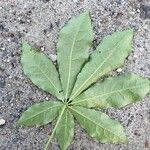
Schefflera digitata
Pate · Seven-fingers
Description
Source: leafsnapSchefflera digitata, commonly known as the Finger Leaf Umbrella Tree, is a tropical evergreen native to Southeast Asia. As a member of the Araliaceae family, it has become a popular houseplant due to its appealing foliage and ease of care. This plant features large, glossy green leaves that are deeply divided into finger-like segments, giving it a unique appearance. The leaves grow in an umbrella-like formation on long stems that can extend up to 1 meter. When grown indoors, Schefflera digitata can reach heights of up to 2 meters. For optimal growth, this plant prefers bright but indirect light and well-draining soil. Regular watering during the growing season is essential, although it tolerates some drought. However, it does not thrive in soggy soil or standing water. In addition to its aesthetic appeal, Schefflera digitata is known for its air-purifying properties. It helps to remove toxins such as formaldehyde, benzene, and trichloroethylene from indoor air. In summary, Schefflera digitata is an attractive and low-maintenance houseplant that offers numerous benefits for indoor environments.
Care Guide
💧 Water Every 7 days
The Seven-finger Pate Tree thrives in moist, humid environments similar to those found in subtropical forests. It requires balanced moisture, needing watering every two weeks, and demonstrates moderate drought tolerance. As an evergreen, this tree flourishes indoors when provided with higher humidity, which helps maintain its lush foliage all year round.
☀️ Light Full shade
The seven-finger Pate Tree does best in locations with plentiful sunlight, reflecting its native, sun-drenched environment. Sufficient sun is necessary for robust growth and abundant foliage. Too much exposure, however, can cause dehydration and sunscald, while too little sunlight can hinder its growth and overall vitality.
What are the sunlight requirements for the Seven-finger Pate Tree?
The Seven-finger Pate Tree requires more than 6 hours of sunlight daily, which is considered full sun exposure, to flourish. However, it can tolerate less than 3 hours of sunlight, known as full shade, but with certain limitations on its growth and health. It's crucial to observe how sunlight moves through your garden throughout the day and select spots that offer a balanced light environment. This careful placement ensures the plants receive the ideal amount of light and shade, contributing to their overall wellbeing.
How does sunlight affect the Seven-finger Pate Tree?
Sunlight plays a critical role in the healthy growth and lush foliage of the Seven-finger Pate Tree, mirroring its natural habitat that is abundant in sunlight. Adequate exposure to the sun is essential, but too much can cause issues such as dehydration and sunscald. On the other hand, insufficient sunlight can hinder its growth and vitality. For indoor plants, especially in less sunny spaces or during winter, artificial lighting can be a significant aid in providing the necessary light for optimal growth, with recommendations on the type, distance, and duration of such lighting.
What symptoms indicate insufficient light exposure in the Seven-finger Pate Tree?
Symptoms of insufficient light exposure in the Seven-finger Pate Tree include smaller new leaves, leggy or sparse growth, faster leaf drop, delayed or halted growth, lighter-colored new leaves, chlorosis, sunscald, leaf curling, wilting, and leaf scorching. These symptoms reflect the plant's struggle with inadequate lighting conditions, leading to a range of health issues from poor chlorophyll production to physical damage from excessive sunlight.
What are the solutions for insufficient light exposure in Seven-finger Pate Trees?
To address insufficient light exposure, gradually acclimate your Seven-finger Pate Tree to receive at least 6 hours of direct sunlight daily, especially if it's indoors. Use south-facing windows, keep curtains open for maximum light, or employ artificial lighting for plants that can't be moved easily, ensuring at least 8 hours of light daily. For outdoor plants, slowly transition them to sunnier spots to avoid sunburn. It's also beneficial to prune obstructions like tree branches to improve sunlight access. For smaller, easily movable plants, consider transplanting them during their dormant period to a sunnier location with good drainage. Remember, parts of the plant already affected may not recover, but new growth after light exposure adjustment should be healthy.
🌡️ Temperature 20–37.8°C
The Seven-finger Pate Tree is indigenous to regions where temperatures commonly range from 68 to 100 °F (20 to 38 °C). It prefers warm climates but can acclimate to cooler conditions if necessary. Seasonal adjustments may be needed to help it thrive.
What is the native climate for the Seven-finger Pate Tree?
The Seven-finger Pate Tree is native to regions where temperatures fluctuate between 68 to 100°F (20 to 38°C), indicating a preference for warm climates. Despite its preference for warmth, it can adapt to cooler temperatures, though seasonal adjustments might be necessary to ensure its health. The tree is particularly heat-loving, and exposure to cold can be detrimental. During colder months, especially in autumn, it is advisable to bring the tree indoors, placing it near a bright window yet away from direct heat sources to maintain optimal growth conditions. Keeping the temperature above 20°C during winter benefits the Seven-finger Pate Tree, as temperatures nearing or dropping below 0°C could harm it.
How does low temperature affect the Seven-finger Pate Tree and what are the solutions?
The Seven-finger Pate Tree thrives in temperatures above 20°C and does not tolerate cold well. Exposure to temperatures below 0°C is harmful, and below -5°C, the tree's leaves may begin to lighten in color, eventually turning brown or black as frost damage becomes apparent. This is accompanied by wilting and drooping. To mitigate such damage, trim away the frost-affected parts of the plant and move it to a warm, indoor environment promptly for cold protection. It's best to place the tree near a south-facing window for sufficient sunlight while avoiding direct exposure to heaters or air conditioning vents, which could cause air dryness and further stress the plant.
What should be done if the Seven-finger Pate Tree is exposed to high temperatures?
In summer, it's crucial to maintain the Seven-finger Pate Tree's environment at temperatures below 38°C. Exposure to temperatures above 43°C can cause the leaves to lighten and increase susceptibility to sunburn. To address this, trim away the sunburned or dried parts of the plant. Relocating the tree to a shade, especially during the peak midday and afternoon sun hours, can prevent further damage. Additionally, watering the plant in the morning and evening helps keep the soil consistently moist, which is vital for its wellbeing during high temperatures.
💨 Humidity
🪴 Soil 6-6
🌱 Fertilizer
The best time to fertilize a Seven-finger Pate Tree is in early spring, as it breaks dormancy. This encourages overall growth and the development of flowers. Fertilization improves the foliage, stems, and branches, while encouraging large, vibrant, and long-lasting blossoms. It assists in moving nutrients from the roots to the flowers and enhances the plant's health and resistance to disease.
🪴 Pot & Repot 2-3 years
The Seven-finger Pate Tree is an upright shrub that should be repotted every 2 to 3 years in the spring. When repotting, use a pot that is 2 to 3 inches wider than the previous one. After repotting, place the Seven-finger Pate Tree in indirect light and ensure the soil stays consistently moist, taking care not to overwater. This will promote optimal growth.
✂️ Pruning
The Seven-finger Pate Tree has palmate leaves and thrives with effective pruning techniques such as deadheading and selective thinning. Prune the tree from early to late winter, during its dormant period. Remove any crossing or crowded branches to improve airflow, enhance light penetration, and increase overall vigor. This will promote a healthier and fuller growth habit.
🌿 Propagating
🐛 Diseases & pets
☠️ Toxicity
Characteristics
- Plant Type
- Tree
- Life Cycle
- Perennial
- Genus
- Schefflera
- Family
- Araliaceae
- Hardiness Zone
- 9-11
- Mature Height
- 3.05 m
- Mature Spread
- 3.05 m
- Leaf Color
- Green, Dark Green
- Leaf Type
- Evergreen
- Flower Color
- Yellow, Green
- Flower Size
- 0.76 cm
- Bloom Time
- Summer
- Planting Time
- Spring, Summer, Autumn, Winter
- Harvest Time
- Late summer, Early fall, Mid fall
- Native Area
- New Zealand