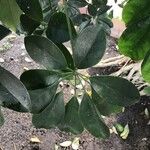
Schefflera heptaphylla
Ivy tree
Description
Source: leafsnapSchefflera heptaphylla, commonly known as the Seven Finger Tree or Umbrella Tree, is a tropical evergreen native to Southeast Asia. Belonging to the Araliaceae family, it can grow up to 20 meters tall in its natural habitat. The plant features large, glossy leaves with seven leaflets that radiate from a central point, resembling an umbrella. It also produces small greenish-white flowers, followed by small black berries. Schefflera heptaphylla is popular as an ornamental plant in gardens and indoor spaces due to its attractive foliage and ease of care. It prefers well-draining soil and regular watering but can tolerate drought once established. The plant thrives in bright, indirect light but can also adapt to low light conditions. In traditional medicine, Schefflera heptaphylla has been used for various ailments, including fever, coughs, headaches, and skin diseases, thanks to its anti-inflammatory properties. However, it should be noted that consuming this plant in large quantities can be toxic. Overall, Schefflera heptaphylla is a beautiful tropical tree with attractive foliage that is easy to care for, making it popular among gardeners worldwide, both indoors and outdoors, depending on climate conditions.
💡 The ivy leaf is shaped like a goose's foot. It possesses strong growth capabilities and is highly adaptable. Its lush appearance evokes the feeling of a tropical jungle, embodying luxury and magnificence. This sense of prosperity and renewal inspires optimism in people.
🌳 The ivy tree is cherished for its round shape and attractive foliage. It can be planted in garden beds and is also valued as a flowering hedge, providing both privacy and acting as a windbreaker in gardens. Gardeners often pair the ivy tree with companion plants like Dracaena, Ficus, and Dieffenbachia.
🎭 Nature and Balance
Care Guide
💧 Water Every 7 days
The ivy tree flourishes in humid subtropical climates and can tolerate moderate drought. To keep it healthy, water it every two weeks and regularly mist the leaves to maintain humidity. Although commonly grown indoors for decorative purposes, these practices ensure its evergreen foliage remains vibrant and its growth cycle remains robust.
☀️ Light Partial sun
The ivy tree does well in spots where sunlight is filtered through other foliage, providing an intermediate condition between shade and full sun. Specimens subjected to the sun's full intensity can cope, as long as they have been acclimated. Too much or too little light can be harmful and impair its healthy growth.
What are the sunlight requirements for an Ivy Tree?
Ivy Trees, known botanically as Schefflera heptaphylla, prosper under specific light conditions. They require 'Partial sun' which refers to about 3-6 hours of sunlight daily and can tolerate 'Full sun' conditions, meaning they can thrive in areas receiving more than 6 hours of sunlight. It's essential to observe how sunlight moves through your garden to identify spots that offer a balanced exposure to light and shade, ensuring your Ivy Tree's wellbeing.
What essentials should be considered for the healthy growth of an Ivy Tree?
The Ivy Tree flourishes in environments where sunlight gently filters through other foliage, creating an ideal balance between shade and direct sunlight exposure. When exposed to the full intensity of the sun, it's crucial that they are gradually acclimated to prevent stress. Insufficient or excessive sunlight can adversely affect the tree's health. In cases where natural sunlight is scarce, especially during winter or in less sunny areas, supplementing with artificial lighting can promote healthier, more vigorous growth. LED lights are often the best choice for indoor plants, providing the necessary wavelengths of light. The amount of artificial light required varies based on the plant's sunlight needs, ranging from 10-50W/sq ft depending on whether the plant prefers full shade, partial sun, or full sun.
What are the common symptoms of inadequate lighting in Ivy Trees?
Ivy Trees displayed away from natural light sources for extended periods may exhibit signs of light deficiency. Symptoms include smaller new leaves, leggy or sparse growth, early leaf drop, stunted or halted new growth, and paler new leaves. These are indicators of insufficient light exposure. Conversely, too much sunlight can lead to chlorosis (yellowing of the leaves), sunscald, leaf curling, wilting, and leaf scorching. Each symptom signifies either an excess or deficiency in light, impacting the Ivy Tree's photosynthesis process and overall health.
How can I address the lighting issues of an Ivy Tree?
To mitigate lighting issues for both indoor and outdoor Ivy Trees, a gradual adaptation to the ideal light conditions is essential. For indoor plants, progressively place them in sunnier spots weekly until they receive 3-6 hours of direct sunlight daily. If moving the plant isn't feasible, consider artificial lighting solutions like keeping a lamp on for at least 8 hours a day or using professional grow lights. For outdoor plants, similarly, incrementally relocate them to sunnier locations to prevent sunburn. Removing obstructions and considering transplanting for smaller plants into sunnier areas can significantly enhance light exposure. Note, however, that parts of the plant already affected by insufficient light may not recover, but new growth should be healthier with improved lighting conditions.
🌡️ Temperature 20–37.8°C
Ivy tree is native to regions where temperatures usually range from 68 to 100 °F (20 to 38 ℃). It prefers warm conditions and can be sensitive to temperature swings, so take care to protect it from severe cold in winter and to give it shade from intense heat in summer.
What is the native climate for an Ivy tree?
The Ivy tree, botanically known as Schefflera heptaphylla, thrives in climates where temperatures typically range between 68 to 100 °F (20 to 38 °C). It prefers a warm environment and is sensitive to temperature fluctuations. Protection from extreme cold in winter and scorching heat in summer is crucial for its well-being.
How should I care for my Ivy tree during winter?
In autumn, to protect your Ivy tree from cold temperatures, it is advisable to bring it indoors if it was grown outside. Place it near a bright window but keep it away from heaters to avoid dry air that can harm the plant. Maintaining temperatures above 20°C is beneficial for the plant, as temperatures near 5°C can be detrimental.
What are the symptoms of cold damage in Ivy trees, and how can it be treated?
Ivy trees show a lack of tolerance for cold temperatures, thriving best above 20°C and requiring conditions above 5°C during winter. Cold damage symptoms include leaves lightening in color when temperatures fall below 1°C, with the color turning brown or black following frost damage, accompanied by wilting and drooping. To treat frost damage, trim off the damaged parts and move the plant to a warm environment indoors, near a south-facing window for sunlight, and away from direct heat sources to prevent air dryness.
What should I do if my Ivy tree is exposed to high temperatures?
During the summer, it is crucial to keep the temperature for Ivy tree below 38°C to prevent heat stress. Excessive temperatures over 43°C can cause the leaves to lighten in color and increase susceptibility to sunburn. To mitigate damage, trim the sunburned and dry parts, relocate the plant to a shaded area during the harshest sun hours, and ensure the soil remains moist with morning and evening watering.
💨 Humidity
🪴 Soil 6-7
🌱 Fertilizer
The best time to fertilize an Ivy tree is in early spring, as it breaks dormancy. This encourages overall growth and flower development. Fertilization improves foliage, stems, and branches, while supporting large, vibrant, and long-lasting flowers. It helps transfer nutrients from the roots to the flowers and boosts the plant's health and resistance to disease.
🪴 Pot & Repot 2-3 years
Repot your ivy tree every 2 to 3 years during the spring. When you do, choose a pot that is slightly larger than the root ball. After repotting, place the ivy tree in a spot with indirect light and keep the soil moist, being careful not to overwater it. Make sure to use a pot with drainage holes to prevent root rot, especially since this plant grows quickly.
✂️ Pruning
The ivy tree flourishes when pruned properly, which helps maintain its shape and encourages healthy growth. Key techniques include removing dead branches and enhancing air circulation. It's best to prune during the tree's dormant period, from early to late winter. Use clean, sharp tools to minimize damage and reduce the risk of disease.
🌿 Propagating
🐛 Diseases & pets
☠️ Toxicity
Characteristics
- Plant Type
- Tree
- Life Cycle
- Perennial
- Genus
- Schefflera
- Family
- Araliaceae
- Hardiness Zone
- 10-11
- Mature Height
- 2.13 m to 14.94 m
- Mature Spread
- 4.57 m to 9.14 m
- Leaf Color
- Dark Green, Forest Green
- Leaf Type
- Evergreen
- Flower Color
- White
- Flower Size
- 15.24 cm to 30.48 cm
- Bloom Time
- Mid summer, Late summer, Early fall
- Planting Time
- Spring, Summer, Autumn
- Harvest Time
- Mid fall, Late fall, Early winter