Schinus molle
Peruvian peppertree · California peppertree · Peruvian-mastictree · Peppertree · American pepper
Description
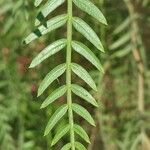
Source: leafsnapSchinus molle, commonly known as the Peruvian pepper tree or California pepper tree, is a species of flowering plant in the Anacardiaceae family. Native to South America, this tree has been widely introduced to various parts of the world, including California and regions with Mediterranean climates. It can grow up to 15 meters tall and possesses a distinctive weeping habit, characterized by drooping branches that lend it an elegant appearance. The leaves of Schinus molle are small and dark green, while its flowers are tiny and either white or yellowish-green. The plant produces a red or pinkish berry, each containing a single seed. These berries have culinary and medicinal uses. Notably drought-tolerant and capable of thriving in poor soils, the Peruvian pepper tree is valued for its ornamental appeal. Its attractive foliage and weeping branches make it a popular choice for landscaping projects worldwide. However, Schinus molle is also considered an invasive species in some areas due to its rapid spread through seed dispersal by birds. In regions like Australia and South Africa, where it has been introduced outside its native range, it can pose a threat to local ecosystems by outcompeting native vegetation. Overall, Schinus molle remains an important plant both culturally, as a food source, and ecologically, as a habitat provider. Nonetheless, when grown outside its natural range, it requires careful management to prevent it from becoming an invasive species that threatens local ecosystems.
🌳 Schinus molle trees are notable for their wide range of uses. The ripe berries produce essential oils and are used as piquant seasonings in cuisines around the world. Their strong, durable wood is also prized by furniture makers. In addition, the leaves of california peppertree can be distilled to create pigments for paint, offering an eco-friendly color choice. The california peppertree also contributes to pest control, since its leaves act as a natural insect repellent. Those same leaves are employed to soften leather, improving its texture and flexibility. Truly a multifunctional plant.
🎭 Religious Zeal, Gentleness, Loveliness, Cleverness
Care Guide
💧 Water Every 7 days
The Peruvian peppertree, native to arid regions, thrives with minimal watering—ideally once every 1 to 2 weeks—allowing the soil to dry out between waterings. Its drought tolerance and preference for full sun make it an excellent choice for xeriscaping and low-water garden designs.
How should I water my Peruvian peppertree?
Your Peruvian peppertree is not particular about how you water it. Any common tool like a watering can, hose, or even a cup will work. When watering, it's best to apply the water directly to the soil. Make sure you moisten all parts of the soil equally to provide water to the entire root system. Filtered water is recommended as tap water may contain harmful particles. Also, use water that is at or slightly above room temperature to avoid shocking the plant. However, the Peruvian peppertree generally adapts well to any type of water.
What should I do if I give too much or too little water to my Peruvian peppertree?
If you have outdoor plants, especially newly planted ones or plant seedlings, they may suffer from not getting enough water. Remember to make sure you water them enough for the first few months, especially when the tree is still small or recently planted. Once the roots are established, Peruvian peppertrees can usually rely on rain for moisture. When you have Peruvian peppertrees planted in pots, be careful not to overwater them. If you accidentally overwater your plant, there are steps you can take to fix the situation. First, stop watering the plant immediately to minimize the impact of overwatering. Then, remove the plant from its pot and check the roots. If you find any roots with root rot, trim them away and consider applying a fungicide to prevent further damage. If there is no root rot, you can return the plant to its pot. Make sure to use well-draining soil when repotting. On the other hand, if you underwater your Peruvian peppertree, simply water it more frequently. Underwatering is usually an easy problem to fix. Look for signs like drooping leaves, dryness, and leaf loss. Once you water the plant enough, the leaves should regain their fullness quickly. Make sure to adjust your watering schedule as soon as you notice underwatering.
How many times should I water my Peruvian peppertree?
If your area doesn't receive much rain, it's important to water your outdoor plants regularly. In the spring and fall, watering every two weeks should be enough, but in the summer, you'll need to water more often. During the winter, you can water less frequently or not at all. If your Peruvian peppertree is young or newly planted, it will need more water to help it grow and become drought tolerant. For potted plants, there are two ways to determine how often to water your Peruvian peppertree. One option is to set a watering schedule, either once a week or once every other week. However, this may not always be suitable for your plant's specific conditions. Another approach is to check the moisture level of the soil. Wait until the top two to four inches of soil have dried out completely before watering again. This method is especially important during the summer when the plant needs more water.
How much water does my Peruvian peppertree require?
When watering your Peruvian peppertree, you may be surprised to learn that it doesn't always need a lot of water. If only a few inches of soil have dried since your last watering, you can support healthy growth by giving it about five to ten ounces of water each time. You can also monitor the moisture of the soil to determine how much water to give. Keep track of how many inches of soil have dried out between waterings. To ensure your Peruvian peppertree receives enough moisture, water enough to moisten all the dry soil layers since the last watering. If over half of the soil is dry, consider giving more water until you see excess water draining from the pot's holes. If your Peruvian peppertree is planted in a rainy outdoor area, it may not need extra watering. When it's young or establishing, ensure it receives 1-2 inches of rain per week. As it grows and establishes, it can rely solely on rainwater. Only during hot weather or a period of no rainfall for 2-3 weeks, consider giving a full watering to prevent stress.
How do I know if I'm giving enough water to my Peruvian peppertree?
The Peruvian peppertree is often overwatered, and there are clear signs to watch out for. If it's overwatered, the leaves will turn yellow and some may fall off. The plant may also become shriveled and develop root rot. On the other hand, if it's underwatered, it will start to wilt and the leaves may become brown or brittle. In either case, it's important to take action and restore the health of your Peruvian peppertree.
☀️ Light Full sun
Accustomed to abundant sunlight, the California peppertree prospers beneath an open sky and tolerates occasional stretches of reduced light. Native to habitats with unobstructed sun, it grows well when given plenty of light. However, insufficient light can impede its growth, while excessive exposure may cause leaf scorch.
What are the sunlight requirements for a Peruvian Peppertree?
The Peruvian Peppertree thrives in full sun, requiring more than 6 hours of sunlight daily, but can also grow in partial sun with about 3-6 hours of sunlight. It's essential to observe the movement of sunlight through your garden to find spots that offer the perfect balance of light and shade, ensuring the plants' optimal growth and happiness. Originating from environments with clear sun exposure, the Peruvian Peppertree shows healthy growth in well-lit areas, though its growth may be hindered in inadequate light, and excessive exposure can lead to leaf scorch.
How do artificial lights support the growth of indoor Peruvian Peppertrees?
When natural sunlight is insufficient for indoor Peruvian Peppertrees, especially during winter or in less sunny spaces, artificial lighting becomes crucial for optimal growth. LED lights are recommended for they can be tailored to the specific light wavelengths needed by plants. Full sun plants require 30-50W/sq ft of artificial light, partial sun plants need 20-30W/sq ft, and full shade plants should have 10-20W/sq ft. The light source should be placed 12-36 inches above the plant to mimic natural sunlight. Most plants will benefit from 8-12 hours of light per day to mimic natural daylight hours effectively.
What symptoms indicate a Peruvian Peppertree is receiving insufficient light?
When a Peruvian Peppertree is exposed to suboptimal lighting, it may show several symptoms, including smaller new leaves, leggy or sparse growth, faster leaf drop, slower or no new growth, lighter-colored new leaves, chlorosis (losing green color and turning yellow), sunscald (bleached areas on tissue), leaf curling, wilting, and leaf scorching. These signs indicate the plant's struggle with the light conditions, affecting its overall health and growth.
What are the solutions for a Peruvian Peppertree suffering from insufficient or excessive sunlight?
For indoor plants, it's advised to gradually move them to sunnier spots until they get at least 6 hours of direct sunlight daily, using south-facing windows for maximum exposure. If moving the plant isn't feasible, utilizing artificial lights for at least 8 hours a day can provide ample light. Outdoors, gradually transitioning your plants to better-lit areas while avoiding sudden changes prevents sunburn. Removing obstructions or transplanting to sunnier locations can ensure your Peppertree receives enough light. Note that plants may not recover from past damage due to bad lighting, but new growth post-adjustment should be healthy.
🌡️ Temperature 15–37.8°C
The california peppertree's native habitat indicates it favors temperatures between 59 and 100.4 ℉ (15 to 38 ℃). In cooler months, it is recommended to keep the plant in a warm environment of about 68 to 77 ℉ (20 to 25 ℃) to prevent damage. During hotter months, the plant can tolerate temperatures up to 104 ℉ (40 ℃) if it receives adequate water and sunlight.
What is the ideal growth environment for the Peruvian peppertree?
The Peruvian peppertree thrives in temperatures between 59°F to 100.4°F (15°C to 38°C). During colder months, it's best to maintain a warmer environment around 68°F to 77°F (20°C to 25°C) to prevent damage. In warmer months, with adequate water and sunlight, the peppertree can tolerate temperatures up to 104°F (40°C). Although it has some cold tolerance, protective measures like wrapping the plant with plastic, fabric, or other materials should be taken if temperatures are expected to fall below its tolerable limit.
How does the Peruvian peppertree respond to temperature variations?
The Peruvian peppertree exhibits moderate tolerance to low temperatures and is healthiest when kept above its tolerable temperature minimum. In winter, it's important to keep it above this specific minimum temperature. Exposure to temperatures below its growth limit can cause leaves to droop, with potential for recovery in mild cases, but in severe cases, leaves may wilt and fall off. For high temperatures, especially above its tolerable maximum, the peppertree's leaves may lighten in color, exhibit dry tips, curl, and become prone to sunburn. To manage these issues, trim damaged parts, protect the plant from cold winds or extreme sun, and maintain soil moisture with regular watering.
💨 Humidity normal (40-60%)
This plant will thrive in moderate humidity, which is probably the level in your home. However, misting it a few times a week can be very beneficial. Make sure the room has good ventilation.
🪴 Soil 6-7
🌱 Fertilizer
Fertilize your California peppertree in early spring to encourage healthy growth. Regular fertilization improves the tree’s overall health, producing vigorous growth, greater resilience to harsh conditions, and better resistance to diseases and pests. Follow a consistent fertilization schedule for your California peppertree to keep foliage vibrant, deeply colored, and lush in appearance.
Why should I put fertilizer on my Peruvian peppertree?
To ensure your Peruvian peppertree thrives, it is important to fertilize it regularly. This will provide essential nutrients for healthy growth and enhance its resilience against harsh conditions, diseases, and pests. As the foliage of your Peruvian peppertree is a notable feature, it is crucial to maintain it by following a specific fertilization schedule. This will promote the development of vibrant leaves, resulting in a lush and attractive appearance.
What is the ideal time to put fertilizer on my Peruvian peppertree?
To keep your Peruvian peppertree in good health, it's important to fertilize it at specific times of the year. The first round of fertilization should occur in late winter or early spring. This helps provide the necessary nutrients for the tree to grow healthily once the weather warms up. If you live in a warm climate, it can be beneficial to provide an additional fertilizer feeding in early fall. This not only adds more nutrients to the soil, which the tree will use in the next growing season, but it also improves the tree's ability to withstand the cold winter without damage to its foliage. Fertilizing earlier in the fall ensures that new branches have enough time to grow and become stronger before the winter arrives.
When should I not put fertilizer on my Peruvian peppertree?
There are a few times throughout the year when fertilizing your Peruvian peppertree should be avoided. The first period is during the early and mid-winter months when the tree is dormant and does not require any feeding. Additionally, it is not recommended to fertilize the plant in late spring and throughout the summer due to hotter and potentially drier weather conditions. These conditions can cause a negative response to fertilization in the Peruvian peppertree. To prevent any potential issues, it is best to adhere to a fertilization schedule that only includes feeding in early spring and early fall.
What kind of fertilizer should I use for my Peruvian peppertree?
Peruvian peppertrees primarily require nitrogen as the most essential nutrient, but this does not diminish the importance of phosphorus and potassium. In fact, a good combination of all three nutrients is necessary for the optimal growth of your Peruvian peppertree. A balanced fertilizer, like a 10-10-10 ratio, can be effective. However, a more refined nutrient ratio is often beneficial for optimal growth, with slightly higher nitrogen content. For instance, a ratio of 10-6-4 can be suitable. The choice between granular or liquid-based fertilizer is a matter of personal preference when it comes to applying fertilizers.
How can I make my Peruvian peppertree grow better?
To fertilize your Peruvian peppertree, you have two options: granular fertilizer or liquid fertilizer. If using granular fertilizer, simply sprinkle it on the soil at the right time. The slow-release property of granular fertilizer ensures a gradual release of nutrients over time. It's recommended to lightly water your tree before applying the fertilizer. On the other hand, using liquid fertilizer is less common. To do this, mix the fertilizer with water and pour it around the base of your tree. Before fertilizing, it can be helpful to conduct a soil test to determine if any adjustments to the pH are necessary.
🪴 Pot & Repot Every 12 months
✂️ Pruning
The Peruvian peppertree is known for its feathery foliage and decorative berries. To promote healthy growth, it's best to perform light pruning. During the early to late winter months, remove any dead branches and thin out dense areas. When shaping the plant, use sharp, sterilized tools to reduce the risk of disease.
🌿 Propagating
🐛 Diseases & pets
☠️ Toxicity
Minor toxicity plant when ingested by humans. This means it can cause you to feel sick if you ingest it but isn't likely to be deadly. The same symptoms may occur when your pet ingests the plants.
Characteristics
- Plant Type
- Tree
- Life Cycle
- Perennial
- Genus
- Schinus
- Family
- Anacardiaceae
- Hardiness Zone
- 8-12
- Mature Height
- 14.94 m
- Mature Spread
- 14.94 m
- Leaf Color
- Green
- Leaf Type
- Evergreen
- Flower Color
- White, Yellow
- Flower Size
- 2.54 cm
- Bloom Time
- All year round
- Planting Time
- Spring, Autumn
- Harvest Time
- All year round
- Native Area
- Brazil, Ecuador, Peru